


When to Rent a Coach Bus for Group Travel
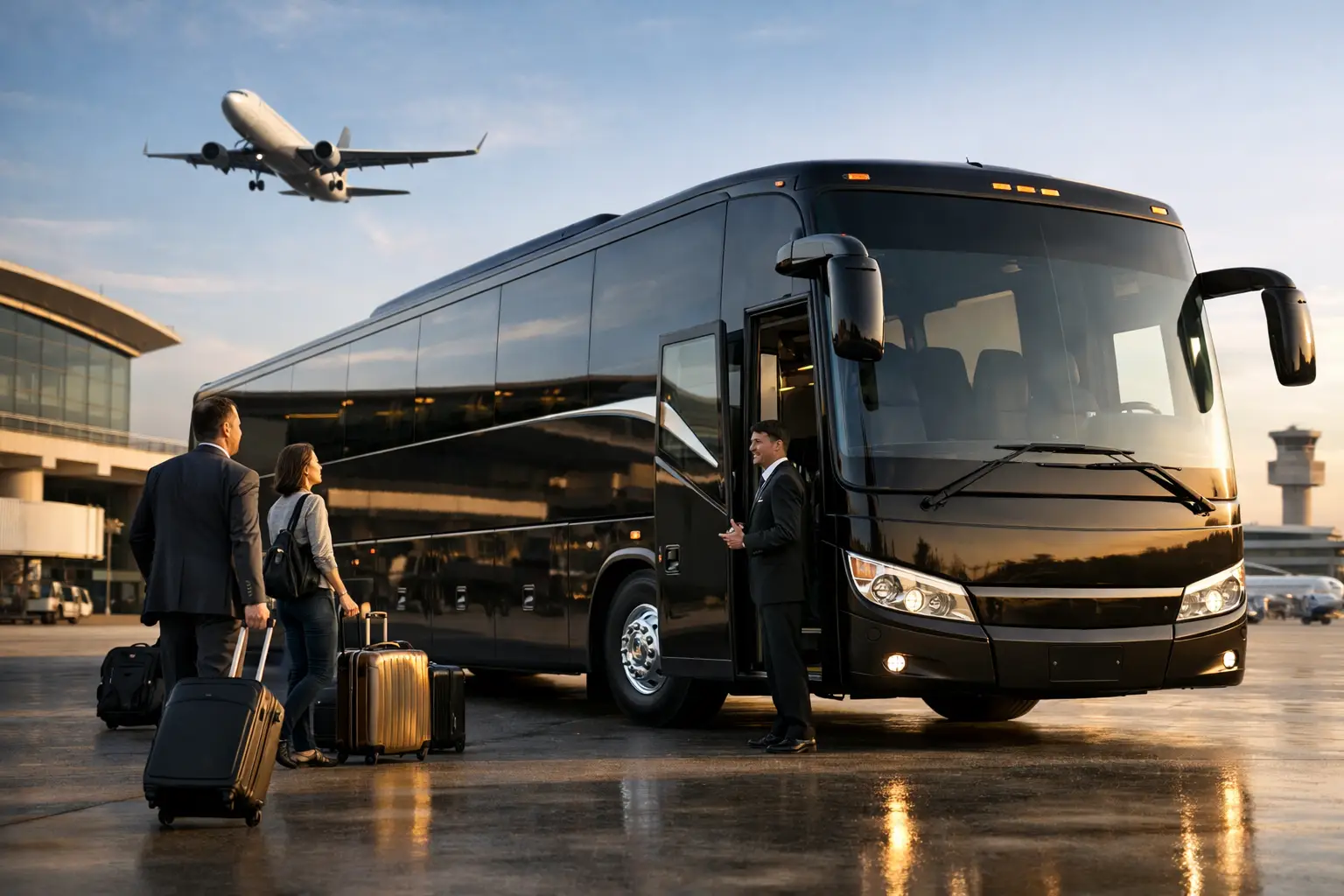
A group of 30 can turn a simple itinerary into a logistics problem fast. If guests are arriving at different times, parking is limited, or the schedule includes multiple stops, the real question is not just cost. It is when to rent a coach bus so the day runs on time and the group stays together.
For most groups, a coach makes sense when coordination matters more than giving everyone their own car. That includes weddings with split venues, corporate events with fixed start times, airport pickups for executive teams, and long-distance trips where comfort becomes part of the plan, not an extra. The right answer depends on headcount, route, timing, and what happens if even a few people arrive late.
When to rent a coach bus for events with fixed timing
A coach bus becomes the practical choice when the schedule has no room for drift. Weddings are the obvious example. If the ceremony, photo session, religious service, and reception happen at different locations, separate cars create separate problems. One guest misses a turn, another cannot find parking, a third arrives 20 minutes late, and the entire timeline starts slipping.
A single coach keeps family or guests moving together. That matters even more for multicultural weddings where timing is structured around specific ceremonies. A Punjabi baraat, a Hindu muhurat, a Pakistani Nikkah, a Persian Sofreh Aghd setup, or a Chinese tea ceremony can all involve precise sequencing and multiple pickup points. In those cases, a coach is less about transportation and more about keeping the day organized.
Corporate events have the same issue, just with less satin and more calendars. If a board meeting starts at 8:30, or a client roadshow includes downtown pickups followed by a site visit, sending people separately often adds unnecessary friction. A coach works well when a group needs to arrive together, step out composed, and avoid delays caused by parking, navigation, or scattered arrivals.
Group size is the first filter
The clearest sign that you should book a coach is headcount. Once your group gets beyond 18 to 20 passengers, splitting people across SUVs or sprinters can become less efficient than moving everyone in one vehicle. It may still be the right call to divide the group if pickup points are spread out or if some passengers need a different level of privacy. But for a single group with one schedule, a coach usually simplifies the plan.
Vehicle type matters here. A 23- or 27-passenger shuttle coach suits shorter local transfers, hotel shuttles, or event movement between venues. A 56-passenger highway coach makes more sense for larger groups or longer routes where luggage space, onboard comfort, and highway stability matter more.
The mistake many planners make is waiting until the headcount is final. By then, the good departure windows may already be gone. If you expect your group to land near coach capacity, it is usually smarter to plan early and adjust passenger numbers later.
Airport and FBO arrivals are a strong case for a coach
Airport transportation is one of the clearest answers to when to rent a coach bus. If a group is flying into Pearson, Billy Bishop, Hamilton, Ottawa, or Montreal and heading to the same hotel, office, or event site, a coach can save both time and confusion. The larger the group, the more useful that becomes.
This is especially true for executive teams, conference groups, and private aviation arrivals. At FBO terminals such as Skyservice, Signature Aviation, and Skycharter, the expectation is controlled ground transportation with a clear handoff from air to road. A coach keeps the group together, manages luggage properly, and avoids a convoy of separate vehicles trying to stage in the same area.
There is a trade-off, though. If passengers are landing on widely different flights, a single coach may create too much waiting time for the first arrivals. In that case, a staggered plan using a mix of sedans, SUVs, or sprinters for key travelers and a coach for the main group can be the better move.
Long-distance travel changes the math
A coach becomes more valuable as the route gets longer. A one-hour local transfer can be handled in several ways. A three-hour run from Kingston to Pearson, a corporate trip from Toronto to Ottawa, or a Niagara Falls day trip with a large group puts different pressure on the vehicle choice.
Long-distance travel is where comfort, onboard space, and driver fatigue really matter. People need room to sit properly, store bags, and stay settled for the full route. They also need a professional chauffeur who is focused on the road rather than juggling app directions, multiple group calls, and changing pickup messages.
For overnight events, company retreats, university delegations, and wedding guest transport between cities, a coach often becomes the most sensible option even before the passenger count gets very high. The longer the route, the less appealing it is to scatter people across multiple vehicles.
Parking, access, and venue flow matter more than people think
Even if the trip itself is short, venue logistics can justify a coach. Downtown hotels, banquet halls, private clubs, wineries, and event venues often have limited curb space and complicated arrival patterns. Ten separate vehicles create ten separate arrival issues. One coach creates one coordinated arrival.
This matters for wedding venues with tight photo schedules and for corporate locations where guest movement needs to be controlled. It also matters at estates, country venues, and private residences where parking is limited and neighbors do not appreciate a parade of arrivals.
If your venue has restricted loading access, low overhangs, or narrow roads, ask that question early. Not every site suits a full-size coach. Sometimes a smaller shuttle coach or sprinter is the better fit. Knowing that before the event day saves a lot of avoidable scrambling.
When not to rent a coach bus
Not every group needs one. If you have 8 to 12 passengers, one pickup point, and a direct route, a sprinter or SUV fleet may be cleaner. The same goes for VIP movement where privacy matters more than centralizing the group. A senior executive team, a wedding couple with immediate family, or an FBO arrival with staggered schedules may be better served by smaller chauffeured vehicles.
A coach can also be inefficient if the route is too fragmented. Five pickup points across the city before a morning departure can turn a simple transfer into a long loop. In those cases, it is often better to centralize boarding at a hotel or designated meeting point.
The point is not to choose the largest vehicle available. It is to match the vehicle to the shape of the day.
How to decide with less guesswork
If you are unsure when to rent a coach bus, start with four questions. How many passengers are actually traveling, not just invited? How fixed is the schedule? How many stops or venues are involved? And what happens if the group arrives in pieces instead of together?
If the answers point to a large group, a fixed timeline, shared luggage, or a route with little tolerance for delay, a coach is usually the right call. If the group is smaller, more private, or spread across different schedules, another chauffeured option may work better.
This is also where service model matters. A company operating owned coaches and directly employed chauffeurs can control dispatch, vehicle standards, and communication more closely than an operation piecing together outside vehicles. For group transportation, that operational control matters. Platinum Rides has worked this way since 2013, with every vehicle owned and every chauffeur employed directly, which is relevant when the booking involves 30, 40, or 50 people and no room for improvisation.
Book for the plan, not just the passenger count
People often ask for a coach because the group is large. The better reason is that the day is complicated. If timing matters, if arrivals need to be coordinated, or if the route includes distance, luggage, and multiple stakeholders, that is usually when a coach earns its place.
The simplest test is this: if separate vehicles would force you to spend the day tracking people, calling late arrivals, or rebuilding the schedule on the fly, it is probably time to put the group on one coach and move everyone together.


Leave a Reply