


Wedding Transportation Checklist That Works
A late car rarely ruins a wedding by itself. What causes real problems is the chain reaction after it – hair and makeup runs long, the church start gets pushed, family photos shrink, and the reception entrance feels rushed. A solid wedding transportation checklist prevents that domino effect by turning vague plans into exact pickup times, vehicle assignments, and route decisions.
For weddings with multiple households, large families, or more than one ceremony, transportation is not a side detail. It is part of the event schedule. That is especially true for multicultural weddings where the day may include a baraat, tea ceremony, Sofreh Aghd setup, church service, photo stop, and banquet hall arrival, all with different groups moving at different times.
Start your wedding transportation checklist with the timeline
Before choosing vehicles, lock in the sequence of the day. Transportation planning works best when it follows the wedding timeline, not the other way around. You need exact addresses, not venue names alone, and realistic loading times at each stop.
Start with who needs to move first. Usually that means the couple, bridal party, immediate family, and any guests who are not driving themselves. Then note where delays are most likely. Condo pickups, hotel valet queues, downtown church access, and banquet halls with multiple weddings on site all require extra buffer.
If your ceremony has a fixed cultural or religious timing, build around that first. A Hindu muhurat, a church ceremony with a strict start, or a Pakistani Nikkah with family arriving from separate homes leaves less room for adjustment. In those cases, transportation should arrive early and stage nearby rather than cut timing too close.
Decide who actually needs chauffeured transportation
Not every guest needs a vehicle, and trying to move everyone in the same way can create unnecessary cost and confusion. The better approach is to separate transportation into tiers.
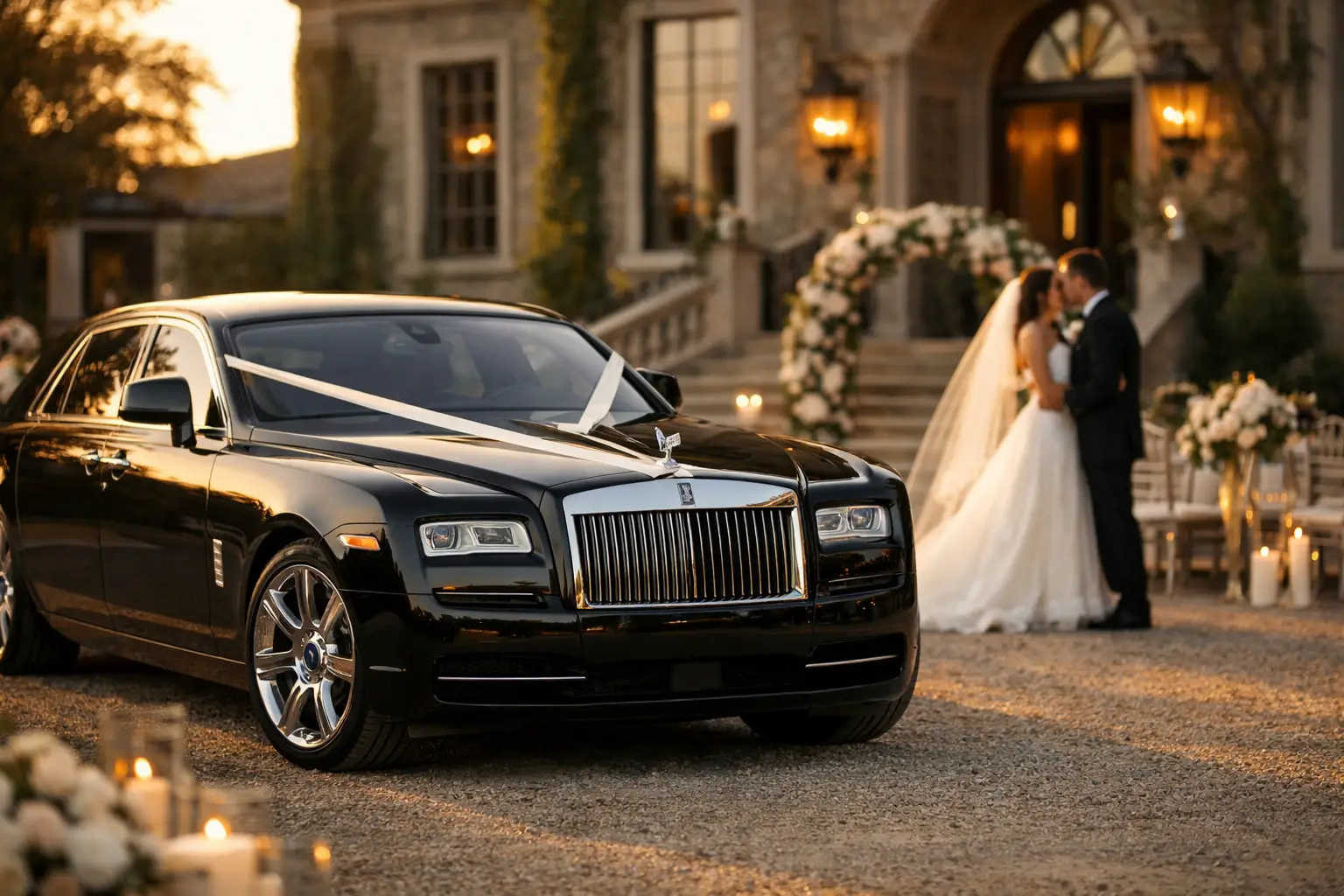
The first tier is the couple. Their vehicle should reflect both timing and appearance. A Rolls-Royce Ghost, Phantom 8 Series, Phantom Two-Tone, Cullinan, or a Mercedes-Maybach S 580 fits formal arrivals and photography. If the car will appear in portraits, body style, color, and rear-seat presentation matter as much as availability.
The second tier is the bridal party and immediate family. This is where larger SUVs, stretch limos, or Sprinters make sense depending on headcount and attire. A bridal party in structured gowns or traditional formalwear often needs more room than the passenger count suggests. A vehicle that seats 14 on paper may not feel practical if everyone is carrying bouquets, garment bags, and extra shoes.
The third tier is guest movement between ceremony and reception. If parking is limited, the venue is remote, or many guests are arriving from one hotel block, shuttle service is worth considering. For some weddings, a 23- or 27-passenger coach is more efficient than sending several smaller vehicles. For others, a party bus or Sprinter is better if the route is short and the group is specific.
Match the vehicle to the job, not just the photo
One of the biggest planning mistakes is choosing a vehicle based only on appearance. The car has to fit the schedule and the people using it.
A vintage car looks right in certain settings, but it may not be the best choice for a long multi-stop day with tight timing. A 1960 Rolls-Royce Silver Cloud II is ideal for ceremony arrival, portraits, and a classic sendoff. It is less practical for transporting several people across multiple locations with large garments and a full photography team waiting.
SUVs such as the Cadillac Escalade, Chevrolet Suburban, and GMC Yukon XL work well when access is tight, the route is longer, or the family wants easier entry and exit. They are also useful for parents, elders, and couples who want a more understated arrival without sacrificing comfort.
Stretch limos and Sprinters are strongest when the wedding party needs to stay together. That matters more than many couples expect. Keeping one group in one vehicle reduces late arrivals, missing bouquets, forgotten phones, and constant check-in calls.
Build your checklist around real pickup logistics
Addresses, names, and contact numbers should be finalized well before the wedding week. Transportation problems usually happen at handoff points, not while the vehicle is on the road.
Each reservation should include the full pickup address, pickup contact, passenger names, ceremony address, reception address, and any photo stop in between. Add building access notes too. Condo tower with concierge, side entrance at the church, hotel motor court, private estate gate code – these details save time when every minute counts.
It also helps to designate one transportation point person. This should not be the bride or groom. A planner, sibling, best man, maid of honor, or family coordinator can confirm when each group is loaded and notify the chauffeur team if timing shifts.
Don’t overlook cultural and family-specific movement
This is where a generic wedding transportation checklist falls short. Many weddings do not follow a simple house-to-ceremony-to-reception pattern.
A Punjabi wedding may need separate transportation for the groom, family elders, and baraat participants, with staging that accounts for music, gathering time, and procession flow. A Chinese wedding may involve door games, tea ceremony stops, and movement between family homes before the formal ceremony begins. A Persian wedding with a Sofreh Aghd setup may require early arrival windows and careful timing for family members involved in the ceremony itself.
Large Italian and Portuguese weddings often need precise church-to-reception coordination, especially when family members are spread across different homes and expect a traditional convoy feel. In these cases, transportation is partly logistical and partly ceremonial. The vehicles are not just moving people. They are part of how the day is experienced.
Confirm the business terms before you sign off
This part is less glamorous, but it matters. Ask whether pricing is flat-rate or variable, whether gratuity and HST are separate, and whether overtime is billed in advance or after the service if the day runs long.
For weddings, flat-rate planning is usually easier to manage because the budget is clearer from the start. It also helps to confirm whether the company is sending its own chauffeurs and vehicles or outsourcing part of the work. When the fleet is owned and chauffeurs are direct employees, communication tends to be tighter because dispatch, drivers, and scheduling are under one roof.
If you are booking several vehicles, ask for one master itinerary that covers every unit. You do not want five separate confirmations that leave room for mismatch on names, times, or locations.
Add the backup details that save the day
A good plan includes a few contingencies. Weather, traffic, and people being late are normal wedding-day variables.
Your wedding transportation checklist should include a rain plan for loading areas, an alternate photo location if travel time changes, and clear instructions for what happens if hair and makeup overruns by 20 minutes. In some cases, the answer is to adjust the photo stop. In others, it is smarter to dispatch one family vehicle earlier so the ceremony starts on time while the couple arrives on the original schedule.
Also think about the end of the night. Couples plan arrivals carefully and then treat departures as an afterthought. If you want a formal exit, late-night guest shuttle, or private ride back to the hotel, put it in writing early. Reception timelines often move more than ceremony timelines do.
A practical wedding transportation checklist
Use this final review a week before the wedding:
- Couple vehicle confirmed with exact pickup time and photo use noted
- Bridal party transportation matched to actual headcount and attire
- Family transportation assigned by household, not guessed at last minute
- Ceremony, reception, hotel, and photo addresses written in full
- Contact person assigned for each major group
- Cultural ceremony timing and staging notes shared in advance
- Buffer time added for loading, valet, downtown traffic, and venue access
- Pricing, gratuity, HST, and overtime terms confirmed in writing
- Departure plan and any guest shuttle service finalized
- Rain plan and timing backup discussed
For couples planning a wedding across Toronto, Mississauga, Brampton, Vaughan, Markham, Hamilton, Cambridge, Niagara, or farther routes where timing matters even more, this level of detail pays off quickly. Platinum Rides has handled these schedules since 2013 with owned vehicles and directly employed chauffeurs, which matters when your day includes more than one car and more than one moving part.
The right transportation plan should feel quiet in the background because everything is where it needs to be, when it needs to be there. That is usually the sign the checklist was done properly.


Leave a Reply