


Private Aviation Ground Transportation
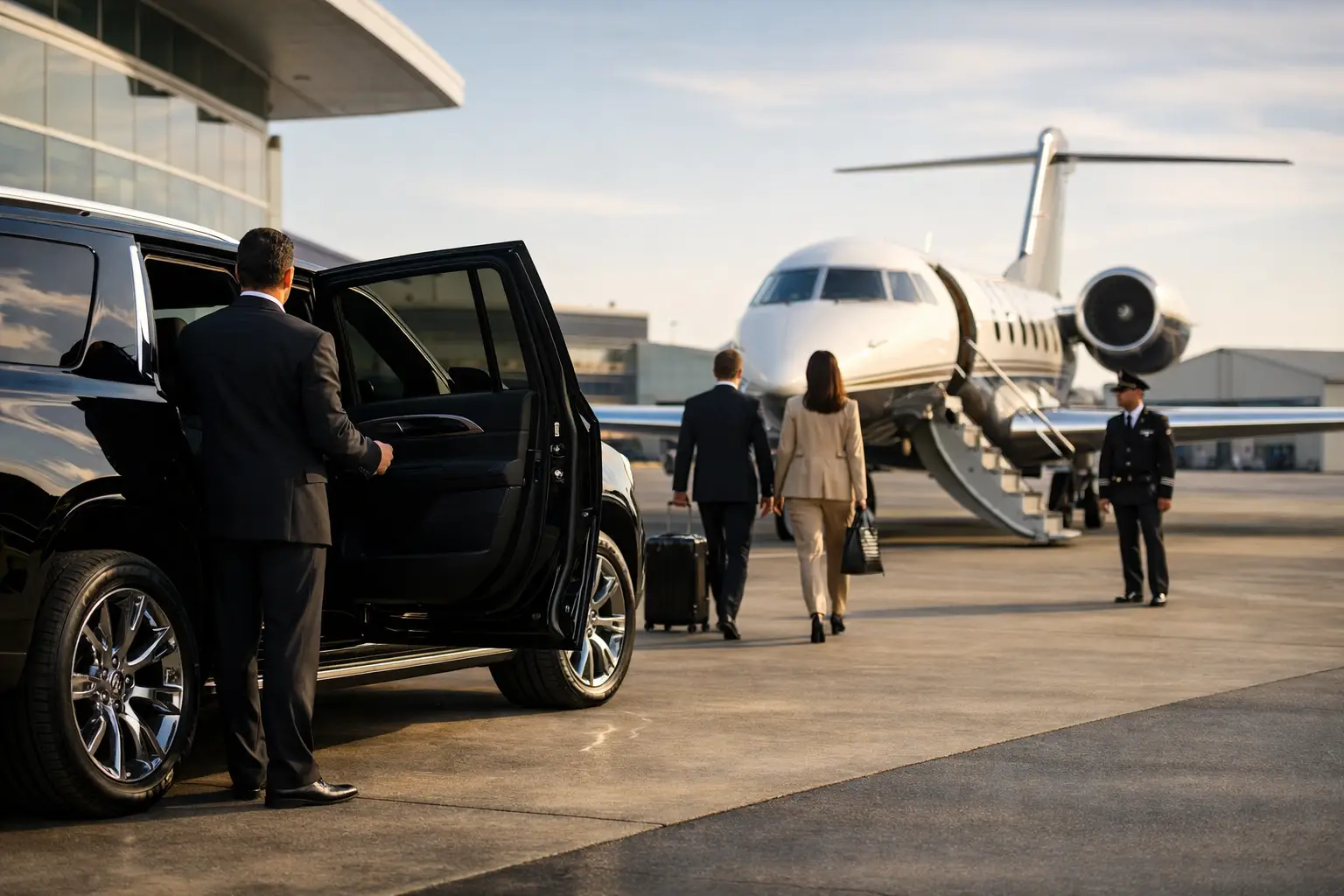
A private jet can save hours in the air and still lose them on the ground if the handoff at the FBO is handled poorly. Private aviation ground transportation is not a side detail for charter clients, executive assistants, or family offices. It is the part of the itinerary that turns a clean arrival into a delay, a security concern, or an avoidable scene at the curb.
For passengers arriving through Skyservice, Signature Aviation, or Skycharter at Pearson, the standard is simple. The vehicle should be in place before wheels down, the chauffeur should know the terminal process, and the route should already reflect traffic conditions, destination timing, baggage volume, and passenger count. That sounds obvious, but this is where many bookings go wrong.
What private aviation ground transportation actually requires
FBO transfers are different from standard airport pickups because the timing is less predictable and the expectations are higher. A commercial airport arrival runs on published schedules and public pickup zones. A private aviation arrival can move early, run late, hold briefly on the apron, or change passenger count with little notice.
That changes how the ground portion should be managed. The chauffeur service needs live coordination with the flight party, familiarity with FBO access procedures, and vehicles that match the use case. A Bay Street executive heading downtown for a board meeting does not need the same setup as a family arriving with children, ski bags, and multiple checked cases for a Muskoka transfer. The first may need a discreet sedan or SUV with a quiet cabin and direct routing. The second may need a larger SUV or Sprinter with proper luggage capacity and a chauffeur who understands that loading speed matters.
This is also why owned fleet and employed chauffeurs matter. When a company controls the vehicle and the driver directly, dispatch has fewer moving parts to manage. That reduces confusion at pickup and removes the common issue of third-party handoffs, where the person taking the booking is not the person handling the arrival.
The first decision is vehicle fit, not badge value
In private aviation, people often assume the right vehicle is the most expensive one available. That is not always true. Vehicle selection should start with party size, luggage, routing, and the tone of the trip.
For one or two executives, a Mercedes-Maybach S 580 or BMW 750i works well when the priority is a quiet cabin and formal arrival. A Cadillac Escalade, Chevrolet Suburban, or GMC Yukon XL makes more sense when baggage volume is heavier or when the destination involves multiple stops. For small groups, a Mercedes Jet Interior Sprinter or Corporate Sprinter can be the right answer, especially when a team wants to travel together and continue discussions en route.
There are also occasions when image is part of the brief. A Rolls-Royce Ghost or Cullinan may be appropriate for a principal client, a VIP guest, or a high-visibility arrival tied to a private residence, gala, or wedding-connected jet transfer. But the trade-off is straightforward. A statement vehicle is not always the most practical choice if the group has significant luggage or if the pickup needs to move quickly with minimal curbside attention.
Good planning means matching the car to the assignment rather than forcing every assignment into the same car.
Timing at the FBO is about coordination, not guesswork
A weak airport transfer can hide behind a flight board. FBO service cannot. Private aviation ground transportation depends on active dispatching because the pickup window moves with the aircraft, the crew, customs requirements when applicable, and passenger readiness.
That is why experienced clients usually care less about generic promises and more about process. They want to know whether the chauffeur service tracks arrival changes, understands where to stage, confirms passenger names and baggage count in advance, and can adjust if one traveler continues to a meeting while another heads to a hotel or residence.
For executive assistants, this matters even more. Their job is to remove friction from the principal’s schedule. If the chauffeur team needs repeated clarification after landing, the service has already missed the mark. The better approach is a confirmed flat rate before departure, clear passenger notes, direct contact protocol, and a driver who arrives briefed rather than waiting to be instructed at the curb.
Privacy and discretion are part of the service
Private flyers are not all celebrities, and they do not need to be. Many are corporate leaders, legal clients, investors, physicians, political figures, or families who simply value privacy. In those cases, discretion is not a luxury add-on. It is part of basic service competence.
That affects more than conversation level. It shapes how pickups are handled, where vehicles are positioned, how chauffeurs communicate, and how much information changes hands. Some bookings require NDA-secured handling on request. Others simply require a chauffeur who understands that silence, restraint, and professionalism are expected.
It also explains why trained chauffeurs matter more than generic drivers. A professionally dressed, licensed chauffeur who works as a direct employee is easier to brief, easier to hold accountable, and more likely to understand the difference between being helpful and being intrusive.
Private aviation ground transportation for different trip types
The right setup depends on the reason for travel.
For corporate arrivals, the priority is usually speed, discretion, and route discipline. A direct run from Pearson’s FBO terminals into downtown Toronto, North York, Mississauga, Markham, or Waterloo region may involve live traffic adjustments and close timing around meetings. In that case, a Maybach S 580, BMW 750i, or Escalade is usually the practical choice.
For family office or residential transfers, comfort and baggage handling often matter just as much as timing. A Rosedale or Bridle Path arrival may call for a lower-profile approach than a public event, while a transfer to Muskoka, Prince Edward County, or Niagara-on-the-Lake may require a vehicle that stays comfortable over a longer distance.
For wedding-related private flights, the planning gets more layered. An arriving couple or immediate family may need direct transport from an FBO to a hotel, ceremony, photo location, or reception venue. If there are cultural timing requirements, such as a baraat procession, Sofreh Aghd setup window, tea ceremony sequence, or church-to-reception convoy, the flight arrival is only one piece of a larger timeline. In those cases, the ground team must think beyond pickup and account for staging, waiting time, and vehicle order.
Flat-rate pricing matters more than many clients realize
Private aviation clients usually want clarity more than surprises. Flat-rate pricing confirmed before departure gives that clarity. It tells the booker what the transfer will cost, plus HST and gratuity, without turning route changes or traffic into a billing argument.
That model is particularly useful for long-distance transfers from the airport. A passenger flying into Pearson may continue to Kingston, Niagara Falls, Ottawa, Montreal, or even cross-border destinations such as Buffalo or Detroit, depending on documentation and trip requirements. In those situations, fixed pricing helps assistants, corporate travel desks, and family offices approve transport quickly and keep records clean for invoicing.
It also helps with vehicle comparison. A sedan starting from $90 serves a different purpose than a Rolls-Royce Ghost from $550 or a Maybach S 580 from $750. The point is not to sell every client the highest category. The point is to place the right vehicle against the right assignment and confirm the rate before the wheels turn.
What to ask before you book
If you are arranging private aviation ground transportation, ask practical questions. Will the company send one of its own chauffeurs in one of its own vehicles? Does it regularly handle FBO pickups at Pearson? Can it accommodate a last-minute passenger count change? Is the luggage plan realistic? Is the rate confirmed in advance?
Those questions reveal more than polished wording ever will. They tell you whether the service is operationally sound or simply good at taking inquiries.
Platinum Rides has handled this category since 2013 with an owned fleet and directly employed chauffeurs, including FBO transfers at Skyservice, Signature Aviation, and Skycharter. That structure matters because private aviation arrivals leave little room for improvisation.
The ground portion of a private flight should feel organized before the aircraft door opens. When the vehicle choice is right, the chauffeur is properly briefed, and the rate is clear, the transfer does what it is supposed to do – protect time, privacy, and momentum.


Leave a Reply