


FIFA World Cup Transportation Toronto Guide
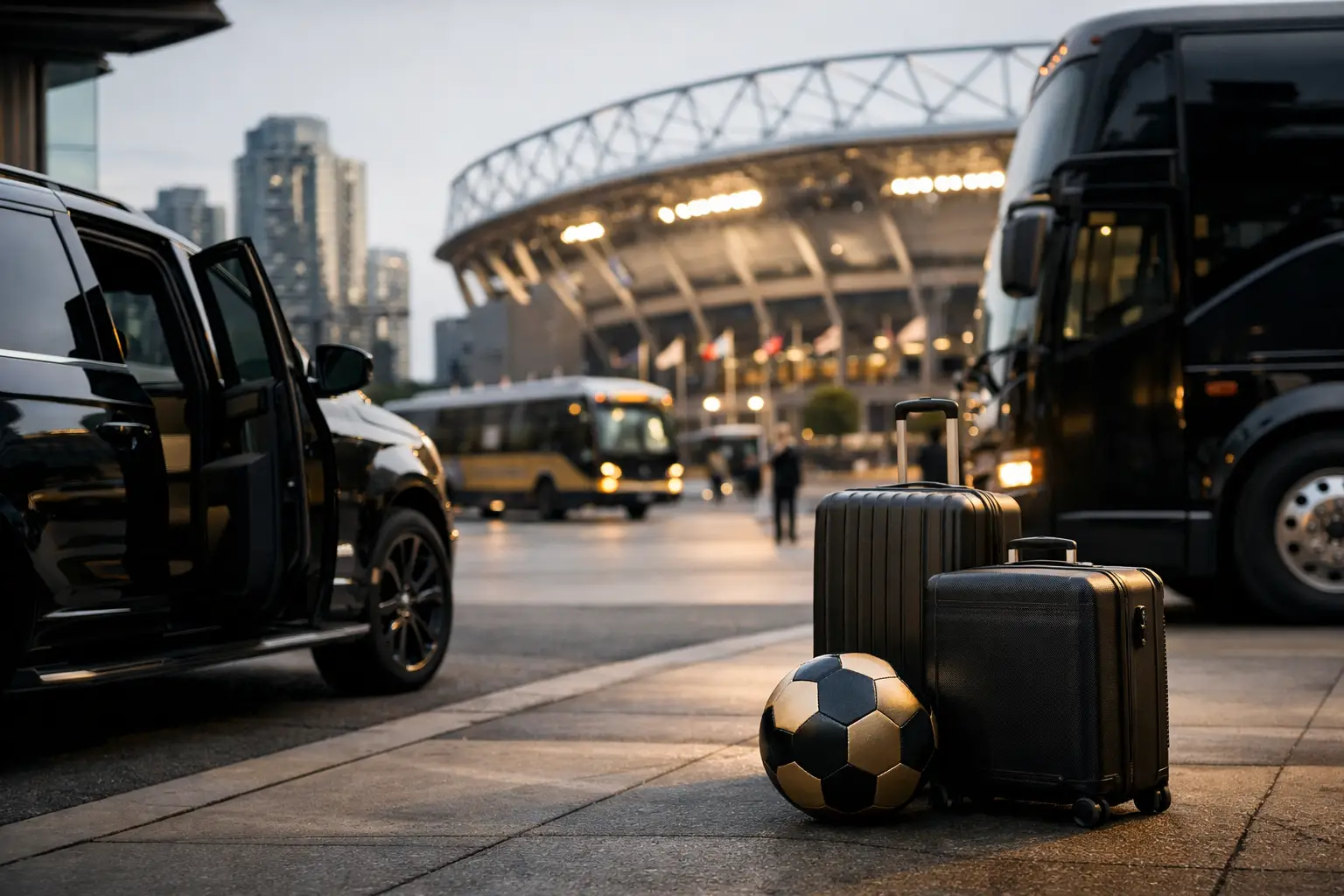
If you plan to be in the city for the tournament, fifa world cup transportation toronto is not something to leave until match day. The pressure points are obvious before you even check a fixture list – airport demand, hotel congestion, road closures, event security zones, and thousands of people moving at the same time toward the same few destinations.
For corporate hosts, private aviation passengers, sponsors, family groups, and international guests, the real issue is not finding a vehicle. It is controlling timing. A missed pickup after a Pearson arrival, an overloaded hotel porte-cochere, or a group split across multiple uncoordinated rides can turn a simple match transfer into a scheduling problem that affects the whole day.
Why FIFA World Cup transportation in Toronto needs planning early
Toronto handles major events well, but the World Cup changes the scale. Hotels fill early. Arrival banks at YYZ and YTZ get tighter. Security around match venues increases buffer time, and downtown traffic does not behave like a normal business day. If you are moving one executive, that matters. If you are moving a delegation, wedding-size family group, or corporate hospitality party, it matters even more.
The first trade-off is flexibility versus certainty. Waiting until the week of a match may leave you with fewer vehicle choices and weaker timing control. Booking too early without a clear itinerary can also create unnecessary revisions. The right approach is to lock in the transport framework early, then refine airport details, passenger counts, and venue timing as your plans firm up.
This is especially relevant for international visitors who assume the city center is compact enough to improvise. Toronto is not difficult, but distances, traffic windows, and event operations make timing less forgiving than many travelers expect.
The main transportation scenarios during the tournament
Most fifa world cup transportation toronto bookings will fall into a few clear categories. Each one has different vehicle and scheduling needs.
Airport arrivals and departures
For many guests, the first transportation decision starts at Pearson YYZ. Tournament periods usually bring heavy terminal activity, longer curbside dwell times, and tighter pickup coordination. Travelers arriving through private aviation terminals such as Skyservice, Signature Aviation, or Skycharter have a different flow, but they still need precise dispatch and chauffeur timing.
A sedan works for one or two travelers with light luggage. A Cadillac Escalade, Chevrolet Suburban, or GMC Yukon XL makes more sense when baggage volume is unpredictable or when a senior executive wants extra space after a long-haul flight. For larger groups, a Mercedes Sprinter Corporate, Ford Transit, or coach avoids the common problem of guests landing together but arriving at the hotel in waves.
Match transfers from hotels, residences, and hospitality venues
This is the highest-pressure movement of the day because everyone is working backward from kickoff. The mistake many visitors make is calculating drive time only. On event days, you also need time for security perimeters, drop-off restrictions, pedestrian congestion, and guest coordination in hotel lobbies.
For couples, VIPs, or small executive parties, the Maybach S 580, BMW 750i, or Rolls-Royce Ghost may fit the occasion. For family groups or hosted clients, Sprinters, stretch limos, and shuttle coaches become more practical. The right vehicle is not just about appearance. It is about keeping the whole group on one schedule.
Multi-stop corporate hosting
Some tournament clients are not only going to the match. They may have airport arrivals, lunch meetings, sponsor events, dinners, and post-match returns on the same day. In those cases, a point-to-point booking may not be enough. Dedicated vehicle blocks with a chauffeur assigned to the group provide better control, especially when guest lists change during the day.
This matters for Bay Street firms entertaining clients, private family offices hosting international guests, and brands running hospitality programs across multiple venues.
Choosing the right vehicle for World Cup travel in Toronto
The right vehicle depends less on the word luxury and more on the passenger mix, luggage, and how fixed the schedule really is.
For one to three passengers, a sedan or flagship car usually covers the job well. A BMW 750i is a clean executive option. A Mercedes-Maybach S 580 suits high-level hosting where cabin comfort and arrival presence both matter. A Rolls-Royce Ghost or Phantom is more occasion-led and may fit VIP hosting, media appearances, or ceremonial arrivals better than everyday transfers.
For families and small groups, SUVs often hit the practical middle ground. An Escalade, Suburban, or Yukon XL gives you room for passengers and luggage without forcing the group into separate vehicles. That is useful when international arrivals are carrying more than standard baggage or when guests include older family members who value easy access and space.
For 7 to 14 passengers, Sprinters are often the strongest option. The Mercedes Sprinter Corporate is suited to business groups. The Jet Interior Sprinter works for smaller VIP parties. The Limo Style Sprinter is more event-focused and fits celebratory group movement. If the group is larger, a 23, 27, or 56-passenger coach brings real operational advantages. One vehicle, one departure time, one arrival plan.
That last point matters more than people think. During a major sports event, simplicity often beats flash. If you are moving 20 or 30 people, a coordinated coach plan is usually smarter than scattering the group across several smaller vehicles.
What makes a chauffeur service different during a major event
During tournament periods, vehicle quality matters, but logistics matter more. A professional chauffeur operation with its own fleet can control dispatch, maintenance standards, chauffeur communication, and backup planning more tightly than a loosely assembled network.
That is one reason many corporate and event clients prefer owned fleets with directly employed chauffeurs. If one itinerary changes, the dispatcher already knows what other vehicles are in rotation, which chauffeur is assigned, and what timing buffers are realistic. That level of control is useful when flights move, hotel check-ins slip, or match-adjacent traffic forces route adjustments.
Platinum Rides has operated from Toronto since 2013 with owned vehicles only and no subcontracting. For World Cup clients, that translates into a clearer chain of responsibility. It does not remove traffic or event restrictions, but it does reduce the number of variables behind the scenes.
Pricing and booking expectations for FIFA World Cup transportation Toronto
Tournament demand usually pushes people to ask the wrong first question. They focus on finding the lowest number instead of clarifying what is actually included. For event transportation, the better question is whether the rate is confirmed in advance and whether the vehicle class matches the group and itinerary.
A flat-rate structure is usually easier to manage than open-ended distance calculations when roads are congested and schedules are tight. With a flat rate confirmed before departure, you know the transport cost in advance, with HST and gratuity handled separately. That gives corporate travel managers, executive assistants, and family planners a cleaner budgeting process.
It is also worth confirming timing assumptions. A direct hotel-to-stadium transfer is different from a booking that includes multiple pickups, waiting time, security delays, and a late-night return after the match. Neither is wrong, but they should not be priced or scheduled as if they are the same job.
Common mistakes visitors make
The most common mistake is underestimating loading time. On paper, 10 guests staying at one hotel sounds simple. In reality, some are in the lobby early, others are still upstairs, one is waiting on luggage, and two want an extra stop. Build that into the plan.
The second mistake is choosing too small a vehicle. Match-day clothing, shopping bags, media gear, and airport luggage add up quickly. A booking that technically fits can still feel cramped and slow if every bag has to be rearranged at each stop.
The third mistake is overcomplicating the fleet. There are times when a Rolls-Royce Phantom or Maybach is exactly the right call. There are also times when a Suburban or Sprinter is the more intelligent choice. The right answer depends on who is riding, what image matters, and how much margin for delay you have.
When to book and what to confirm
As soon as your flights, hotel block, or hosting schedule starts to take shape, transport should be part of the same planning conversation. You do not need every passenger name on day one, but you should know the movement pattern – airport arrival, hotel transfer, match transfer, post-match dinner, or all of the above.
Before confirming, check passenger count, luggage count, arrival terminal, pickup instructions, any children or elderly guests, and whether the booking is point-to-point or vehicle-on-standby. For corporate groups, it also helps to confirm one on-site contact who can make quick decisions if timing shifts.
The World Cup will bring energy, crowds, and a lot of moving parts. The transportation plan that works best is usually the one that looks almost boring on paper – clear pickup times, the right vehicle size, an experienced chauffeur, and enough margin to let the day unfold without panic. That is how you keep attention on the match, not the ride to it.


Leave a Reply