


7 Best Executive Travel Vehicle Options
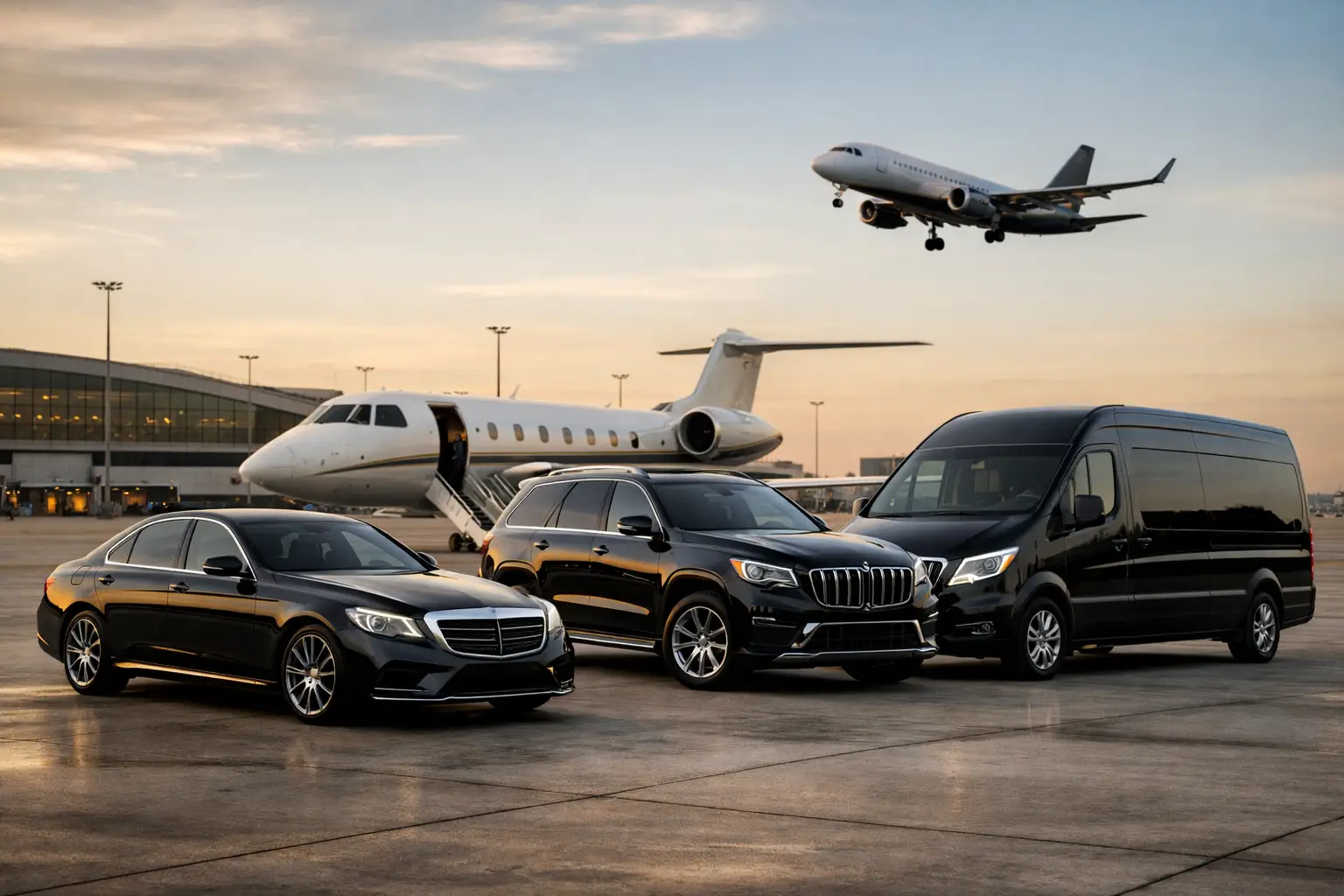
A Bay Street pickup at 6:15 a.m. is not the time to realize the vehicle is wrong for the assignment. The best executive travel vehicle options depend less on badge prestige and more on who is riding, how long they will be in the vehicle, what they need to do en route, and how tight the schedule is.
For an airport transfer to Pearson, a one-person downtown meeting run, and a private aviation arrival at Skyservice, the right answer may be three different vehicles. Executives do not book transportation for the sake of transportation. They book for time control, privacy, presentation, and consistency.
How to choose the best executive travel vehicle options
The first question is not sedan or SUV. It is use case. A senior banker heading from Rosedale to a breakfast meeting may prioritize quiet cabin space and a discreet arrival. A legal team moving between offices and a courthouse may care more about punctual staging and room for bags and documents. A C-suite arrival at Signature Aviation or Skycharter often needs both presence and operational precision.
Trip length matters just as much. For a short urban transfer, a flagship sedan can be the right fit because it moves efficiently through city traffic and keeps the arrival polished without feeling oversized. For Kingston to Pearson, Toronto to Ottawa, or a full day of meetings across Mississauga, Vaughan, and Markham, seat support, rear legroom, ride quality, and luggage capacity start to matter more than appearance alone.
There is also the question of passenger count. Many executive bookings fail at this basic point. A vehicle that feels right for one principal and one assistant can feel cramped once carry-ons, garment bags, presentation materials, or security personnel are added.
Best executive travel vehicle options by use case
1. Executive sedan for solo or two-passenger business travel
A proper executive sedan remains the standard for a reason. Vehicles such as the BMW 750i work well for airport transfers, hotel pickups, dinner transfers, and back-to-back meetings where efficiency matters. They are easy to stage at office towers, private residences, and commercial entrances without drawing unnecessary attention.
For many corporate clients, this is the practical default. It gives a clean professional arrival, comfortable rear seating, and enough trunk space for standard luggage. If the trip is under an hour and the passenger count is low, a sedan often covers the need better than a larger vehicle.
The trade-off is space. If the executive wants to work extensively in the back seat, or if there are multiple checked bags, a sedan can start to feel tight.
2. Maybach-class sedan for senior executives and long transfers
When the rider is a CEO, visiting board member, private aviation passenger, or UHNW client, a Maybach S 580 makes sense because it gives more rear-seat comfort and a more composed ride over longer distances. This category suits airport runs to YYZ, long-distance trips from Toronto to Kingston or Niagara, and higher-level corporate hosting where the vehicle itself is part of the impression.
This is where comfort becomes measurable rather than cosmetic. The extra cabin room, quieter ride, and more accommodating rear seating matter on a three-hour drive. If the passenger is taking calls, reviewing documents, or arriving directly into a meeting, those details count.
The trade-off is cost and scale. A Maybach is not the answer for every executive booking. For short hops with minimal luggage, a standard flagship sedan may be the more sensible choice.
3. Full-size SUV for airport luggage, winter travel, and discreet presence
The Cadillac Escalade, Chevrolet Suburban, and GMC Yukon XL are often the smartest answer for executive ground transportation in Ontario. They handle airport luggage well, offer easier entry for some clients, and provide a more planted ride in winter conditions or on longer highway routes.
For corporate travelers arriving at Pearson with multiple cases, golf clubs, trade show materials, or family members, the SUV category solves problems before they start. It also works well for private aviation pickups where luggage volume is uncertain until wheels down.
An SUV can also be the better choice when the schedule includes multiple stops. If an executive is moving from Yorkville to Union Station, then to a law office, then out to Mississauga, the extra room and commanding ride position tend to make the day easier.
The trade-off is that SUVs are physically larger. In dense downtown settings, some clients still prefer the cleaner footprint of a sedan.
4. Rolls-Royce for executive hosting where arrival matters
Most executive transportation does not require a Rolls-Royce. Some assignments do. If the booking involves hosting an overseas chairman, collecting a private equity principal from an FBO, or moving a keynote guest to a high-visibility engagement, a Rolls-Royce Ghost, Phantom 8 Series, or Cullinan can be the correct tool.
This is not about excess for its own sake. In certain rooms, perception is part of protocol. The vehicle signals that the host took the arrival seriously. That matters for investor relations, private client hospitality, luxury real estate showings, and certain board-level occasions.
Still, this category is highly situational. For regular corporate account work, many firms prefer a lower-profile vehicle. The strongest booking decisions are usually the least emotional ones.
5. Executive sprinter for small teams and roadshows
When three to seven passengers need to move together, the best executive travel vehicle options usually shift from sedans and SUVs to a corporate sprinter. A Mercedes Jet Interior Sprinter works well for executive teams, investor roadshows, production crews, and delegations that need to stay together between meetings.
The key advantage is not just seating capacity. It is continuity. Instead of splitting a group into separate vehicles and managing separate arrival times, one executive sprinter keeps the team coordinated. That becomes especially useful for airport arrivals, site visits, and full-day itineraries with equipment or presentation cases.
For larger teams up to 14 passengers, a Mercedes Sprinter Corporate provides practical group transport without moving into full coach territory. The environment is more businesslike than a social vehicle, which is usually what corporate clients want.
6. Shuttle coach for conferences, plant visits, and corporate groups
Once the group size moves beyond sprinter territory, a shuttle coach is usually the right answer. For 23, 27, or 56 passengers, a coach is less about image and more about execution. It keeps arrival timing controlled, reduces confusion at large venues, and gives a single point of management for the transportation schedule.
This matters for bank off-sites, university leadership visits, hospital administration travel, and manufacturer tours where guests are moving between airport, hotel, office, and event venue. It also matters when there is baggage, signage coordination, or multiple pickup windows.
The mistake many organizers make is waiting too long to move from SUV thinking to coach thinking. If the day involves a real group movement, a proper coach is usually cleaner operationally than trying to patch together multiple smaller vehicles.
7. Specialty executive transport for image-driven occasions
There are executive bookings that sit outside ordinary corporate movement. Client entertainment in Niagara wine country, diplomatic-style hosting, gala arrivals, and heritage events may call for a more distinctive vehicle. In those cases, the vehicle becomes part of the setting.
A vintage 1960 Rolls-Royce Silver Cloud II, for example, would not be the default for airport work or a tight downtown schedule. But for a formal reception, private dinner, or ceremonial arrival, it can be the right fit. The same principle applies to a Rolls-Royce Cullinan when an executive itinerary needs both presence and SUV practicality.
The rule here is simple. Specialty vehicles work best when the occasion has enough visual and social weight to justify them.
What executives usually get wrong when booking
The most common mistake is choosing based on brand name alone. The vehicle that looks strongest in a photo may not be the best vehicle for Pearson luggage volume, cross-border paperwork, winter highway driving, or a 10-hour roadshow.
The second mistake is underestimating staging and chauffeur quality. Vehicle choice matters, but service structure matters more. For executive travel, flat-rate pricing confirmed before departure, direct-employed chauffeurs, and no subcontracting create more predictability than flashy inventory on paper.
That is one reason corporate accounts tend to value fleet depth. If a service owns its vehicles and employs its chauffeurs directly, there is more control over dispatch, maintenance, presentation, and consistency across repeat bookings.
Matching the vehicle to the moment
For one or two executives on a standard city schedule, a flagship sedan is often enough. For airport runs with baggage or winter travel, a full-size SUV usually earns its place. For board-level hosting or private aviation arrivals, a Maybach-class sedan or Rolls-Royce may be justified. For teams, roadshows, and event movements, executive sprinters and coaches solve the coordination problem that smaller vehicles create.
Platinum Rides has built much of its corporate work around that exact reality since 2013. The right vehicle is the one that supports the schedule, the people in it, and the level of discretion the booking requires.
If you are deciding between categories, start with passenger count, luggage, trip length, and the importance of the arrival itself. The right answer usually becomes obvious once you stop choosing for image alone.


Leave a Reply