
A shuttle loop fails long before the first guest misses a ride. It fails when the route is treated as a simple drive from Point A to Point B instead of a moving schedule with loading times, traffic patterns, venue rules, and people who do not leave at the same moment. Strong guest shuttle loop logistics account for those details before vehicles arrive.
For a wedding, conference, gala, or multi-location corporate event, the purpose is simple: give guests a dependable way to move between designated locations without creating a long line, an empty vehicle, or uncertainty about the next departure. The plan behind it is more involved. It requires the right vehicle mix, realistic departure windows, one clear pickup point, and active coordination throughout the event.
Start With the Guest Movement, Not the Vehicle
The first question is not, “How many seats do we need?” It is, “When and where will guests actually need to move?” A loop can serve hotel guests traveling to a ceremony, attendees moving from a conference venue to dinner, or wedding guests returning from a reception to two or three hotels. Each pattern calls for a different operating plan.
A wedding day often has defined pressure points. Guests may need to arrive before a church ceremony, then leave in a concentrated group for the reception. At the end of the evening, departures usually happen in waves rather than all at once. A corporate event may be more evenly paced, especially when a program ends at a set time but attendees remain for networking.
Map the day in both directions. Identify the origin, destination, first guest arrival time, hard event start, expected peak departure period, and final departure. If a ceremony begins at 4:00 p.m., a loop should be designed around guest arrival well before 4:00 p.m., not a vehicle arriving at the door at 4:00 p.m.
Build Around Departure Windows
Fixed departure windows are easier for guests and chauffeurs to follow than an open-ended promise to move people whenever needed. A practical plan might use departures every 20 or 30 minutes during the main arrival period, followed by a different frequency for late-night returns.
The interval depends on passenger volume, drive time, loading conditions, and venue access. A 15-minute route does not create a 15-minute loop. Add time for guests to board, seat belts, luggage or personal items, parking, venue driveway congestion, and the return approach. For many event routes, the full cycle can be double the driving time shown on a map.
It also helps to establish a final scheduled departure and communicate it in advance. Guests are more likely to use the service properly when they know whether the last ride leaves at 11:30 p.m. or 1:00 a.m. A final sweep can be useful, but it should be planned rather than assumed.
Match Capacity to the Peak, Not the Total Guest Count
A 200-person guest list does not automatically require 200 seats at one time. Some guests will drive, some will stay at a different hotel, and some will leave early. Conversely, a 70-person shuttle plan can be underbuilt if most of those 70 guests are expected to depart in the same 30-minute period.
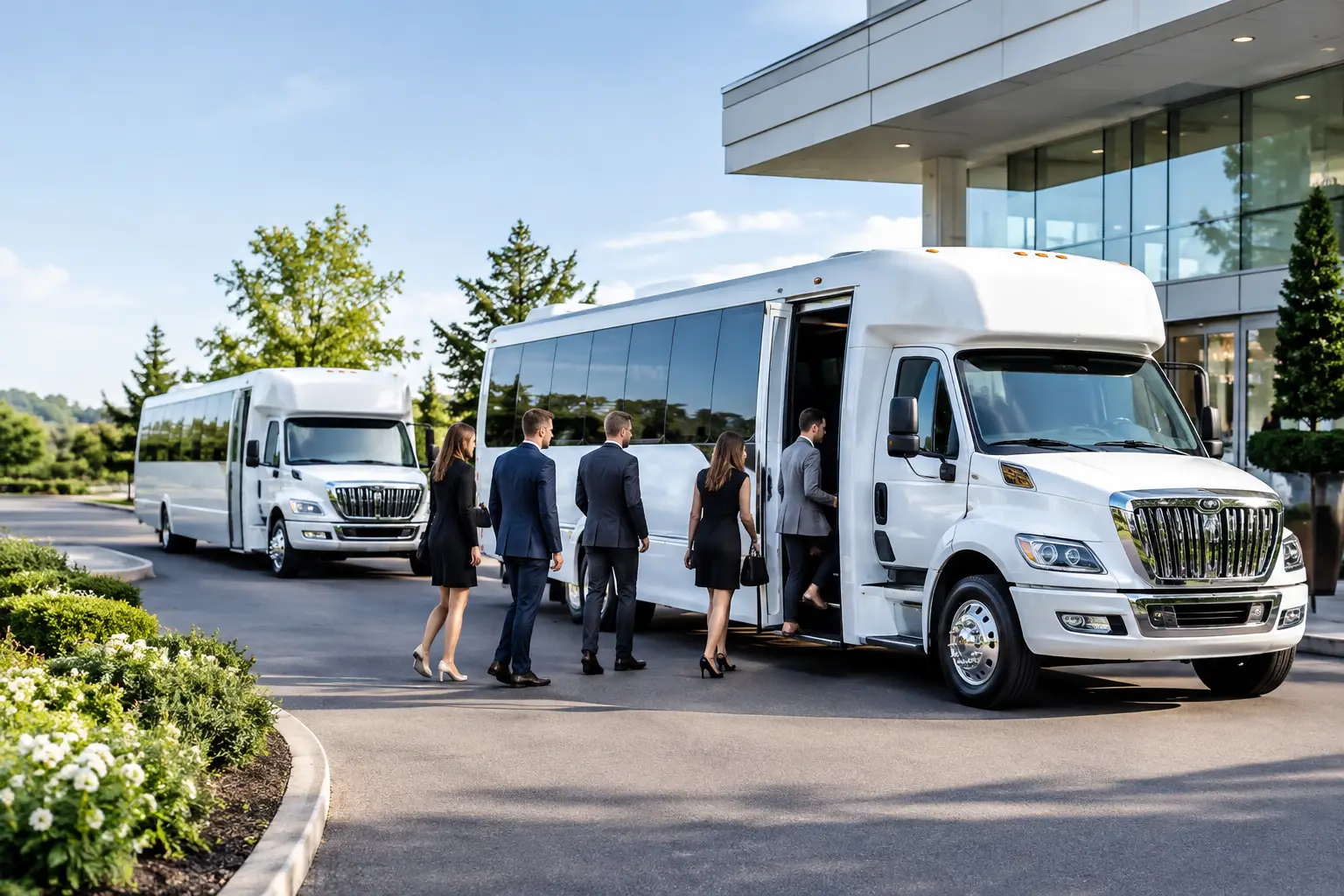
The key number is peak demand. Estimate how many passengers are likely to be waiting during the busiest departure window, then compare that number with the seats available per cycle. A 56-passenger highway coach can move a large group efficiently when access and timing support it. For shorter hotel-to-venue routes or roads with limited turning space, a 23- or 27-passenger coach, 14-passenger Mercedes Sprinter Corporate, or Ford Transit may make more sense.
Multiple smaller vehicles can be the better choice when guests are split among several hotels or when the schedule changes throughout the day. They provide flexibility, but they also require disciplined dispatch. A large vehicle may reduce coordination points, while smaller vehicles can reduce wait times. Neither option is automatically right.
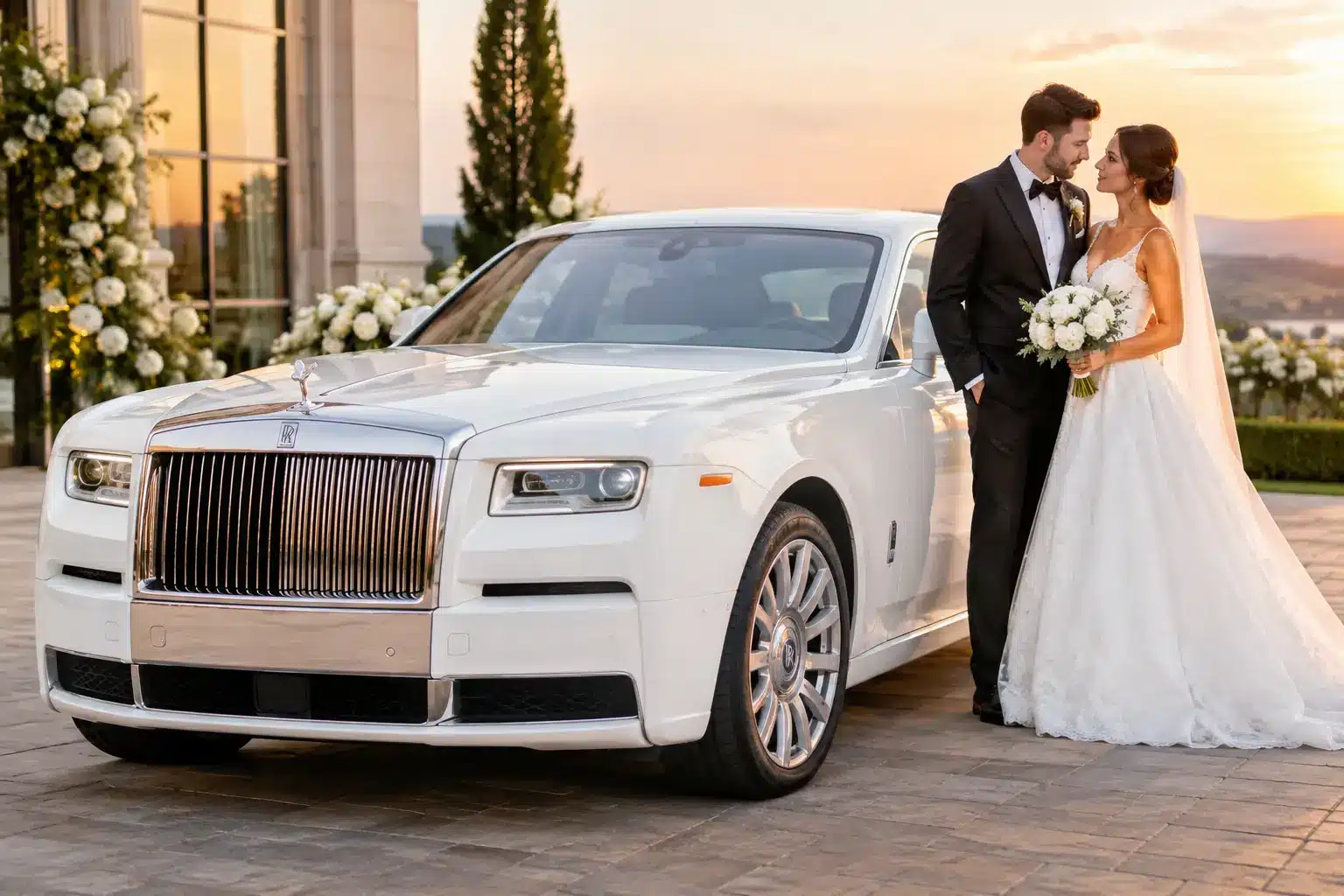
For weddings with a formal vehicle program, keep guest transportation separate from the couple’s transportation whenever possible. A Rolls-Royce Phantom Two-Tone or Rolls-Royce Cullinan may be assigned to the couple, while a Cadillac Escalade, Hummer H2 Stretch, or Mercedes Sprinter Limo Style supports the wedding party and immediate family. Guest loops should have their own operating plan so a delayed photo session does not affect hotel departures.
Choose Pickup Points Guests Can Actually Find
A pickup point should be obvious, legal, and usable by the planned vehicle. “Outside the hotel” is not specific enough. A large hotel may have separate front, conference, and side entrances. A banquet hall may designate a bus lane, a secondary lot, or a driveway that cannot accommodate a coach during peak arrival.
Use a single named pickup location whenever possible, such as the north entrance porte cochere or the marked coach bay beside the ballroom entrance. If the location requires a walk of several minutes, say so clearly. Guests can work with a short walk. What causes problems is discovering it after they have already missed a departure.
Venue confirmation matters especially in Toronto, Mississauga, Brampton, Vaughan, Markham, and downtown corridors where event traffic, construction, and loading restrictions can change the practical route. The transportation team should know where vehicles can stage, whether they can wait onsite, who controls access, and what happens if the driveway becomes blocked.
Give One Person Authority to Make Live Decisions
A loop needs a designated transportation contact. This can be an event planner, venue coordinator, corporate administrator, or a trusted family member who understands the schedule. The contact should be reachable during the event and authorized to answer practical questions: Has the ceremony ended? Are guests being released? Has the reception entrance moved? Does the final return need an extra run?
That person should not be expected to manage every passenger. Their role is to provide timely operational updates. The chauffeur team manages the vehicles; the event contact confirms what is happening inside the venue.
For larger groups, guest-facing instructions should identify the pickup point, operating times, vehicle description, and a contact number for day-of questions. Keep the wording direct. A long itinerary buried in a wedding website or conference email is less useful than a brief, visible schedule sent the day before.
Plan for the Awkward Parts of the Evening
The most difficult part of a guest loop is often the period after the formal program ends. Guests leave at different speeds. Some want to stay for the final song; others need to return early with children or connect to an early flight. A plan based on one large departure can leave the first guests waiting too long and the final guests without a clear option.
Use a staged return schedule when the event allows it. Early rides can serve families and guests with early commitments, followed by regular departures during the main exit period and a final documented departure. If two hotels are involved, determine whether one route should run first or whether separate vehicles are required. Combining hotels may save a vehicle, but it can add enough travel time to frustrate passengers.
Weather and seasonal conditions also change the calculation. Winter boarding takes longer. Rain can crowd a covered entrance. Summer weddings may have guests waiting outside in formal clothing. Build reasonable buffer time into the loop rather than expecting every boarding process to take two minutes.
Confirm the Commercial Details Before the Event
Transportation should be quoted against the actual operating plan: vehicles, hours, route, standby expectations, and any special access requirements. Platinum Rides confirms a flat rate before departure, plus HST and gratuity, rather than adding per-kilometer charges during an event.
Ask what is included in the scheduled service period and how additional time is handled if the event runs late. For corporate accounts, monthly invoicing can simplify repeat transportation planning, but the same routing discipline still applies. A recurring executive event deserves the same attention to venue access and guest-release timing as a wedding.
The right plan does not try to eliminate every variable. Traffic, late speeches, and guest behavior cannot be scripted. Good guest shuttle loop logistics create enough structure to absorb those variables without making guests guess where to go or when the next vehicle will leave. When the schedule is visible, the pickup point is clear, and capacity matches the busiest part of the day, transportation becomes one less issue competing for the host’s attention.