

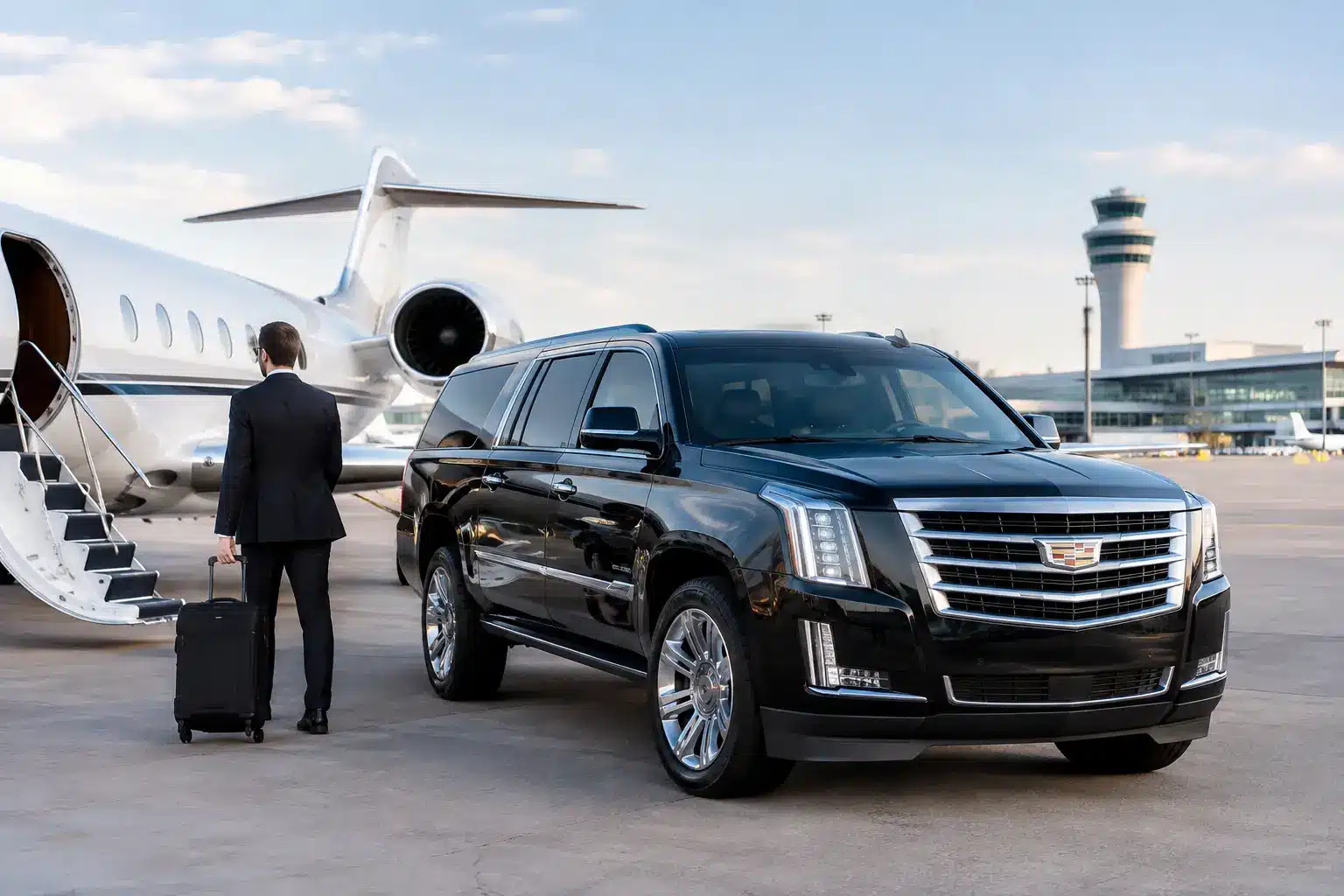
A private aircraft arrival removes many commercial-terminal routines, but it also creates a different set of details that need to be confirmed before wheels touch down. The top FBO pickup considerations are not limited to choosing a vehicle. Terminal authorization, the actual arrival sequence, customs requirements, luggage volume, and a clear communication plan determine whether the ground transfer begins properly.
At Toronto Pearson, private aviation clients may arrive through Skyservice, Signature Aviation, or Skycharter. Each movement should be planned around the specific FBO, not simply the airport code. A formally dressed, licensed chauffeur should know where to report, who is authorized to release passenger details, and where the vehicle can wait without interfering with ramp or terminal operations.
Confirm the FBO, Not Just YYZ
Pearson is a large airport with multiple private aviation facilities. Saying that a flight arrives at YYZ is useful, but it is not enough information to dispatch a chauffeur correctly. Confirm the FBO name, the terminal address or designated entrance, the aircraft tail number, and the expected arrival time. For charter movements, it is also useful to identify the operator or flight coordinator who can provide updates.
Private flight schedules can change for reasons that have little to do with the passenger. Air traffic flow, weather en route, fuel stops, crew duty limitations, and ramp coordination can move an arrival forward or back. A ground transportation plan should account for that possibility without assuming that the published itinerary is fixed.
For a corporate executive arriving from New York, Montreal, or Detroit, the relevant pickup point may be straightforward. For an international arrival requiring customs processing, the timing is less certain. The chauffeur should be in position based on the flight plan, while the booking contact and FBO team confirm when passengers are cleared to depart the facility.
Use the tail number as the operational reference
A tail number is often more useful than a flight number in private aviation. It allows the FBO, flight department, and ground transportation coordinator to identify the actual aircraft movement even if the schedule changes. Provide it at booking whenever it is available, then update the chauffeur service if the aircraft changes.
This is particularly helpful when several company aircraft or charter flights are arriving during the same period. It reduces the chance of matching a passenger with the wrong arrival estimate.
Plan for Customs and Arrival Timing
An FBO pickup should be scheduled around the passenger release time, not merely the aircraft landing time. Domestic arrivals may move quickly from aircraft to terminal. International arrivals can require customs and immigration procedures, agricultural declarations, baggage inspection, or additional review. The time required varies by passenger, flight origin, and border agency activity.
The practical approach is to provide both the estimated wheels-down time and a contact who can confirm clearance. A chauffeur can be staged near the FBO according to its access rules, then proceed when the passenger or coordinator confirms they are ready. This avoids asking travelers to wait outside with luggage while also avoiding unnecessary circulation around a restricted facility.
For executives who prefer limited calls and messages after a long flight, designate one assistant, family office representative, flight coordinator, or corporate travel manager as the point of contact. The chauffeur service can communicate with that person while the passenger completes arrival formalities.
Match the Vehicle to the Actual Transfer
Vehicle selection for an FBO pickup should reflect the passenger count, luggage, destination, and level of privacy required. The right choice is often practical rather than ceremonial.
A Mercedes-Maybach S 580 or BMW 750i suits one or two executives traveling light to a downtown Toronto meeting, Yorkville hotel, or private residence. A Cadillac Escalade, Chevrolet Suburban, or GMC Yukon XL is often the stronger option when passengers have several cases, golf equipment, presentation materials, or winter outerwear. It also gives a family or executive team more room after a long flight.
For an arriving principal traveling with security personnel, colleagues, or family members, separate vehicles may be more appropriate than placing everyone in one SUV. This gives the principal a quieter cabin and provides more dependable luggage capacity. It also avoids the awkward last-minute decision of trying to fit carry-ons and garment bags into an already full vehicle.
Groups require a different calculation. A 14-passenger Mercedes Sprinter Corporate can work well for a visiting management team, while a 23-, 27-, or 56-passenger coach may be suitable for a larger corporate delegation. Passenger capacity is only part of the decision. Confirm the number and type of bags, whether anyone has mobility considerations, and whether the group needs to make separate stops after leaving Pearson.
A Rolls-Royce Ghost or Rolls-Royce Cullinan can be appropriate for a principal, a wedding couple arriving by charter, or a client hosting a significant guest. The trade-off is luggage space. When baggage is substantial, arrange a support SUV or choose the Cullinan rather than relying on assumptions about what will fit.
Top FBO Pickup Considerations for Access and Security
FBO facilities operate under airport security rules that differ from a hotel driveway or office entrance. The chauffeur may not have the same access as flight crew, passengers, or an aircraft operator. Pickup procedures can change based on the terminal, time of day, aircraft position, construction activity, or security direction.
Confirm the permitted vehicle waiting area and passenger handoff point before the date of service. If terminal-side access is not available, passengers should know exactly where they will meet the chauffeur. A vague instruction such as meet outside can create confusion at a facility where several doors, ramps, and private entrances may be in use.
For high-profile clients, share only the information required to operate the transfer. Passenger names, mobile numbers, arrival details, and destination addresses should be handled carefully. An NDA-secured booking may be requested when privacy requirements call for it. The chauffeur should receive the information needed to identify the party and complete the transfer, not unnecessary personal details.
It is also wise to decide in advance how recognition will work. Some clients prefer the chauffeur to check in with FBO reception, while others want a discreet text to an assistant after the vehicle is in position. A name sign may suit a visiting executive who has not met the driver, but it may not suit a private individual seeking a lower-profile departure.
Build a Communication Plan That Works on the Ground
A clear communication chain matters more than frequent messages. Before arrival, confirm who can authorize changes, which mobile number should receive updates, and whether the passenger wants direct contact. For an executive assistant managing several moving parts, one concise confirmation when the chauffeur is staged and another when the passenger is onboard is often sufficient.
The chauffeur should also have the complete destination, including the correct building entrance where applicable. Downtown Toronto towers, private clubs, hotel porte-cocheres, and residential properties can all have different preferred drop-off points. A client heading directly to a board meeting may need the office entrance, while a passenger returning to Bridle Path or Rosedale may have gate or driveway instructions that should be shared in advance.
If the transfer includes a stop, identify it during booking. A quick stop for documents, a colleague, or a hotel check-in can affect vehicle timing and routing. It is easier to plan that movement before the flight arrives than to change the schedule while the chauffeur is waiting at the FBO.
Confirm Pricing and Service Scope Before Departure
Private aviation schedules can be fluid, so the service scope should be clear before the day of travel. Confirm whether the booking is a one-way FBO transfer, a round trip with a later return, or a vehicle on standby for meetings. If an aircraft is diverted to Hamilton, Buffalo, or another airport, the transportation plan may need to change materially.
Platinum Rides confirms a flat rate before departure, plus HST and gratuity, rather than charging by the kilometer. That gives the booking contact a defined starting point for the planned itinerary. If the arrival airport, waiting requirements, or destination changes, the revised scope should be confirmed promptly rather than assumed.
For corporate accounts, monthly invoicing can simplify repeated executive movements, but trip details still matter. An account profile should not replace current flight information, passenger count, or FBO confirmation. The most reliable operating notes are the ones reviewed for each movement.
A properly planned FBO pickup is quiet, precise, and prepared for normal aviation variables. Share the terminal, tail number, passenger count, luggage profile, destination, and point of contact early. Those few details give the chauffeur room to focus on the arrival rather than solve preventable questions at the curb.