
The baraat cannot wait because a vehicle was assigned to the wrong group. When you plan Sikh wedding transportation, the practical question is not simply which vehicle looks right in photos. It is how every person reaches the Gurdwara, portrait location, and reception in the correct order, with enough time for the family moments that do not run on a fixed schedule.
A Sikh wedding often involves several generations, a full bridal party, ceremonial arrivals, and a reception that may be at a different venue. Transportation needs a written plan that respects the day’s religious setting while keeping the movement of people organized.
Start With the Sikh Wedding Timeline
Begin by confirming the actual order of events with the couple, families, Gurdwara coordinator, and wedding planner. An Anand Karaj schedule can differ from one family to another. The baraat may have a short procession at the entrance, or it may involve a larger gathering and music. The couple may also schedule portraits before the ceremony, after the ceremony, or between the Gurdwara and reception.
Do not build the vehicle schedule only around the invitation time. Set separate arrival targets for the groom’s party, the bride and her immediate family, the couple, bridal party, parents and grandparents, and guests requiring group transportation. A chauffeur should receive the correct pickup address, entrance, contact person, and requested arrival time for each movement.
Allow a meaningful buffer before the ceremony. Traffic in Brampton, Mississauga, Vaughan, Markham, and North York can change quickly on a weekend, but the bigger issue is often loading time. Formalwear, children, elders, bouquets, photo equipment, and multiple pickups all take longer than a standard point-to-point trip.
Confirm Gurdwara Access and Etiquette
Ask the Gurdwara about the appropriate arrival entrance, passenger drop-off point, parking rules, and whether a baraat procession has a designated route. A chauffeur service can manage vehicle positioning, but the family or venue should confirm what is permitted on site.
Guests entering the Darbar Sahib will generally need to remove shoes and cover their heads. Chauffeurs remain focused on vehicle operations, but transportation planning should account for the time guests need to prepare before entering. Avoid scheduling a ceremony arrival so tightly that family members are rushing through these important steps.
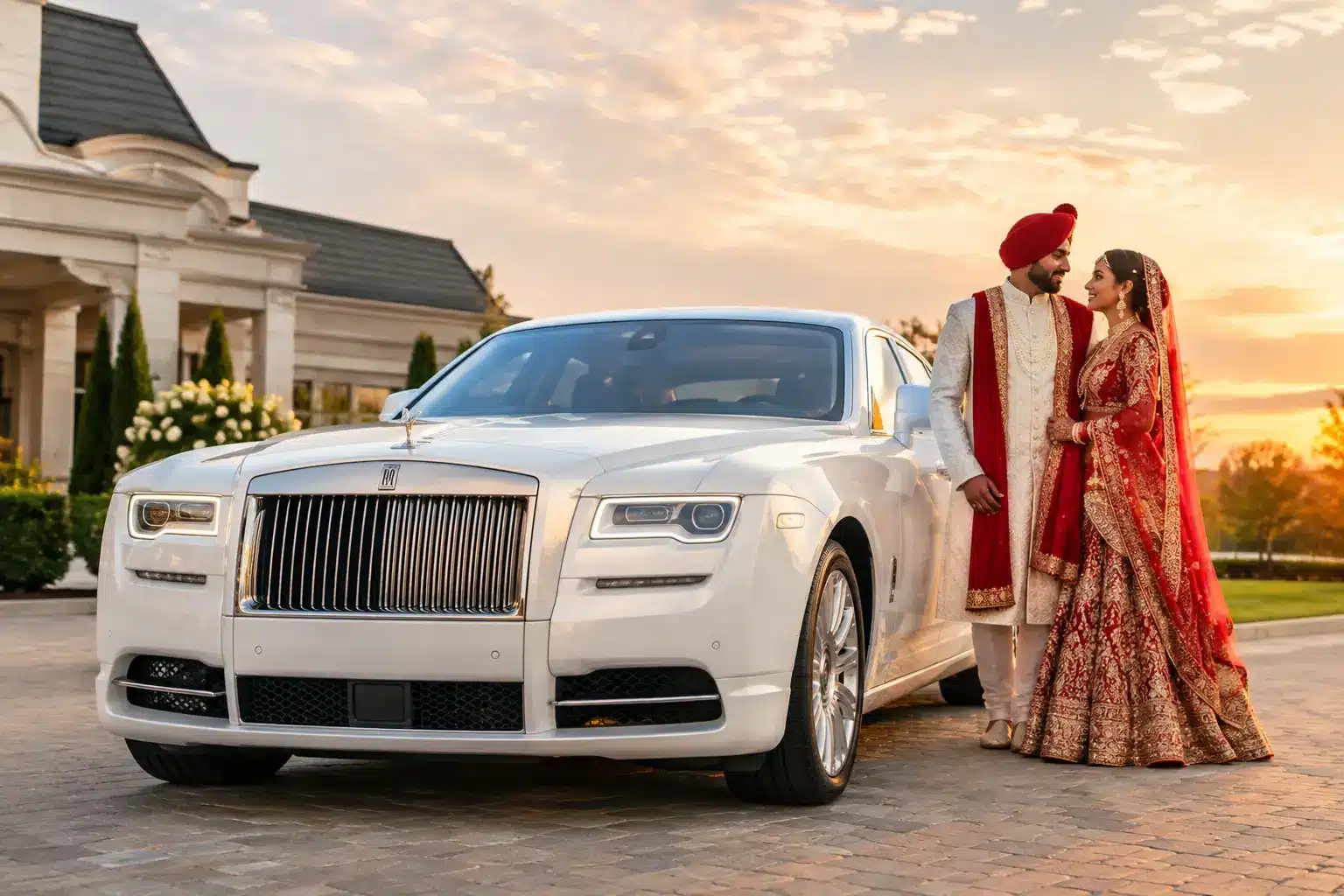
If the couple wants a Rolls-Royce arrival, confirm where photographs can take place without blocking access for elders, guests, or regular Gurdwara activity. The vehicle should support the day, not become an obstacle at the entrance.
How to Plan Sikh Wedding Transportation by Group
The strongest plans separate people by role rather than trying to fit everyone into one large vehicle. The couple, immediate family, bridal party, and out-of-town guests have different schedules and different priorities.
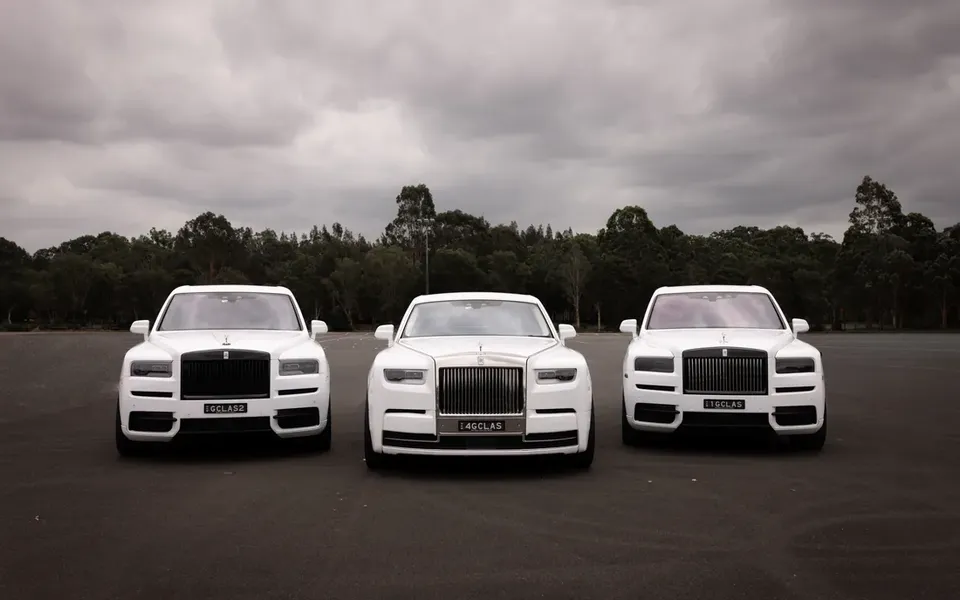
For the couple, a Rolls-Royce Phantom Two-Tone, Rolls-Royce Phantom 8 Series, Rolls-Royce Ghost, or Rolls-Royce Cullinan creates a composed arrival and gives photographers time with the vehicle. The 1960 Silver Cloud II is a distinct option for couples who want a vintage look, though it is better suited to a carefully timed, shorter movement than a full day of repeated transfers. A Mercedes-Maybach S 580 is another strong choice when a formal sedan is preferred.
For a bridal party, a Cadillac Escalade, Chevrolet Suburban, GMC Yukon XL, Lincoln Navigator Stretch, or Hummer H2 Stretch can make sense depending on party size, attire, and the number of stops. The Hummer H2 Stretch accommodates up to 18 passengers, but confirm access and turning space at every location before assigning it to a downtown hotel, Gurdwara, or banquet hall.
Family transportation often needs more attention than the couple’s vehicle. A Mercedes Sprinter Limo Style or Corporate Sprinter carries up to 14 passengers and works well for parents, siblings, and close relatives traveling together. For larger groups, party buses seating 22, 28, 34, or 50 passengers, along with 23-, 27-, and 56-passenger coaches, can reduce the number of separate arrivals.
A practical division might be the couple in a Rolls-Royce Cullinan, the bridal party in a Hummer H2 Stretch, immediate family in a Sprinter, and extended family or hotel guests in a coach. That structure is not required for every wedding. A smaller Anand Karaj with a nearby reception may need only two or three vehicles. A large celebration with guests arriving from multiple hotels may need a more detailed shuttle schedule.
Build the Baraat Plan Around Movement, Not Just Music
The baraat is one of the most visible transportation moments of the day. It can also create the most confusion if the groom, family, musicians, guests, and vehicles arrive at different times without a clear meeting point.
First, determine whether the groom will arrive in the same vehicle as family members or separately. A Rolls-Royce Ghost or Cullinan offers a formal groom’s arrival, while a Cadillac Escalade may be more practical if close family members travel together. The decision depends on the procession format, photography plan, and how much time is available at the Gurdwara entrance.
Next, set a staging time before the scheduled baraat start. The chauffeur should know whether to hold at a nearby location, pull directly to the entrance, or arrive after the guests have gathered. This prevents a vehicle from sitting in the wrong place while the procession forms.
Keep the departure plan equally clear. After the Anand Karaj and langar, some guests may leave directly while the couple and wedding party stay for photos. Assigning one vehicle to every person for the full day is sometimes inefficient. A coach can return guests to a hotel while the couple’s vehicle and bridal party transportation remain available for portraits and the reception.
Plan the Gap Between Ceremony and Reception
The interval between the Gurdwara and reception is where schedules often slip. Family photo lists run long. Elders may need a direct ride home or to the reception. The bridal party may need a stop for photos. Guests may have several hours before cocktail hour.
Map every route before booking. Include the ceremony address, photo location, reception venue, hotel blocks, and any home pickups. Then identify which passengers must move immediately and which can travel later. This avoids sending a full bus to the reception too early while leaving key family members without transportation.
For weddings with a large guest count, use departure waves. The first wave can transport elders and immediate family after the ceremony. A later group can leave after portraits or langar. If the reception is in Hamilton, Guelph, Niagara-on-the-Lake, or another destination beyond the ceremony city, make the travel time part of the wedding-day schedule rather than treating it as a blank gap.
A professional chauffeur service should provide a named point of contact for the operational schedule and keep the vehicle assignment clear. Platinum Rides provides formally dressed, licensed chauffeurs for every booking, with flat rates confirmed before departure, plus HST and gratuity. That matters when the day includes multiple vehicles and several changing pickup points.
Give Every Chauffeur the Same Information
A transportation plan is only useful if every driver has the current version. Create one itinerary with the date, passenger group, pickup time, pickup address, destination, vehicle, lead contact, and planned departure time. Include notes such as “groom’s family,” “parents and grandparents,” or “return after reception” so no one has to interpret vague instructions on the day.
Share the itinerary with the couple, planner, family coordinators, and transportation provider several days before the event. Then designate one decision-maker for day-of changes. When five relatives call five chauffeurs with different instructions, delays become much more likely.
Also account for personal belongings. Garment bags, gifts, overnight bags, and decor can quickly fill a vehicle. If the bridal party has substantial wardrobe changes or photo props, choose a vehicle with suitable space rather than assuming passenger capacity tells the whole story.
Questions to Settle Before You Book
Before confirming service, make sure you can answer these questions:
- What are the exact ceremony, portrait, and reception addresses?
- Who is traveling in each vehicle, and which guests need assistance with mobility?
- Does the Gurdwara have specific drop-off, parking, or procession requirements?
- Will the bride and groom leave the ceremony together, separately, or after photos?
- Which guests need a return trip to a hotel or home after the reception?
- Who has authority to approve schedule changes on the wedding day?
The answers shape the vehicle count and timing more than the guest total alone. A 250-person Sikh wedding with most guests driving independently may need fewer vehicles than a 100-person wedding with hotel guests, elders, and a reception across the region.
The goal is not to over-schedule every minute. Leave room for family photographs, greetings, and the natural pace of the Anand Karaj. A clear transportation plan gives the family more space to be present for those moments while chauffeurs handle the movement between them.