
A wedding chauffeur cannot be expected to know your ceremony timing simply from the pickup address and vehicle selection. So, do wedding chauffeurs know ceremony timing? They should know it when the booking has been properly planned, the itinerary has been shared, and a coordinator or family contact can confirm changes on the day.
That distinction matters. A chauffeur’s job is not to guess when the vows will end or when a receiving line will run long. Their job is to understand the schedule, position the vehicle correctly, monitor the agreed timing, and move the couple, family, or wedding party according to the plan.
What a Chauffeur Should Know Before the Wedding
A professional chauffeur should receive more than a ceremony start time. For transportation planning, the useful schedule begins with the first pickup and continues through the final drop-off. It should identify pickup locations, the ceremony venue, reception venue, photo locations, passenger groups, and the contacts authorized to make decisions.
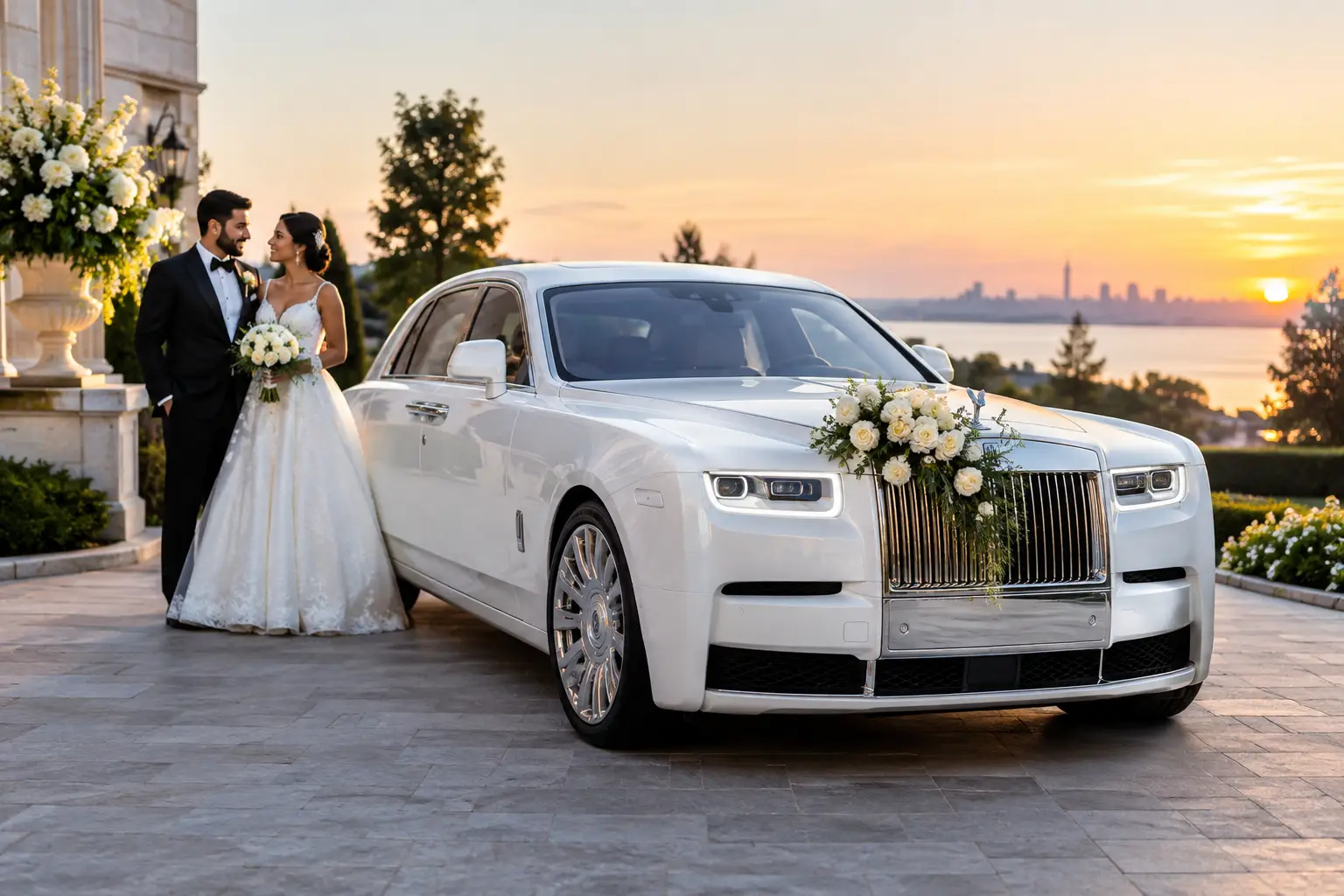
The ceremony start time is only one part of that plan. A 2:00 p.m. church ceremony may require the couple to arrive at 1:30 p.m., while a banquet hall ceremony may require an earlier arrival for photographs, family greetings, or venue access. If the bridal party is traveling in a Hummer H2 Stretch or Mercedes Sprinter Limo Style while the couple uses a Rolls-Royce Phantom Two-Tone, each vehicle may have a different pickup sequence and arrival target.
A clear itinerary should also state whether the vehicle is staying on site, moving to a nearby holding area, or leaving after drop-off and returning later. This affects how quickly the chauffeur can respond if the ceremony finishes early or family photos run late.
Ceremony Time Is Not the Same as Departure Time
Many wedding delays are not caused by traffic. They happen because a schedule treats every event as though it starts and ends precisely on cue.
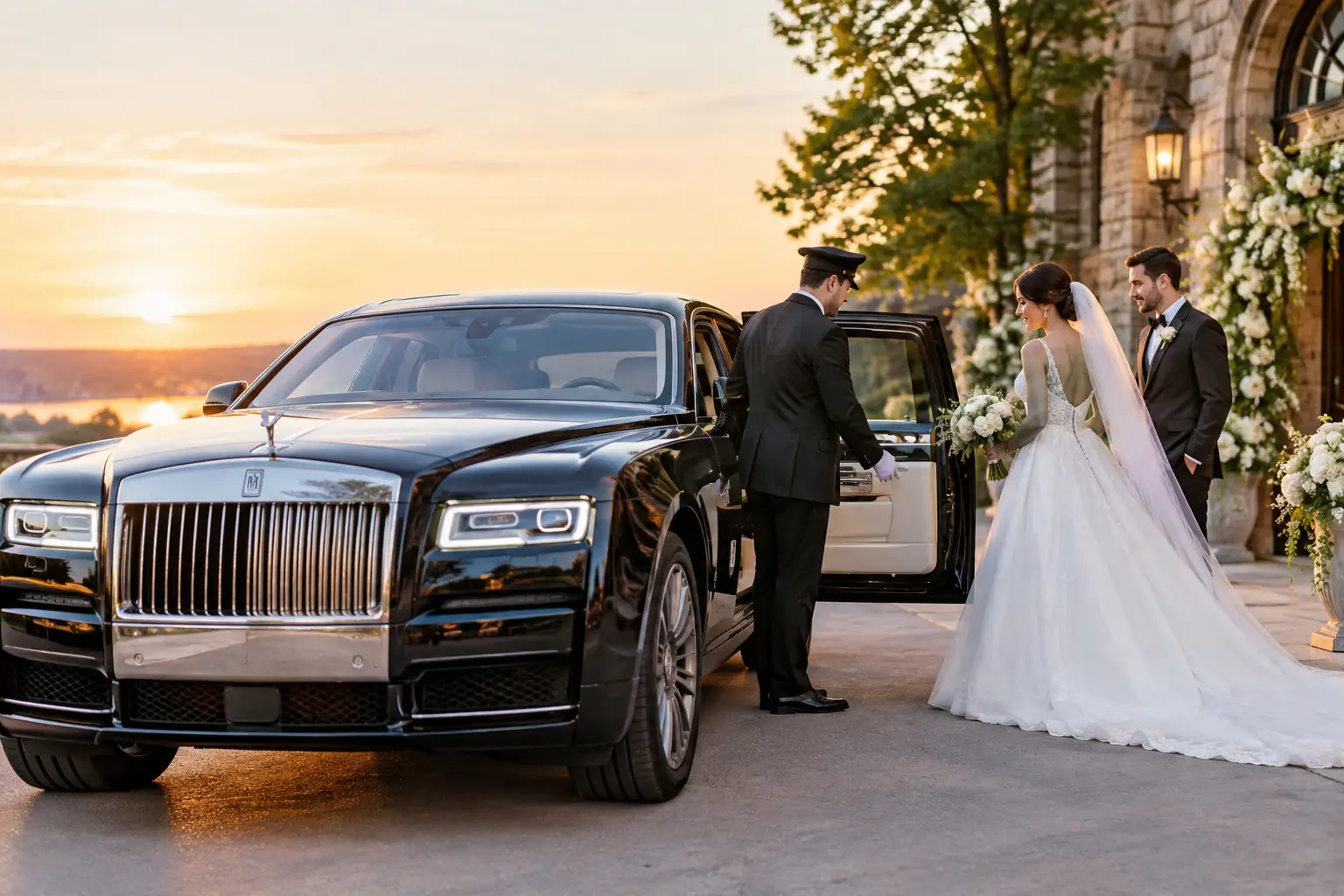
A chauffeur needs to know when passengers must be ready to enter the vehicle, not just when they hope to leave. A five-minute delay getting a bridal party into a stretch limousine can become fifteen minutes once dresses, flowers, photographs, elevator access, and building entrances are involved. For a larger group traveling by party bus or coach, boarding takes longer still.
The same applies after the ceremony. Guests may remain in the aisle for photographs. Parents may need assistance getting to the vehicle. The couple may be pulled into greetings before they leave for portraits. A practical wedding itinerary includes a time range for these transitions rather than a single rigid minute.
For example, instead of writing, “Depart church at 3:15 p.m.,” write, “Couple expected to exit between 3:10 and 3:25 p.m.; proceed to photo location after confirmation from coordinator.” That gives the chauffeur useful operational direction without forcing the wedding party to rush a meaningful moment.
Cultural Ceremonies Need Specific Timing Notes
Ceremony timing can be particularly nuanced at multicultural weddings. The transportation plan should reflect the actual order of events, not a simplified version of the day.
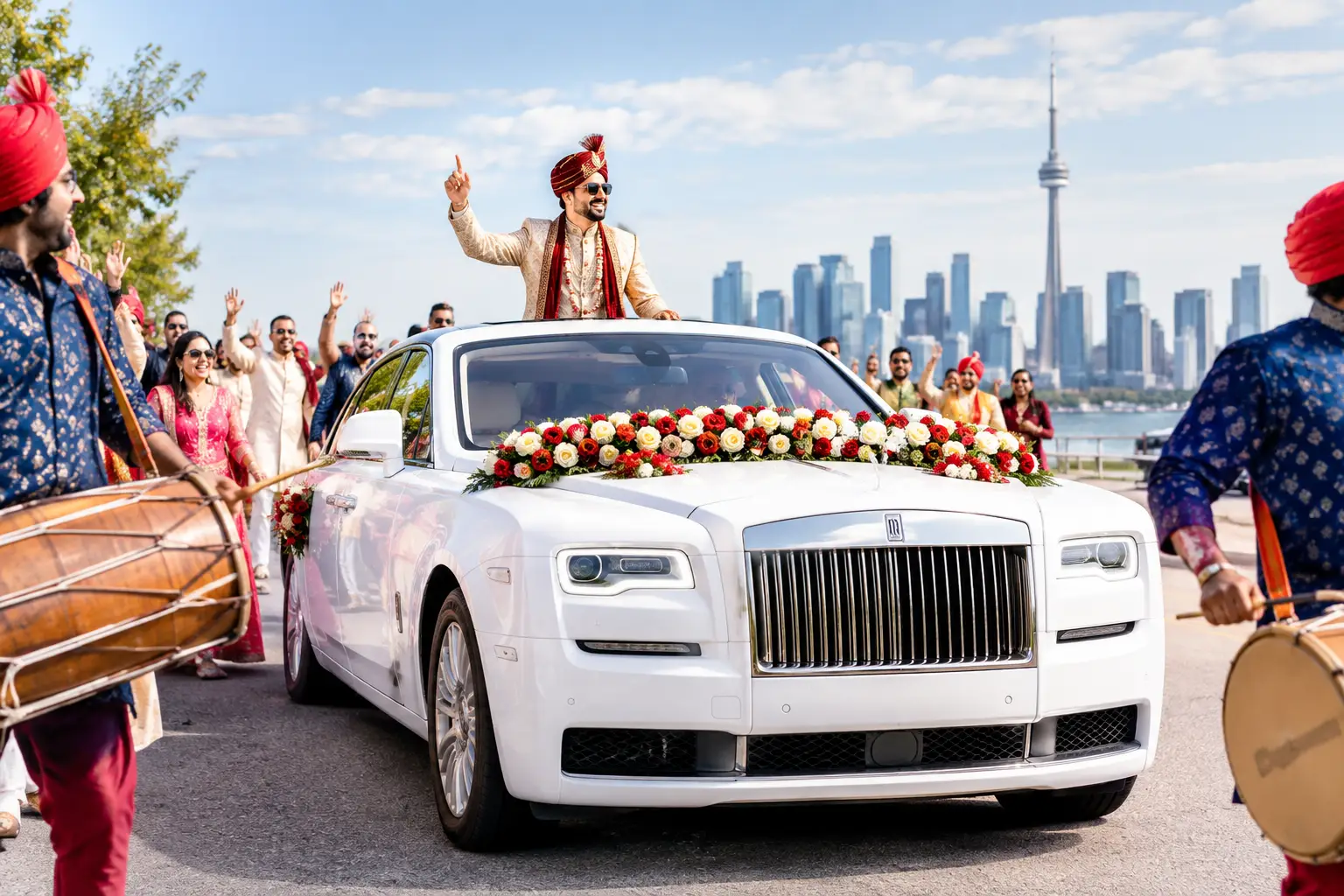
At a Sikh or Punjabi wedding, the baraat arrival, family greetings, and entrance sequence may affect where the couple’s vehicle waits and when the bridal party should arrive. A Hindu ceremony may be structured around a muhurat, with timing that requires close coordination between family, priest, planner, and venue. A Pakistani Nikkah can involve separate arrival patterns for close family and the couple. A Persian Sofreh Aghd setup may require the couple and immediate family to be in place before guests enter.
Chinese tea ceremonies often add a second location before the main ceremony, sometimes with different passenger groups traveling separately. Italian church-to-reception logistics can require careful staging when family vehicles, photographers, and a formal convoy all depart within a short window.
The chauffeur does not need to direct these traditions. They do need to understand what the schedule means for vehicle access, pickup order, waiting time, and the person who will give the go-ahead. A short planning conversation before the wedding can prevent assumptions that create avoidable confusion later.
Who Should Give Timing Updates on the Day?
There should be one designated transportation contact for each key movement. It may be the wedding planner, maid of honor, best man, parent, venue coordinator, or another reliable family member. What matters is that the chauffeur knows who is authorized to confirm a schedule change.
Without a designated contact, a chauffeur may receive different instructions from several well-meaning relatives. One person may ask the vehicle to pull forward, another may say the couple is still taking photos, and a third may request an additional stop. Those decisions can affect the rest of the schedule, especially when multiple vehicles are operating.
For a multi-vehicle booking, it is useful to name one overall transportation lead and one contact for each passenger group. The couple’s vehicle, family Sprinter, bridal-party limousine, and guest coach should not be coordinating independently through a group chat full of changing messages.
How Chauffeurs Plan for Real Wedding-Day Conditions
Experienced wedding chauffeurs account for the time that exists around the ceremony. They consider venue entrances, loading zones, parking restrictions, traffic patterns, road closures, weather, and the distance between ceremony, photo, and reception locations.
Toronto weddings can have additional access considerations at hotels, private residences, downtown churches, and banquet halls in Mississauga, Brampton, Vaughan, Markham, or Hamilton. A large vehicle may need a different pickup position than a sedan. A Rolls-Royce Ghost or Mercedes-Maybach S 580 can often approach a venue entrance differently than a 50-passenger party bus or 56-passenger coach.
That is why a vehicle choice should follow the itinerary, not just the number of seats. A Cadillac Escalade may be appropriate for immediate family moving between a hotel and ceremony. A Mercedes Sprinter Corporate can keep a larger group together for a longer transfer. A couple may choose a Rolls-Royce Cullinan when the day includes several venue transitions and formal photo stops.
The right assignment also considers passenger comfort, attire, and boarding. A vehicle that technically seats a group may not be the practical choice when formalwear, bouquets, elderly relatives, or young children are part of the plan.
Questions to Ask Before You Confirm Transportation
Before finalizing wedding transportation, ask the chauffeur service how it collects timing details and handles itinerary revisions. You are looking for a planning process, not a vague promise that everything will work out.
Confirm the pickup times, required arrival times, all addresses, passenger count by vehicle, and whether each vehicle stays or returns later. Ask where vehicles will wait during the ceremony and photographs. Confirm the named day-of contact and make sure that person has the chauffeur service’s dispatch number.
It is also wise to discuss overtime or additional stops before the wedding. Ceremony timing can shift for valid reasons, and a clear understanding of the booking terms avoids a difficult conversation when everyone should be focused on the celebration. At Platinum Rides, pricing is confirmed as a flat rate before departure, plus HST and gratuity, so the itinerary should be as complete as possible before the date.
Build a Transportation Timeline That Can Absorb Change
The strongest wedding transportation schedule is detailed but not brittle. It sets firm times for the moments that cannot move, such as venue access, ceremony arrival, and reception entrance. It leaves reasonable breathing room around photographs, family greetings, and post-ceremony boarding.
Share the final itinerary with the chauffeur service several days before the event, then provide only meaningful changes on the day. If the ceremony begins twenty minutes later than planned, communicate the new expected exit time and whether the photo location or reception arrival must change as well. A single update with clear direction is more useful than a stream of partial messages.
Your chauffeur should know the ceremony timing because you have given them the full context behind it. When the transportation plan reflects the real structure of the day, the vehicle becomes one less detail for the couple and their families to manage while the celebration is underway.