
A Kingston Pearson transfer example is most useful when it starts with the details that affect the day: the flight time, the pickup address, the number of passengers, luggage, and whether the booking is headed to Pearson YYZ or leaving it. Kingston and Toronto Pearson are roughly a three-hour drive apart in normal conditions, but airport travel should be planned around more than drive time alone.
For an early international departure, a Kingston pickup often needs to happen well before sunrise. For a late arrival at Pearson, the focus shifts to flight monitoring, terminal coordination, and getting passengers home or to a Kingston hotel after a long day. A professionally chauffeured transfer gives the itinerary one accountable point of contact from curb to terminal.
A Kingston Pearson Transfer Example, Step by Step
Consider a Queen’s University faculty member traveling from a residence near downtown Kingston to Pearson for a 10:45 a.m. international flight. The traveler has one checked suitcase, a carry-on, and a laptop bag. They want time to check bags, clear security, and reach the gate without compressing the morning schedule.
The booking begins with the flight number, airline, departure terminal, pickup address, passenger count, and luggage count. Based on a three-hour road transfer and the airline’s recommended arrival time, the chauffeur service may schedule a 4:45 or 5:00 a.m. pickup. That allowance recognizes that Highway 401 traffic, construction, weather, and airport activity can change the day. It is planning, not a promise that every road condition will be identical.
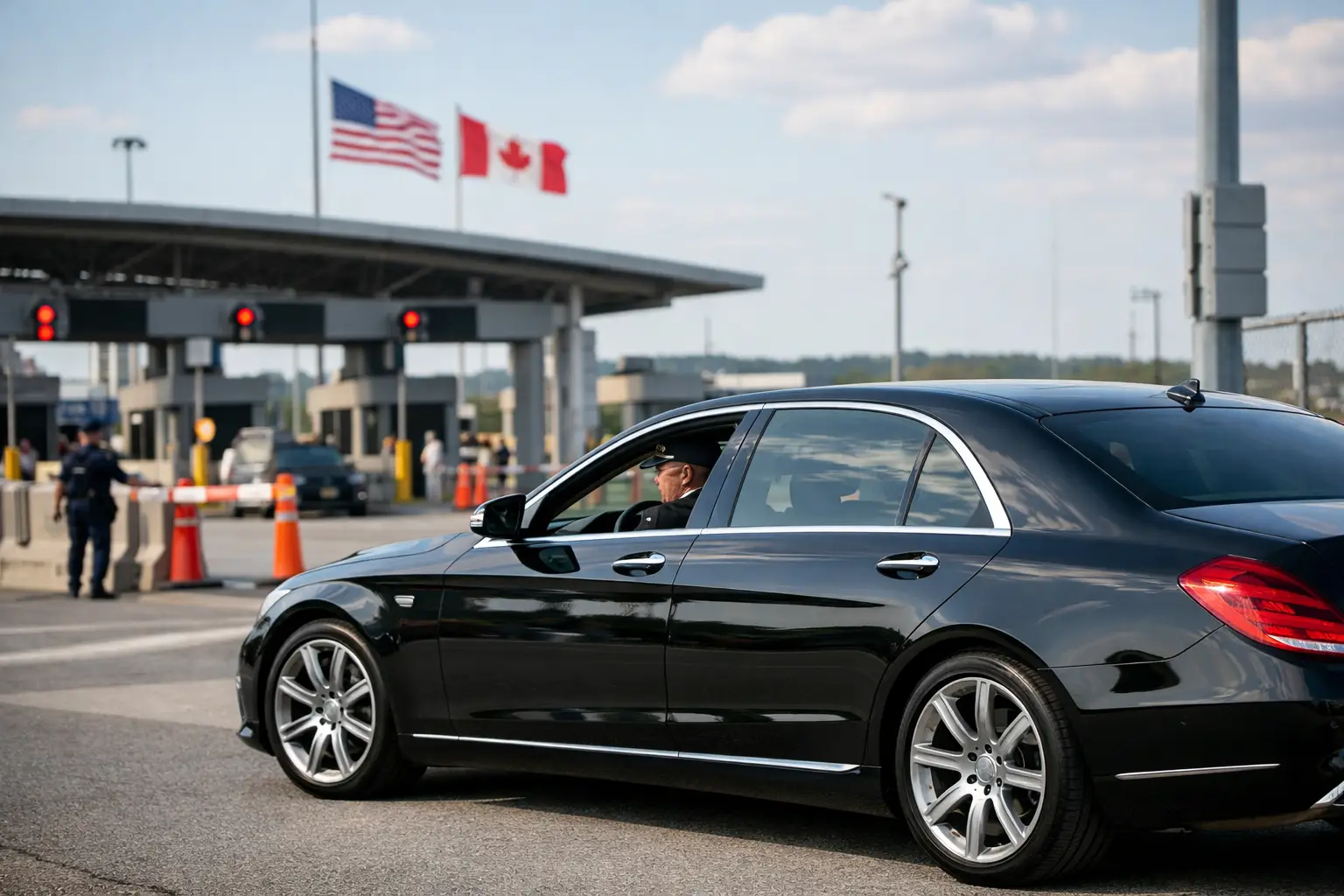
A formally dressed, licensed chauffeur arrives at the specified address, assists with luggage, and proceeds toward Pearson. The vehicle is reserved for the party rather than shared with other airport passengers. The route may vary according to road conditions, but the purpose stays the same: deliver the traveler to the appropriate Pearson terminal with enough time for the airport process.
For this type of booking, a Mercedes-Maybach S 580 suits one or two passengers who value a quiet cabin and room to work between Kingston and Toronto. A Cadillac Escalade, Chevrolet Suburban, or GMC Yukon XL is often more practical when there are multiple travelers, larger luggage, or equipment cases. Vehicle selection is not just about appearance. It should reflect passenger count, baggage volume, and how the vehicle will be used during the transfer.
The return-trip version
Now reverse the itinerary. A corporate visitor lands at Pearson at 8:20 p.m. and needs to reach Kingston that evening for a next-morning meeting. Their confirmed booking includes the arriving flight details, passenger phone number, terminal information, destination, and luggage count.
After the aircraft arrives, international arrivals can be affected by border processing, baggage delivery, and terminal congestion. For that reason, the chauffeur and dispatch team need accurate flight information and a clear post-arrival communication plan. The traveler should keep their phone available after landing and follow the agreed pickup instructions. This avoids confusion at a busy airport curb where several levels and terminal areas may be in use.
The return ride is also a different vehicle decision. A Mercedes-Maybach S 580 works well for a single executive who may want to review notes or make quiet calls after clearing the airport. For two or three colleagues traveling with checked baggage, an Escalade or Suburban can provide more usable space. If a visiting team is continuing directly to Kingston, a Mercedes Sprinter Corporate for up to 14 passengers or a 23- or 27-passenger shuttle coach can keep the group together.
Timing Is the Main Decision
The distance between Kingston and Pearson makes timing the central part of the booking. A three-hour drive is a useful baseline, not the full airport schedule. The right pickup time depends on the flight, the airline’s arrival guidance, the day of the week, seasonal road conditions, and the passenger’s comfort with time at the terminal.
Morning departures require particular care. Leaving Kingston at 6:30 a.m. for a 10:00 a.m. international flight may appear workable on a map, but it leaves little flexibility for highway delays, terminal traffic, checked-bag lines, or security. A more conservative pickup time is often the better choice when a missed flight would affect a meeting, conference, family event, or onward connection.
Late-night airport arrivals present a separate issue. A Kingston-bound passenger may not clear Pearson at the scheduled landing time, particularly on an international arrival. Booking a chauffeur transfer means the road portion is arranged in advance, but the passenger should still allow for the variables inside the airport.
There are four details worth confirming before the reservation is finalized:
- The flight number and whether the transfer is for departure or arrival
- The exact Kingston pickup or drop-off address
- The number of passengers, checked bags, carry-ons, and oversized items
- The required airport arrival time or preferred post-landing pickup procedure
These details allow dispatch to assign an appropriate vehicle and build a realistic schedule. They also matter for families traveling with children, university visitors carrying presentation materials, and executives moving between a Kingston office and a Pearson departure.
Choosing the Right Vehicle for the Route
A long airport transfer asks more of a vehicle than a short downtown ride. Comfort matters, but so do rear-seat space, luggage access, ride quality, and the ability to keep a party together.
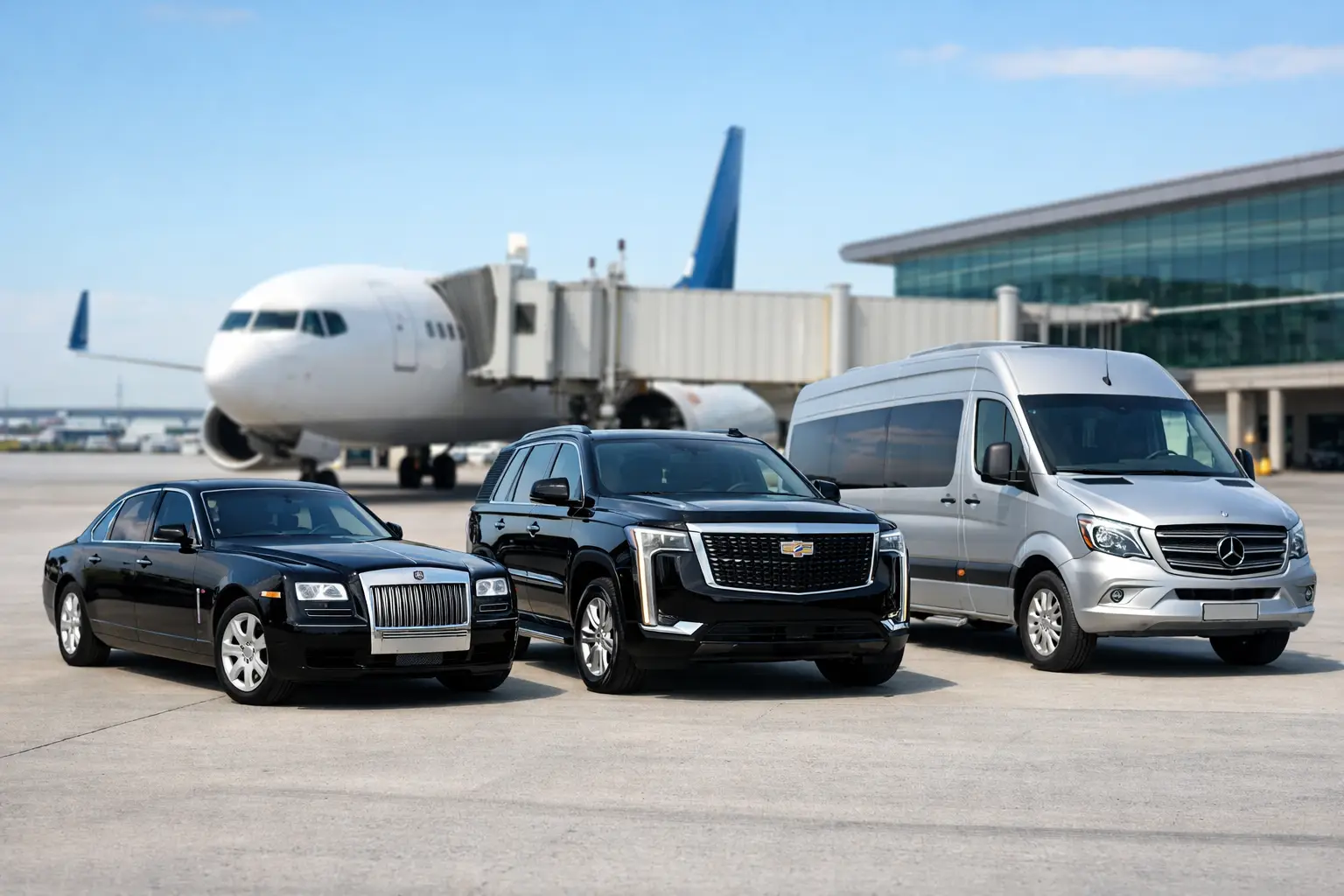
For an individual traveler or couple, the BMW 750i and Mercedes-Maybach S 580 are sensible sedan options. The Maybach is often selected for executive travel, Pearson FBO arrivals, or a longer trip where rear-seat comfort is a priority. The Rolls-Royce Ghost or Rolls-Royce Cullinan may be appropriate when the transfer is part of a wedding weekend, private aviation itinerary, or formal occasion, though they are not necessary for every airport run.
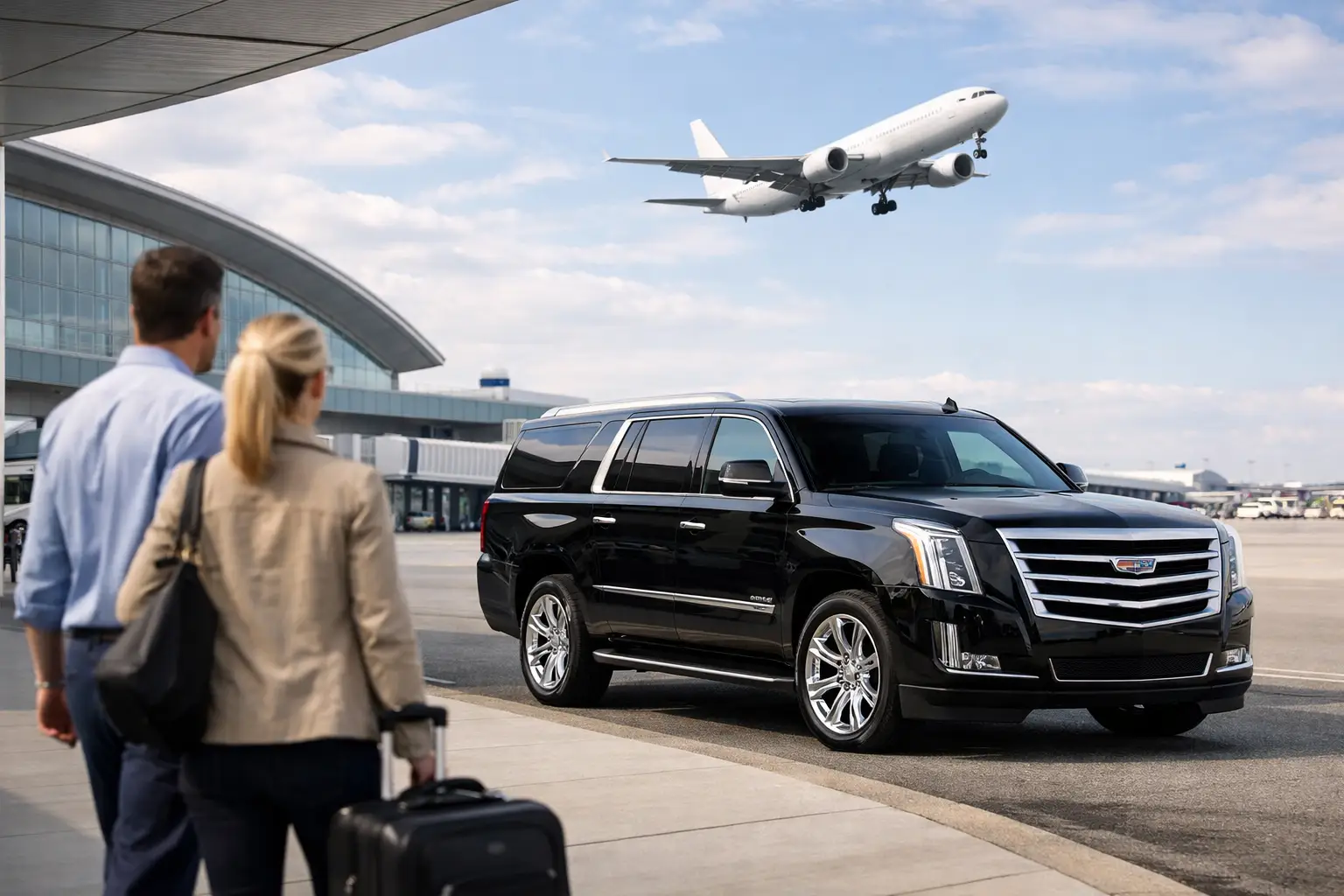
For family travel, a Cadillac Escalade, Chevrolet Suburban, GMC Yukon XL, or Cadillac Lyriq EV can make more sense than a sedan. The right choice depends on passengers and luggage. An SUV can be the practical answer when a family has several large suitcases, car seats, or a mix of adults and children.
For larger groups, the important question is whether everyone needs to travel together. A 14-passenger Mercedes Sprinter Corporate or Ford Transit can suit a university delegation or business group. The 56-passenger highway coach is intended for significant group movements, such as a conference delegation, athletic group, or organization traveling between Kingston and Pearson. Capacity should always be matched against actual luggage, because a full passenger count with full-sized suitcases may require a different plan.
What Flat-Rate Planning Changes
For a Kingston-to-Pearson chauffeur booking, the rate should be confirmed before departure. Platinum Rides quotes long-distance transfers as a flat rate, plus HST and gratuity, rather than applying per-kilometer charges during the trip. That makes it easier for an executive assistant, corporate travel coordinator, or family organizer to approve the transportation cost before the travel date.
A flat rate does not mean details are unimportant. Extra stops, a changed itinerary, different passenger counts, or a significant change in pickup location can alter the requirements. The cleanest approach is to provide the complete itinerary when requesting the quote and to communicate changes as early as possible.
Corporate accounts can also use monthly invoicing, which is useful for organizations with recurring Kingston-Pearson travel. A Queen’s University department, Kingston-based business, or Toronto company hosting Eastern Ontario visitors may prefer one billing process rather than separate individual payments. NDA-secured booking can be requested when discretion is required.
When a Transfer Should Include More Than One Stop
Some Kingston Pearson transfers are not point-to-point. A family may need a pickup in Kingston, a brief stop in Napanee for another passenger, and then Pearson. A corporate group may collect colleagues at a Kingston office before continuing to the airport. These plans can work well when stated in advance, but every stop affects the pickup schedule and vehicle choice.
The same applies to return trips. If passengers are splitting between Kingston, Gananoque, and Brockville, it may be more efficient to coordinate separate vehicles or a larger vehicle, depending on timing and group size. The goal is not to force every itinerary into one format. It is to organize the route around the people, bags, and flight commitments involved.
A useful Kingston Pearson transfer example ends with a simple principle: set the airport deadline first, then work backward to the pickup time and vehicle. When those details are decided before travel day, the road transfer has a clear plan and the passenger has fewer decisions left to make.