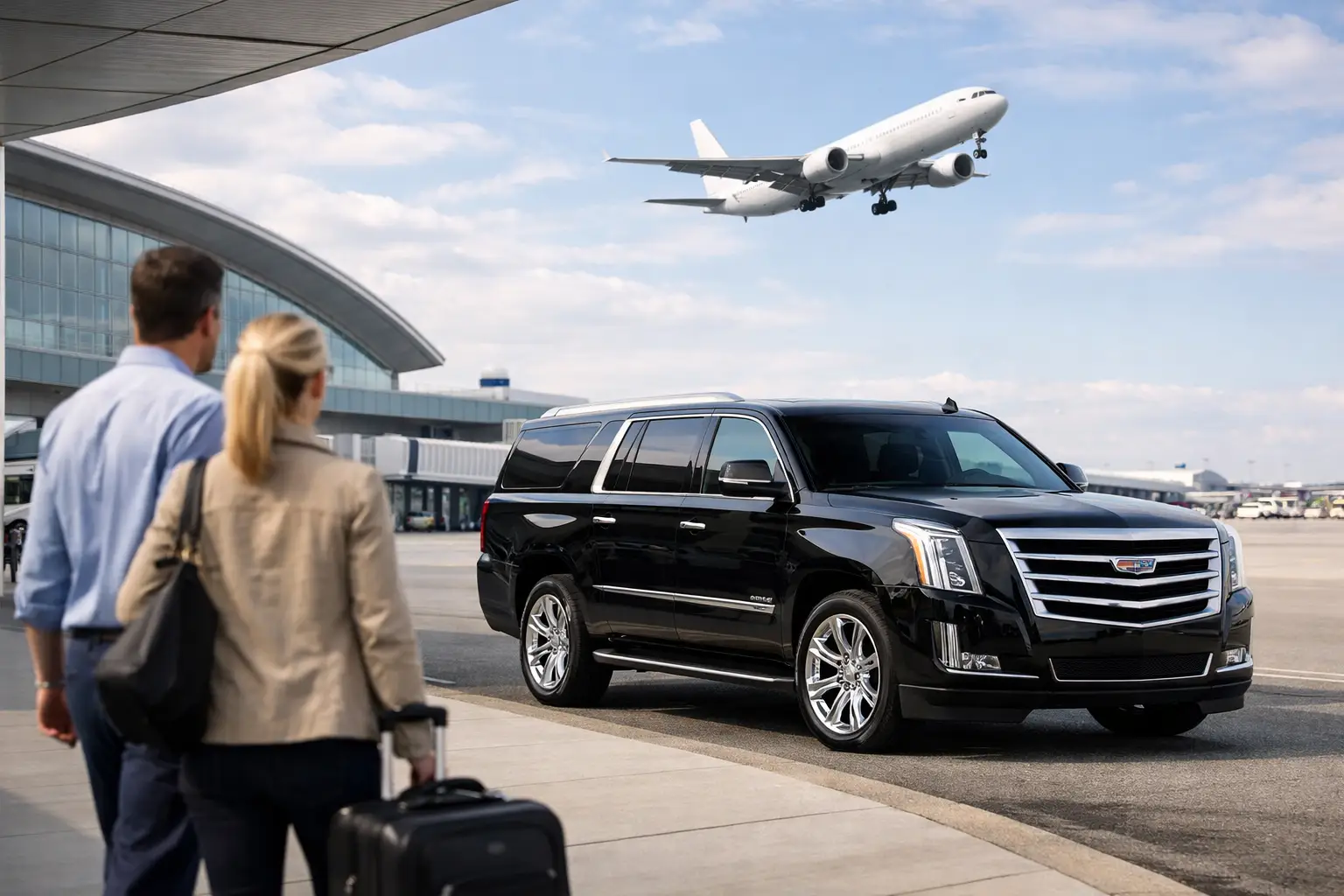


A private aircraft can land at Toronto Pearson without passing through the commercial terminal, but the ground transfer still needs careful coordination. That is how private aviation transfers work in practice: the chauffeur service aligns the vehicle, pickup time, FBO location, passenger count, and flight status before the aircraft arrives.
For an executive arriving at Skyservice, Signature Aviation, or Skycharter, the objective is simple. The right vehicle and a formally dressed licensed chauffeur should be ready at the correct fixed-base operator when passengers are released from the facility. The planning behind that pickup is more detailed than a standard airport arrival.
How Private Aviation Transfers Work From Aircraft to Vehicle
Private aviation passengers generally arrive through an FBO, also called a fixed-base operator, rather than Pearson’s main commercial terminals. The FBO manages services for private aircraft, including arrival coordination, ramp activity, and passenger facilities. Each location has its own access procedures, vehicle staging rules, and pickup points.
A chauffeur service begins with the core trip information: the aircraft tail number or flight number when available, scheduled arrival time, FBO name, passenger count, luggage volume, destination, and a reliable day-of contact. For corporate travel, the booking may also include an assistant, security contact, or aviation coordinator who can provide schedule changes directly.
The chauffeur is dispatched to the FBO based on the agreed arrival plan. In many cases, the vehicle waits in an approved area or is brought forward when the FBO confirms that passengers are ready. Access beyond public or designated vehicle areas is controlled by the FBO and airport security. A professional chauffeur does not assume airside access or enter restricted areas without authorization.
Once passengers exit the FBO or are directed to the designated curbside point, the chauffeur confirms the party, assists with luggage where permitted, and departs for the final destination. FBO staff or flight crew may manage luggage from aircraft to the facility. The chauffeur’s role begins at the appropriate handoff point and continues through the ground portion of the itinerary.
Flight tracking matters, but communication matters more
Flight tracking helps a chauffeur service monitor progress, particularly when a charter departs early, encounters weather, or changes its estimated arrival time. It is useful, not infallible. An aircraft may land before passengers are ready to leave the FBO, or an arriving party may need time for customs, luggage, crew discussions, or a last call before departure.
That is why direct contact with the client, assistant, or FBO coordinator remains valuable. The best pickup time is not always the touchdown time. For international arrivals, clearance requirements can add another variable. For domestic charter flights, the timeline may be shorter, but it still depends on the aircraft’s final parking position and FBO procedures.
Choosing the Right Vehicle for a Private Flight
Vehicle selection is based on more than the number of seats. Luggage, golf bags, ski equipment, presentation materials, and the length of the onward drive all affect the choice.
A Mercedes-Maybach S 580 or BMW 750i suits one or two executives traveling light to downtown Toronto, Yorkville, Rosedale, or a Bay Street office. A Cadillac Escalade, Chevrolet Suburban, or GMC Yukon XL provides additional luggage capacity and is often a practical choice for families, security teams, or small executive groups.
For a client flying into Pearson after a long international itinerary, a Rolls-Royce Ghost or Rolls-Royce Cullinan may suit the occasion and passenger preference. The choice is not only about appearance. A larger SUV can be the more appropriate vehicle when multiple checked bags are involved, even for a single traveler.
Groups arriving on the same aircraft require a different plan. A Mercedes Sprinter Corporate seats up to 14 passengers and works well for a visiting management team. The 14-passenger Ford Transit can support group airport movement where practical space is the priority. Larger parties can be assigned a 23-, 27-, or 56-passenger coach, depending on the itinerary and luggage requirements.
When a flight includes a principal passenger, family members, or colleagues continuing to separate destinations, multiple vehicles are often more efficient than asking one vehicle to make several stops. The booking should identify who rides in each vehicle, which addresses are first, and whether anyone needs a return pickup later that day.
Departures Require a Different Timeline
Private aviation departure transfers are scheduled around the FBO’s requested arrival time, not a commercial airline check-in rule. Clients often have more flexibility than commercial passengers, but that does not mean leaving ground transportation until the last minute.
The aviation coordinator or charter operator may set a preferred time for passengers to arrive at Skyservice, Signature Aviation, or Skycharter. That time accounts for aircraft readiness, crew planning, international documentation where applicable, and the passenger’s own schedule. A chauffeur service should confirm the pickup address, boarding time, FBO, number of bags, and any stops before departure.
For a departure from downtown Toronto during a weekday morning or afternoon, road conditions should be considered realistically. A route from the Financial District to Pearson can vary with weather, construction, sporting events, and traffic volume. The same applies to longer pickups from Oakville, Markham, Brampton, Hamilton, or Niagara-on-the-Lake.
A good plan builds in reasonable travel time without requiring passengers to spend unnecessary time waiting at the FBO. If the aircraft schedule moves, the chauffeur service can adjust dispatch timing when it receives the updated information early enough.
Special considerations for international and cross-border flights
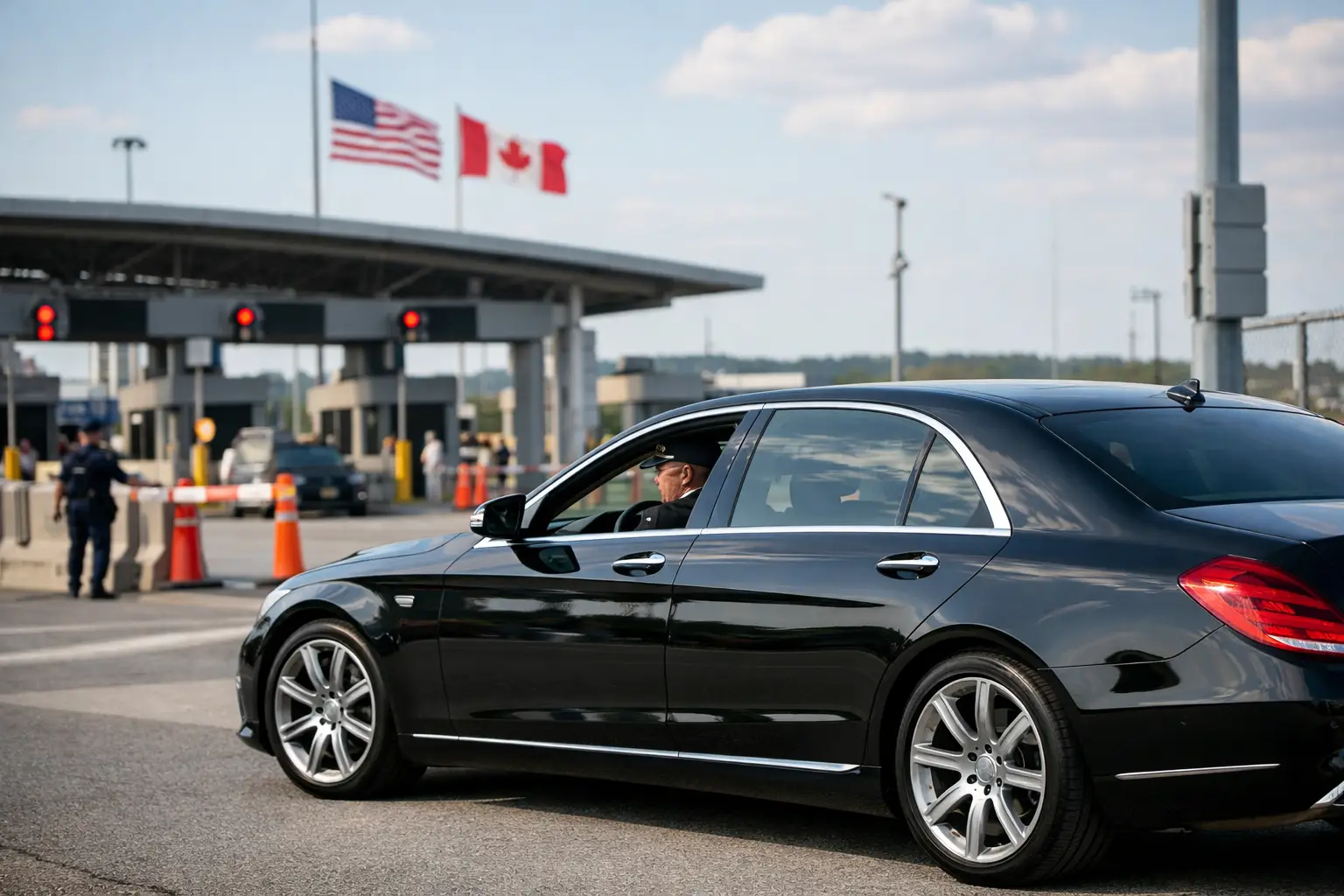
Private aviation does not eliminate border and customs requirements. Travelers departing for the United States or arriving from another country should follow the instructions provided by their operator, FBO, and border authorities. Ground transportation should be given the relevant schedule, but it should not be expected to interpret travel documents or clearance requirements.
For cross-border ground service to Buffalo, Detroit, or surrounding U.S. destinations, passengers need proper documentation, and pickup timing should account for border processing. The same principle applies to private aviation clients continuing from Pearson to an Ontario residence, hotel, office, or event venue after an international arrival.
What to Confirm Before Booking
Private flight schedules can change quickly, so a clear booking record prevents avoidable confusion. Before the chauffeur is assigned, confirm the FBO name, aircraft arrival or departure details, the number of passengers, luggage expectations, pickup contact, destination, and any additional stops.
It also helps to establish the communication chain. An executive may prefer that an assistant receive all confirmations. A family arriving on a charter may designate one lead traveler. A corporate flight department may want the chauffeur service to communicate only with its operations contact. NDA-secured booking can be arranged on request for clients who require added discretion.
Ask how schedule changes will be handled and provide a contact who can authorize adjustments. If an arrival moves from one Pearson FBO to another, that information should reach the chauffeur service immediately. A last-minute change is manageable when the right people know about it.
At Platinum Rides, private aviation transfers at Pearson are planned around Skyservice, Signature Aviation, and Skycharter operations, with a licensed chauffeur assigned to every booking. Rates are confirmed before departure as a flat rate, plus HST and gratuity, rather than calculated by distance traveled.
The Value of a Coordinated Ground Plan
A private flight removes much of the commercial-terminal routine, but it does not remove the need for a precise arrival plan. The difference is that the handoff happens at an FBO, on a schedule that can shift, with passengers who often need to move directly to a meeting, residence, hotel, or onward event.
The most useful preparation is simple: share the correct FBO, keep the chauffeur service informed of timing changes, and choose a vehicle that fits the people and luggage actually on board. With those details settled before wheels touch down, the ground transfer has a clear path from the FBO door to the next address.