


Wedding Chauffeur Service That Fits the Day
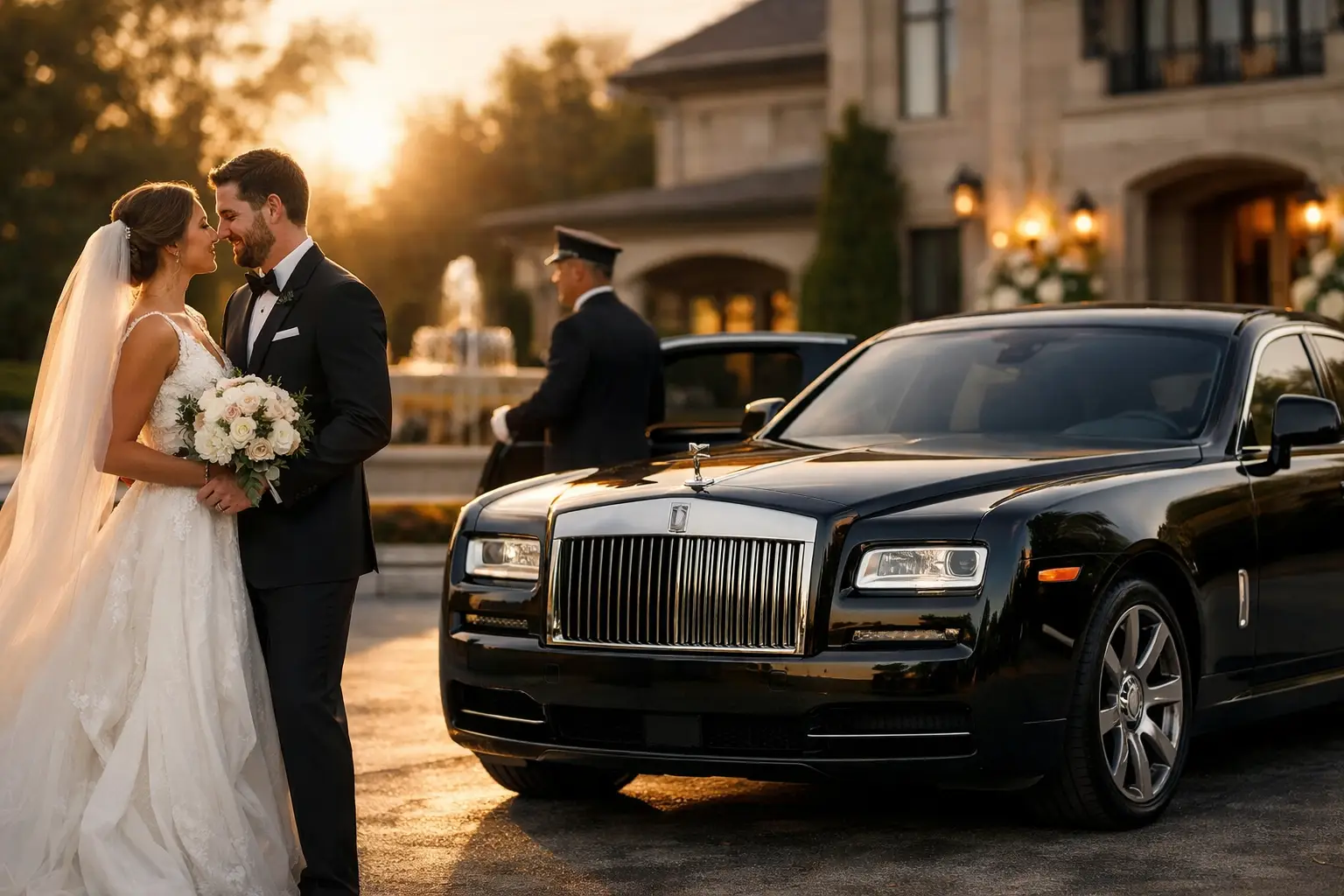
The car matters less than the timing – until the timing goes wrong.
A wedding chauffeur service is not just about arriving in a Rolls-Royce for photos. On a real wedding day, transportation affects the schedule, the ceremony flow, family coordination, and how calm the couple feels between locations. If there are multiple pickups, cultural events, a church or temple ceremony, a banquet hall reception, and a late-night exit, the vehicle choice is only one part of the job. The bigger issue is whether the service can manage the day properly.
That is where many couples make the wrong comparison. They focus on the hero vehicle and overlook the operating side of the booking – chauffeur standards, dispatch control, backup planning, route timing, and whether the company is actually running its own fleet.
What a wedding chauffeur service should really cover
A proper wedding booking starts with timing, not with car photos. The first question should be how the day moves from one point to the next. If the bride is getting ready in North York, the groom has a separate pickup in Vaughan, the ceremony is in Mississauga, and the reception is in Brampton, the transportation plan has to support that sequence without compressing every buffer.
That becomes even more important for multicultural weddings. A Punjabi baraat, a Hindu ceremony with a fixed muhurat, a Pakistani Nikkah, a Persian Sofreh Aghd setup, or a Chinese tea ceremony often means more than one key arrival and more than one audience watching the timing. In those cases, a chauffeur service needs to understand that the day does not move like a simple church-to-reception transfer.
The service should also match the people being moved. The couple may want a Rolls-Royce Phantom, Ghost, Cullinan, or a Mercedes-Maybach S 580. The bridal party may be better suited to a Cadillac Escalade, Chevrolet Suburban, or stretch limousine. Family transport may call for a Mercedes Sprinter or a coach if there are elders, children, or out-of-town guests moving together. Good planning is less about one impressive vehicle and more about placing the right vehicles where delays are most likely to happen.
Choosing the right vehicle for the wedding
There is no single correct wedding car. It depends on the ceremony style, the photography plan, the dress, and how many people need to move with the couple.
For the couple
A Rolls-Royce works when the couple wants formal arrival shots, strong visual presence, and extra cabin room for attire. That matters with larger dresses, layered ceremonial outfits, and photo-heavy schedules. A Rolls-Royce Phantom Two-Tone or Phantom 8 Series gives a different look than a Ghost or Cullinan. The Phantom reads more traditional and ceremonial. The Ghost feels more understated. The Cullinan makes sense when the schedule includes longer distances, winter dates, or venues where SUV access is simply more practical.
A Maybach S 580 is often the better choice for couples who want quieter luxury and a more discreet profile. It does not announce itself the same way a Rolls-Royce does, but it is a very strong option for city weddings, executive-style events, and couples who care more about comfort and cabin quality than visual spectacle.
For the bridal party and family
This is where planning usually breaks down. A couple books one feature vehicle and assumes everyone else will sort themselves out. That works until hair and makeup runs late, family members are split across hotels, or the photographer wants the entire bridal party at a second location.
If the bridal party is moving as a group, a Lincoln Navigator Stretch, Hummer H2 Stretch, or Mercedes Sprinter Limo Style can make more sense than multiple SUVs. If the priority is cleaner logistics rather than celebration inside the vehicle, a Sprinter Corporate or Ford Transit may be the better fit. For larger family movement between ceremony and reception, shuttle coaches or minibuses are often the smarter decision, especially when parking is limited or the venue has strict access windows.
Why ownership and staffing matter
This point gets ignored too often. When you book a wedding chauffeur service, you should know whether the company actually owns the vehicles and directly employs the chauffeurs.
That changes accountability. If one team handles dispatch, vehicle prep, chauffeur standards, and route coordination internally, there are fewer handoffs. It also means the company is more likely to know the actual vehicle you booked, rather than treating the reservation like a generic category.
For weddings, that matters because the day is not forgiving. If the ceremony starts at a fixed time, if the venue has a strict entrance window, or if the family expects a certain sequence of arrivals, the transportation provider needs control over its own operation. Platinum Rides has operated from Toronto since 2013 with an owned fleet and employed chauffeurs, which is a meaningful distinction for couples booking a high-stakes date.
Questions to ask before you book a wedding chauffeur service
The useful questions are practical.
Ask whether pricing is flat-rate or variable. Ask what is confirmed before departure. Ask how overtime is handled if photos run long or a ceremony is delayed. Ask who controls the fleet on the day itself. Ask whether the chauffeur is licensed and formally dressed. Ask how pickup addresses, standby time, and multi-stop routing are documented before the event.
You should also ask whether the company has handled your type of wedding before. That is not about marketing language. It is about whether they understand the mechanics. An Italian church ceremony with a reception convoy has different timing pressure than a Persian ceremony with a Sofreh Aghd setup. A South Asian wedding may need separate planning for the groom’s arrival, family staging, and post-ceremony transfers. Experience is not a slogan here. It is operational memory.
Pricing: what couples should expect
Wedding transportation should be priced clearly before the date. Flat-rate structure is usually the cleanest model because it gives the couple a confirmed number before departure, with HST and gratuity handled separately if applicable.
The actual price depends on the vehicle, number of hours, routing, and how much idle time is built into the day. A sedan may start around $90 for basic service, while a Rolls-Royce Ghost can start from $550 and a Maybach S 580 from $750. Those numbers only become meaningful when the itinerary is clear. A short transfer with one pickup is different from a wedding package involving home pickup, ceremony wait time, photo location transfers, and reception drop-off.
The cheapest-looking quote is not always the lower-cost decision if it leaves out key waiting periods or adds uncertainty around the exact vehicle and chauffeur assignment.
Wedding chauffeur service for complex timelines
The more moving parts your wedding has, the more transportation should be treated like event operations.
A same-day wedding in one venue can often be handled with simple point-to-point planning. A multi-location wedding with separate family pickups, ceremony staging, and guest shuttles needs a much tighter dispatch approach. This is especially true in cities where traffic patterns shift quickly and venue access is time-sensitive.
For example, a ceremony at one location followed by photos at a waterfront site and a reception at a major banquet hall requires realistic transition windows. If the chauffeur service builds the schedule too tightly, every delay compounds. If it builds too much idle time, the day feels slow and overbooked. Good planning sits in the middle. It leaves enough margin for real conditions without dragging the day out.
What couples often get wrong
Most mistakes happen before the booking is signed.
Some couples choose a vehicle only for photos without checking whether the dress, family members, or route make it practical. Others underestimate how many people need dedicated transport. Many assume the wedding day will run exactly on paper, when in reality hair, family photos, venue access, and receiving lines can all shift the clock.
Another common mistake is treating guest transportation as optional until late in planning. If the ceremony and reception are in different places, or if many guests are coming from hotels, coordinated group transport can make the whole event feel more organized. It also reduces late arrivals and parking issues.
The right booking is the one that fits the wedding
A good wedding chauffeur service should feel measured, not flashy for its own sake. The vehicle should suit the couple, the chauffeur should fit the tone of the event, and the schedule should hold up under real conditions.
For some weddings, that means a Phantom and a stretch limo. For others, it means a Maybach for the couple and a Sprinter for the family. The right choice depends on the ceremony, the distance between venues, the family structure, and how much coordination the day actually demands.
If you plan transportation around the full timeline rather than just the photo moment, the day tends to move better – and that is what people remember long after the car doors close.


Leave a Reply