


Niagara Wine Tour Chauffeur: What to Book
A Niagara wine tour chauffeur booking usually looks simple on paper – pickup, wineries, lunch, return – but the quality of the day depends on details most people do not think about until they are already on the road. Timing between tastings, where the vehicle can stage, how your group moves between estates, and whether the chauffeur service actually owns and dispatches its own fleet all affect the experience.
For couples, friend groups, executives, and private hosts planning a day in Niagara-on-the-Lake, the right service is not just about arriving in something impressive. It is about building a day that stays on schedule, feels polished, and does not fall apart when one tasting runs long or the lunch reservation shifts by twenty minutes.
What a Niagara wine tour chauffeur service should actually provide
A professional chauffeur service for wine country is not a dressed-up transfer from point A to point B. The job starts before pickup, with route planning, vehicle selection, confirmation of passenger count, and realistic timing based on where the wineries are located.
Niagara wine country is compact compared with other touring regions, but that does not mean every stop is close together. A day that includes two wineries near Niagara-on-the-Lake, one stop closer to Vineland, and a late lunch can work well if it is mapped properly. The same day can feel rushed if the vehicle is too small, if pickup takes place in multiple locations, or if there is no clear schedule.
A proper chauffeur service should give you a flat rate before departure, explain what is included, and match the vehicle to the group rather than pushing one format for every booking. That matters whether you are leaving from Toronto, Oakville, Burlington, Hamilton, or staying overnight near the vineyards.
Choosing the right Niagara wine tour chauffeur vehicle
Vehicle choice changes the tone of the day more than most clients expect. A sedan works well for a couple who wants a quiet, private itinerary with lunch and three or four tastings. A Cadillac Escalade or Chevrolet Suburban suits small groups who want extra room and an easier ride between stops. For birthdays, bachelorette groups, or family celebrations, a Sprinter or stretch limousine often makes more sense than trying to split everyone into separate vehicles.
There is no single correct answer because the itinerary matters as much as the headcount. Six guests who want a calm, conversation-friendly day may prefer a luxury SUV over a louder group vehicle. Fourteen guests doing a celebratory outing with a longer lunch and photo stops may be better served by a Mercedes Sprinter Limo Style. Larger groups heading to multiple wineries can justify a party bus or coach, especially when everyone needs to stay together and return on one timetable.
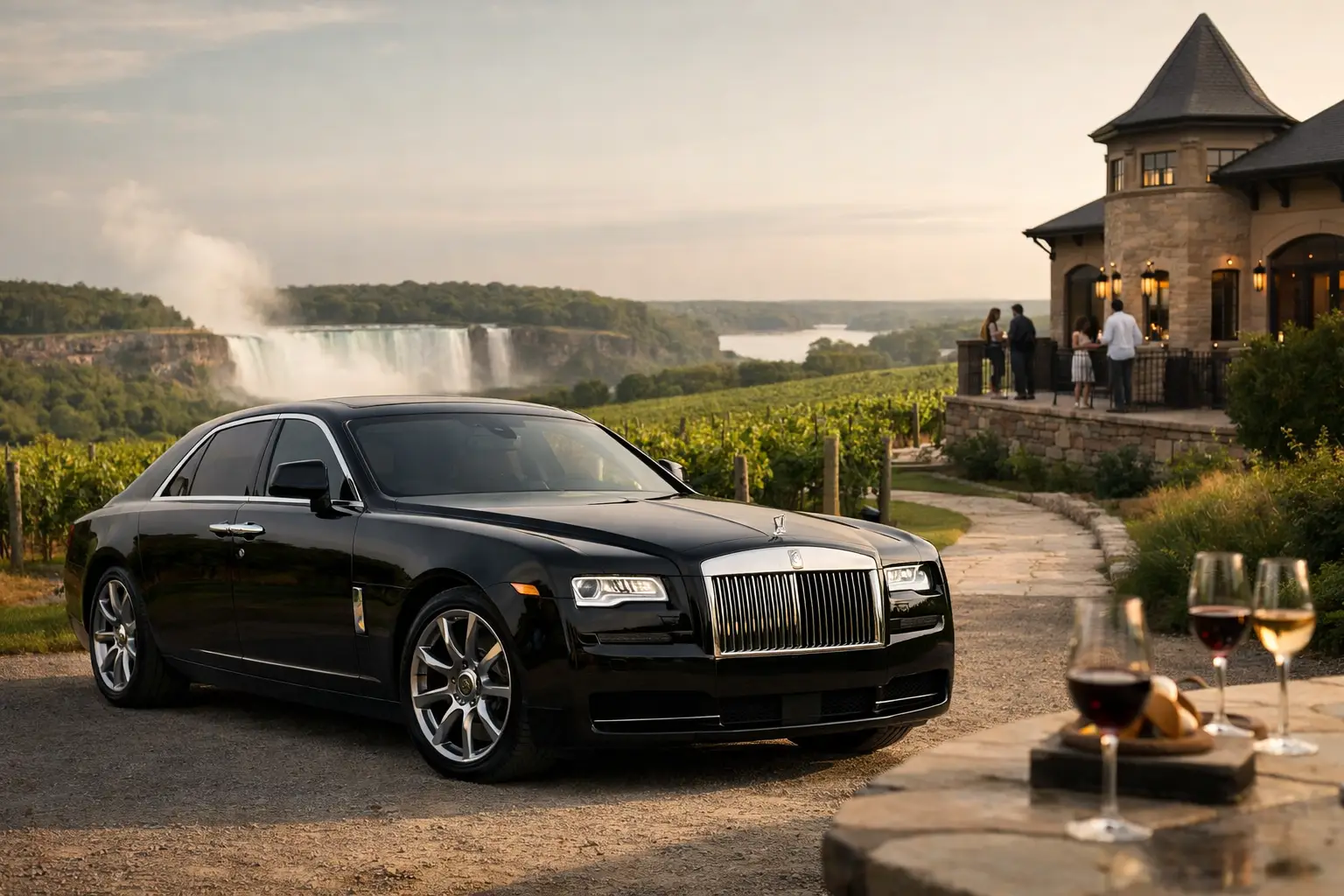
For clients who care about presentation as much as logistics, higher-end options such as a Rolls-Royce Ghost or Mercedes-Maybach S 580 can suit anniversary trips, executive hosting, or proposal plans. But there is a trade-off. Those vehicles make a statement, though they are not always the practical answer for larger groups or tasting-heavy itineraries where space and flexibility matter more.
Flat-rate pricing matters more than people think
Wine tours tend to run over. One tasting room seats you late, the lunch service stretches, someone wants a quick photo stop, and suddenly the day is longer than planned. That is why pricing structure matters.
A professional Niagara wine tour chauffeur service should confirm a flat rate in advance, plus HST and gratuity, so the client knows the transportation cost before the first pickup. That gives the day a different feel. You are not watching distance or wondering whether each detour adds another hidden charge.
This is particularly useful for corporate hosts and private clients who need clean billing. If the booking involves guests from Toronto visiting Niagara for relationship-building, client entertainment, or executive downtime, predictable pricing is easier to approve and easier to expense.
Why owned fleet and employed chauffeurs make a difference
This point gets overlooked, but it matters. When a company owns its vehicles and employs its chauffeurs directly, the standard is easier to maintain. Dispatch knows the fleet, knows the route, and knows who is behind the wheel. If there is a change to pickup timing or a revised winery sequence, communication is usually cleaner.
For a wine tour, that consistency matters because the day is not static. Guests may finish early at one stop and stay longer at another. A chauffeur who is part of the company, not a last-minute outside fill-in, is more likely to understand the expected tone, vehicle standard, and schedule control required for premium day service.
Platinum Rides has operated from Toronto since 2013 with an owned fleet and directly employed chauffeurs, which is relevant for clients booking longer day trips where consistency matters as much as presentation.
Building a realistic winery itinerary
The most common planning mistake is trying to fit too much into one day. Four winery stops and lunch can work. Five or six usually becomes a rushed checklist unless tastings are intentionally short and close together.
A better approach is to decide what kind of day you want first. If the goal is relaxed conversation, vineyard views, and a proper meal, fewer stops usually produce a better result. If the group is wine-focused and wants broader sampling, you can increase the number of visits, but only if appointments, travel time, and boarding time are handled realistically.
Pickup location also changes the shape of the day. A group departing from downtown Toronto needs a different schedule than a group staying in Niagara-on-the-Lake. Add multiple pickup addresses in North York, Mississauga, or Vaughan, and the first hour can disappear quickly. That does not mean multi-stop pickups are a bad idea. It means they should be planned, not improvised.
How many hours should you book?
It depends on where the day starts. For clients leaving Toronto, a full-day format is usually the right call. That allows enough time for highway travel, three to four meaningful stops, lunch, and a comfortable return. For clients already in Niagara, a shorter block may be enough.
Short bookings can work for couples doing two tastings and dinner. Larger groups rarely benefit from trying to compress the day. Boarding and regrouping simply take longer when you have ten, fourteen, or twenty-two passengers.
When a chauffeur-driven wine tour makes the most sense
Some Niagara trips are straightforward transportation bookings. Others are event transportation in disguise.
Anniversary outings, birthday groups, proposals, and executive hosting all carry expectations beyond basic driving. The vehicle becomes part of the day’s atmosphere. So does the chauffeur’s timing, appearance, and judgment. You want the car ready when the tasting ends, you want the route handled without confusion, and you want the group to stay focused on the day rather than the logistics.
This is especially true for clients entertaining out-of-town visitors. If you are hosting colleagues, investors, or private guests, there is value in controlled pacing and a properly presented vehicle. The same is true for wedding-adjacent plans, such as a pre-wedding family wine day or a quiet couple’s outing after the main events are over.
Questions worth asking before you confirm
Ask whether the rate is flat and confirmed before departure. Ask which vehicle is actually assigned to your group size. Ask whether the chauffeurs are direct employees. Ask how schedule changes are handled during the day.
You should also confirm luggage or cooler needs if the group is buying bottles, and make sure the passenger count is final. A group of eight booked into the wrong vehicle can affect comfort for the entire day. So can underestimating how much time your lunch reservation will require.
If your group includes older family members or guests who need easier entry and exit, that should shape the vehicle choice too. A stretch vehicle may look right for the occasion, but an SUV or Sprinter may be more practical depending on mobility, seating, and how often the group is getting in and out.
The difference between a ride and a well-run day
A good Niagara wine tour chauffeur service does not try to make the day bigger than it needs to be. It keeps the transportation side organized, confirms the cost in advance, sends the right vehicle, and manages the schedule with enough discipline that the trip still feels relaxed.
That is usually what clients remember. Not the sales language. Not the brochure version of wine country. They remember that the vehicle arrived on time, the day moved properly, and the group never had to think twice about how they were getting to the next stop.
If you are planning a Niagara wine tour, start with the itinerary you actually want, then book the chauffeur service that can support it without guesswork. The right day in wine country should feel easy because it was planned well.


Leave a Reply