


Multi Stop Wedding Transportation Example
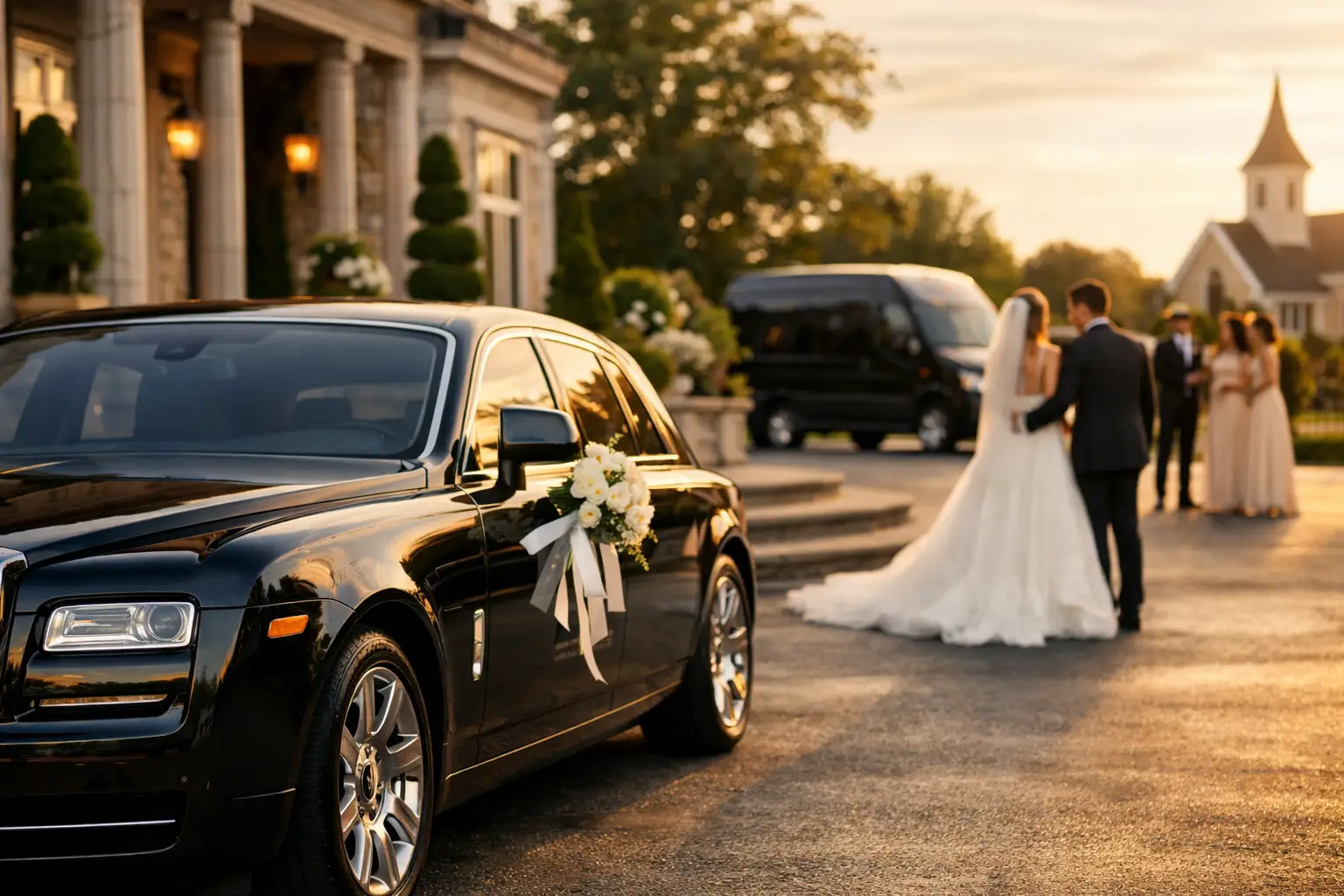
A wedding day stops feeling simple the moment the schedule includes a church, a tea ceremony, hotel pickups, a photo location, and a reception in a different city. That is why a clear multi stop wedding transportation example matters. It shows where timing holds, where it slips, and how the right vehicle plan keeps the day moving without turning every transfer into a negotiation.
For most couples, the transportation issue is not just what car to book. It is how to move different groups at different times, with enough padding for real life. Hair and makeup runs late. A parent needs a separate pickup. A ceremony finishes early, but the banquet hall is not ready yet. The transportation plan has to absorb all of that without making the couple feel rushed.
A practical multi stop wedding transportation example
Here is a realistic example based on a common Greater Toronto wedding format. The couple has a morning tea ceremony at the bride’s family home in Markham, a church ceremony in North York, portraits downtown, and an evening reception in Vaughan. The wedding party is large, and both immediate families need dedicated transportation rather than trying to coordinate their own arrivals.
The couple books a Rolls-Royce Phantom Two-Tone for their headline arrivals and portraits. The bridal party uses a Mercedes Sprinter Limo Style for 14 passengers. Immediate family is split between a Cadillac Escalade and a Chevrolet Suburban so elders and close relatives are not waiting on the bridal party schedule.
The timeline might look like this.
Morning pickup and family staging
At 8:30 a.m., the Sprinter arrives first at the hair and makeup location. The goal is not glamour at this stage. It is control. Bridesmaids, bags, garment covers, and emergency items go in one vehicle rather than four separate cars that may or may not leave on time.
At 9:15 a.m., the Escalade picks up the bride’s parents and grandparents. This separate move matters because older family members usually need a cleaner boarding process, less waiting outside, and direct routing. Meanwhile, the Suburban handles a second family cluster from another address.
At 10:00 a.m., the Rolls-Royce arrives for the bride. That timing is intentional. Sending the feature car too early often creates unnecessary idle time and pressure while final photos, dress adjustments, and family moments are still happening.
Ceremony one to ceremony two
By 10:30 a.m., all vehicles are moving toward the tea ceremony. The chauffeur team already knows who leaves first after the ceremony and who stays for additional family photos. This is where many wedding plans fail. People assume everyone moves together. In reality, wedding days work better when the transportation plan accepts that different groups move on different clocks.
After the tea ceremony, the family SUVs depart first for the church. The bridal party Sprinter leaves next. The couple in the Rolls-Royce leaves last, which gives them a private window and protects the photo sequence. If the ceremony schedule is tight, that order can reverse. It depends on whether the church requires the couple to arrive before guests are seated.
Portraits without losing the schedule
After the church ceremony, the couple heads downtown for portraits. This is where a multi-stop route either works or collapses. If the bridal party also goes to portraits, they need a vehicle that can hold dresses, extra shoes, water, touch-up kits, and the photographer’s gear without becoming cramped. That is why a Sprinter often makes more sense than trying to split a wedding party across sedans or smaller SUVs.
Family usually does not need to stay for the full portrait block. In this example, the Escalade takes the parents and grandparents directly to the reception venue in Vaughan for a break before cocktail hour. The Suburban returns selected relatives to the hotel to refresh, then makes a second transfer to the reception. Those are two distinct jobs, and they should be priced and scheduled that way from the start.
What this example shows about vehicle selection
A good multi stop wedding transportation example is not really about showing off cars. It is about matching each vehicle to a role.
The lead couple vehicle should fit the visual standard of the day and the amount of time the couple will actually spend inside it. If the car is mainly for arrival and portraits, a Rolls-Royce Ghost, Phantom 8 Series, Phantom Two-Tone, Cullinan, or Mercedes-Maybach S 580 makes sense. If the couple expects longer transfers between cities, cabin comfort starts to matter just as much as appearance.
The bridal party vehicle should prioritize boarding speed, room, and schedule discipline. A Sprinter or stretch limousine can work, but the choice depends on dress volume, passenger count, and route length. A Hummer H2 Stretch looks different from a Sprinter, but if the day includes several stops and quick exits, the more practical entry and interior layout of a Sprinter may save time.
Family transportation is where planners often underbuild. Parents, elders, and VIP relatives usually need their own routing. That does not mean they need the headline vehicle. It means they need a chauffeur who knows exactly which entrance to use, who is riding, and whether there is a return movement later.
Timing trade-offs that couples should expect
The cleanest itinerary on paper can still change once the day starts. That is normal. The question is whether the transportation plan has enough margin to handle it.
One trade-off is photography time versus guest flow. If the couple wants multiple portrait locations, someone else has to move family to the reception separately. Otherwise, everyone waits on the couple’s photo schedule. Another trade-off is visual impact versus logistics. A vintage 1960 Rolls-Royce Silver Cloud II looks right for certain weddings, but older vehicles are chosen for style and occasion, not for carrying extra bags or making repeated group transfers.
Traffic also changes the plan. A route from Markham to North York to downtown Toronto to Vaughan may look efficient on a map, but wedding day timing is built around loading, unloading, photo holds, venue access, and guest coordination as much as road time. That is why flat-rate planning before departure matters more than guessing how the day will unfold in the moment.
Multi-location weddings need more than one dispatch mindset
South Asian, Persian, Chinese, and Italian weddings often involve separate households, ceremonial staging, and venue-specific timing that a basic point-to-point booking will not cover. A baraat has its own rhythm. A Sofreh Aghd setup affects when the room is accessible. A tea ceremony may run on family timing even when the written schedule says otherwise. Church-to-banquet transitions can be tight if the receiving line goes long.
This does not mean every wedding needs a huge fleet. It means the transportation plan needs to reflect the ceremony structure. Sometimes the right answer is one Rolls-Royce for the couple, one SUV for immediate family, and one Sprinter for the bridal party. Other times, a larger wedding with hotel guests and a separate evening reception shuttle needs a party bus or coach layered on top of the wedding cars.
Platinum Rides handles this with owned vehicles and directly employed chauffeurs, which matters more on a multi-stop day than it does on a simple transfer. When the same operation controls the fleet, it is easier to keep changes coordinated across the couple car, family SUVs, and group vehicle.
How to build your own route without overbooking
Start with people, not vehicles. List who must arrive together, who needs private time, and who can be routed separately. Then map the fixed moments first – ceremony start, photo permit windows, reception access, and any cultural ceremony that cannot move.
After that, decide where one vehicle can do more than one job and where it cannot. A Suburban might handle parent pickup in the morning and later return to the hotel with out-of-town family. A couple vehicle usually should not be repurposed mid-day for practical family moves. That sounds efficient, but it tends to disrupt the part of the booking that matters most.
Finally, build in waiting time on purpose. Not excess for the sake of it, but enough to absorb real delays. The cheapest-looking itinerary is often the one that breaks first because it assumes every person exits, boards, and arrives exactly on cue.
A strong wedding transportation plan should feel calm when you read it. Not because weddings are calm, but because the schedule already respects the reality of a day with multiple stops, multiple households, and several people who all think their pickup is the priority. That is the value of a good example. It turns a vague idea into a route that can actually hold up when the doors open and the day begins.


Leave a Reply