


How to Organize Group Night Transportation
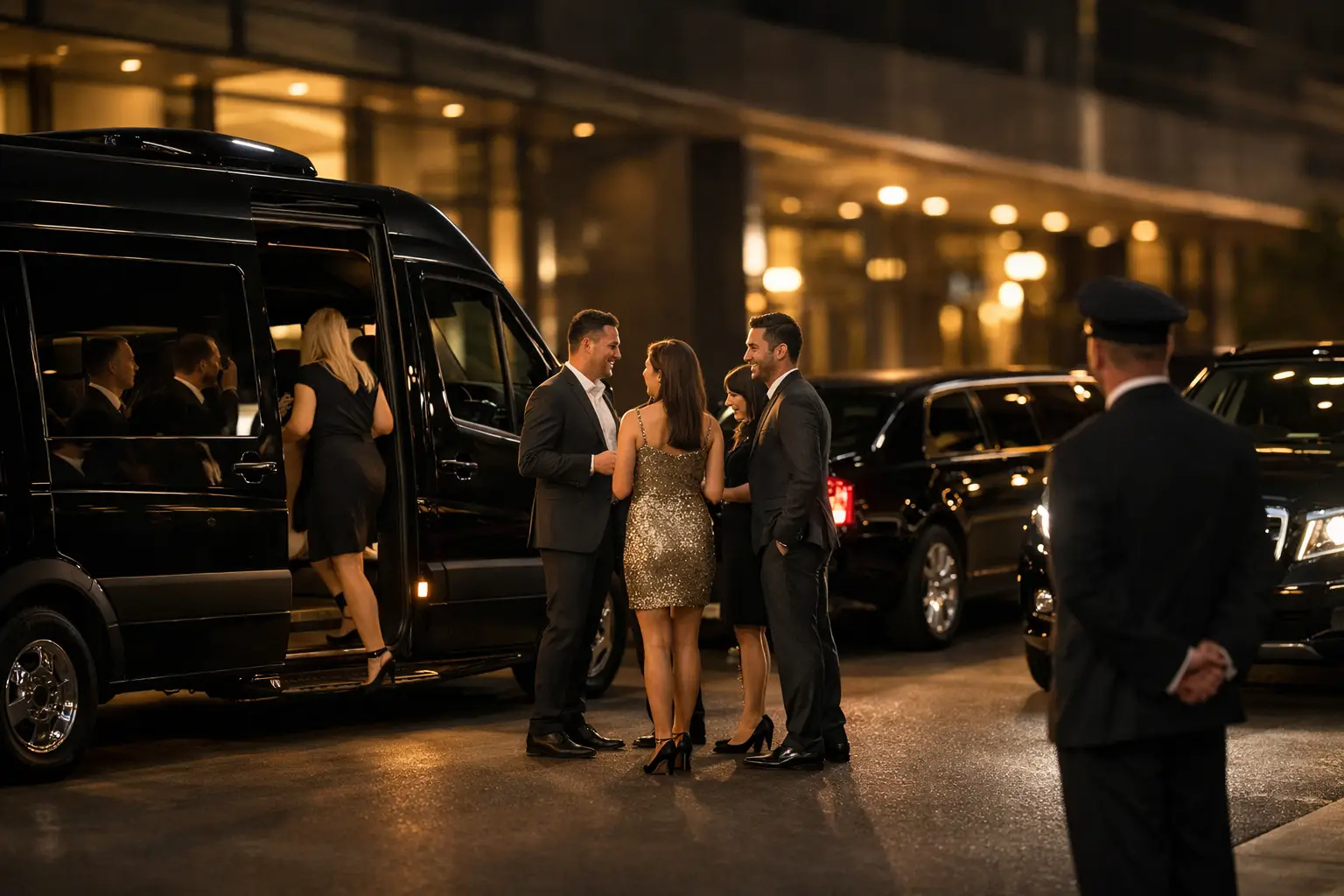
A group night out starts going sideways long before anyone arrives late. It starts when ten people leave from three addresses, two guests change outfits at the last minute, one person assumes they can drive separately, and nobody has confirmed who is getting home after midnight. If you are figuring out how to organize group night transportation, the real job is not finding a vehicle. It is building a plan that still works once the night becomes unpredictable.
For corporate dinners, wedding after-parties, milestone birthdays, charity galas, and private evenings in Toronto and across Ontario, transportation usually breaks down for the same reasons: the headcount changes, the schedule is too tight, or the vehicle type does not match the group. Good planning fixes all three.
How to organize group night transportation without gaps
Start with the night’s actual structure, not the guest list. A 14-person dinner reservation sounds simple until you realize four guests are leaving from Yorkville, three from Mississauga, two from a hotel downtown, and the rest want a late pickup after cocktails. One large vehicle is not always the right answer. Sometimes it is smarter to run a sedan for the host, an SUV for VIPs or family, and a Sprinter or party bus for the main group.
The key decision is whether everyone truly needs to move together. If the event begins with a single arrival, such as a birthday dinner or concert, one vehicle often makes sense. If the evening includes staggered departures, multiple stops, or different return times, splitting the group into two coordinated vehicles usually avoids delays.
That trade-off matters. A single party bus keeps everyone together and creates a social atmosphere, but it can slow down pickups if guests are spread out. Multiple vehicles improve timing and flexibility, but require tighter coordination from the organizer.
Build the plan around headcount, not estimates
Night transportation gets expensive and messy when people book for “around 20” and confirm 27 later. Capacity should be set against the real number of passengers, plus a little room for comfort if the group is dressed for an event. Formalwear, heels, coats, gift bags, and evening accessories take space, even if they do not count as passengers.
For smaller groups, a Cadillac Escalade, Chevrolet Suburban, or GMC Yukon XL can be the right fit when everyone is traveling from one point to another. For mid-size groups, a Mercedes Sprinter or Ford Transit works well if the priority is efficient movement. For larger social groups, a 22, 28, 34, or 50-passenger party bus is often the cleaner solution because it keeps the evening on one timetable.
If the event has a more formal tone, such as a gala arrival, executive dinner, or private client entertainment, the choice should reflect that setting. A Maybach S 580 or BMW 750i for principals, paired with a shuttle vehicle for the rest of the group, creates a better arrival plan than trying to put everyone into the same format.
Set pickup times earlier than the group wants
Most group delays come from optimism. Guests assume they can be ready in five minutes. They cannot. If a dinner reservation is at 8:00 p.m., and the drive is 30 minutes, groups tend to schedule a 7:20 pickup. That leaves no room for elevator delays, valet congestion, wardrobe changes, or traffic near the venue.
A better rule is to work backward from the hard arrival time and then add buffer at each stage. For a reservation, performance, or private booking, aim to arrive 15 to 20 minutes early. Then factor in real pickup loading time, not just drive time. A group of twelve can easily take ten minutes to board once people are actually at the curb.
This matters even more for multi-location nights. If the plan is hotel pickup, dinner, then a lounge or private event, each stop should have a confirmed departure window. Open-ended timing sounds relaxed, but it usually means the night drifts and the vehicle schedule starts chasing the group instead of leading it.
Choose the right service model for the night
Not every group night needs the same booking structure. Some events are best handled as one-way transfers. Others need the vehicle and chauffeur held on standby for the evening.
For a concert, sporting event, or dinner with a fixed end time, round-trip service can be enough if the return is clearly defined. For bachelor and bachelorette parties, birthdays, anniversaries, and venue-hopping evenings, hourly service is usually more practical because the schedule changes once the group is out.
There is no universal answer here. If the night includes one destination and one return, a simple transfer structure keeps things clean. If there are multiple stops, waiting periods, or uncertain end times, booking around the full evening is often the safer call.
A professional chauffeur service should confirm the rate before departure, explain what is included, and make clear whether taxes and gratuity are separate. Flat-rate pricing is especially useful for evening group travel because it avoids uncertainty once the night is underway.
Assign one decision-maker
Large groups do not need more opinions during the event. They need one point of contact. The person booking should also be the person authorized to approve timing changes, stop changes, and final passenger counts.
This is especially important for weddings and formal family events. A couple may not be the right people to manage evening movement once guests are arriving from a ceremony, cocktail hour, reception, and after-party. In those cases, assign a planner, sibling, best man, maid of honor, or corporate event lead to handle communication.
The smoother the communication chain, the better the night runs. When five passengers are messaging different instructions, mistakes become much more likely.
How to organize group night transportation for special events
Different occasions create different transportation pressure points. Prom needs strict structure, clear pickup and return details, and no confusion about conduct. Corporate hospitality needs discreet arrivals, efficient timing, and a vehicle mix that respects hierarchy without making the group feel split apart. Weddings often require the most planning because there may be family members, bridal party, and the couple all moving on separate schedules.
For multicultural weddings, this matters even more. A Punjabi baraat, Chinese tea ceremony, Persian Sofreh Aghd, or church-to-reception convoy can involve timing that is ceremonial, not just logistical. Transportation has to follow the event’s rhythm, not force the event to adapt to the vehicle plan.
That is where fleet depth matters. One operator with owned vehicles and employed chauffeurs can coordinate the couple’s Rolls-Royce, a family Sprinter, and an SUV for key relatives with much more control than a patchwork arrangement. If one timeline shifts, the whole schedule can be adjusted from one dispatch point.
For nightlife groups, the concern is usually different. The vehicle should fit the tone of the night, but the planning should stay practical. A Hummer H2 Stretch or party bus can make sense for a birthday or celebration where the ride is part of the event. A corporate dinner or client evening may call for quieter, more restrained vehicle choices.
Confirm the return before the night starts
Outbound planning gets attention. Return planning gets ignored. That is usually the mistake that creates the longest wait at the end of the evening.
Before the vehicle is booked, confirm whether the whole group is returning together, whether some passengers are ending at a hotel, and whether the return address is fixed. If the event may run late, say so early. If half the group expects to continue elsewhere, build that into the booking instead of trying to improvise later.
Late-night returns also need realistic curbside planning. Some venues are easy to stage from. Others are congested, especially when several events end at once. A professional chauffeur service should know how to work around those choke points, but the client still needs to identify the likely exit flow in advance.
What good group transportation looks like in practice
The best night transportation plan feels almost invisible because nothing has to be solved in real time. The right passengers are in the right vehicles. The pickup order makes geographic sense. The timing has margin. The return is already understood. No one is negotiating curbside after midnight.
That does not mean every night should be overplanned. Some groups want a tighter schedule and some want flexibility. The point is to be precise where it counts: headcount, vehicle type, pickup windows, decision-maker, and return plan.
For clients booking important evening transportation, whether that means a corporate dinner in Toronto, a wedding reception in Vaughan, or a birthday group headed to Niagara-on-the-Lake, the real value is not just the vehicle. It is having chauffeurs, dispatch, and fleet coordination set up to handle the night as it actually unfolds.
Platinum Rides has operated that way since 2013, with owned vehicles and directly employed chauffeurs, because group transportation works better when the planning and execution stay under one roof.
If you are organizing the night, keep the goal simple: make the schedule realistic, make the vehicle choice fit the group, and decide the return before the evening starts. That is usually the difference between a good night out and one that begins with messages nobody wants to send.


Leave a Reply