
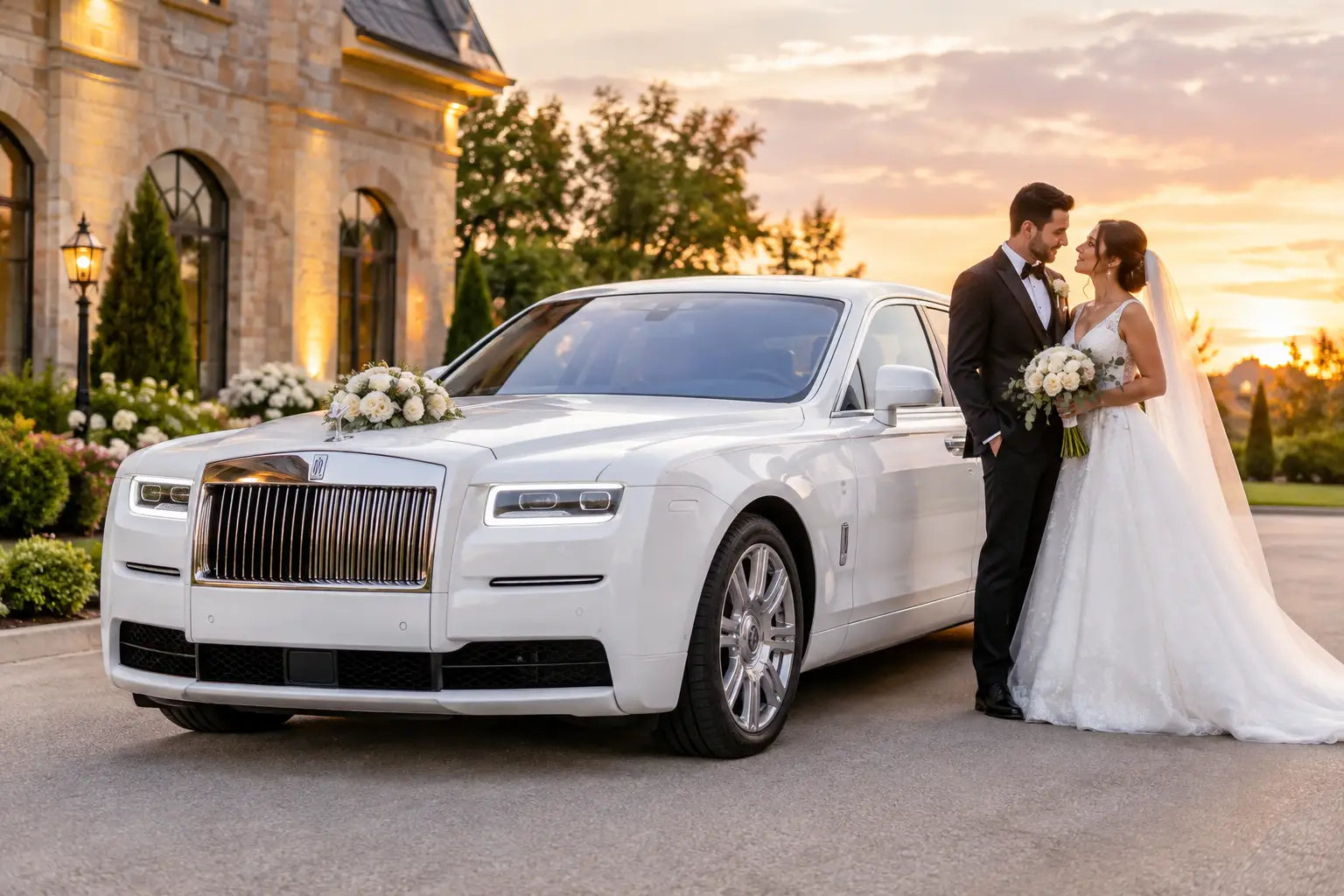
A wedding vehicle is visible in the photos, but its real job happens between photographs. It has to arrive at the right entrance, hold the right people, accommodate formalwear, and keep a multi-location schedule moving when a ceremony, family photos, and reception all have fixed start times. The right wedding vehicles are chosen around the day’s logistics first, then style.
For weddings across Toronto, Mississauga, Brampton, Vaughan, Markham, Hamilton, and beyond, that often means more than selecting one car for the couple. A well-organized transportation plan accounts for the couple, bridal party, immediate family, older relatives, and any guests moving between venues. The vehicle mix should reflect how the wedding is actually unfolding.
Start with the couple’s schedule
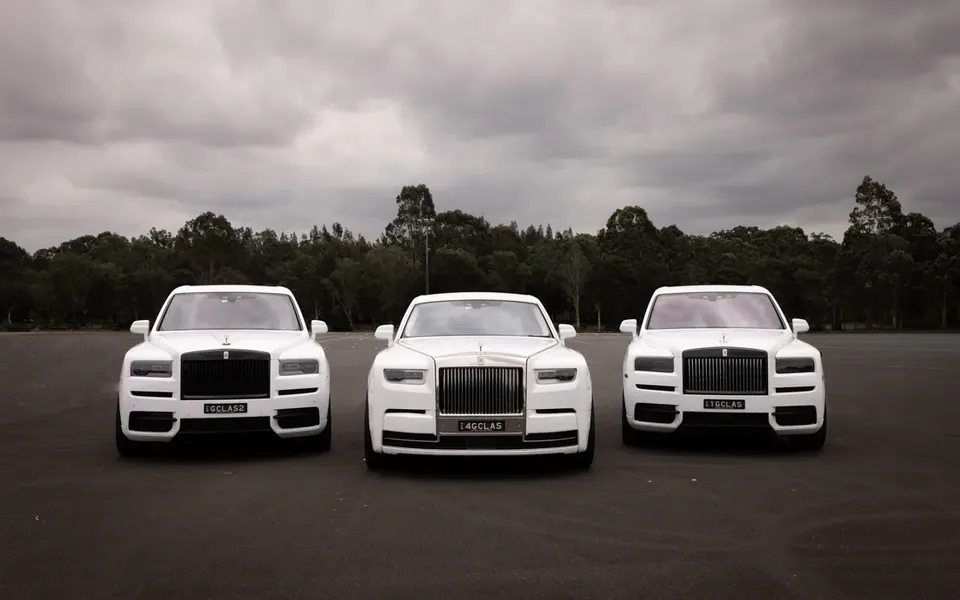
The couple’s vehicle should suit the ceremony, wardrobe, photography plan, and number of stops. A Rolls-Royce Phantom Two-Tone creates a formal arrival for a ballroom, estate, or hotel wedding, while the Rolls-Royce Cullinan is a practical choice where weather, longer drives, or a dress with significant volume are factors. The Phantom 8 Series, Rolls-Royce Ghost, Mercedes-Maybach S 580, and BMW 750i offer different interpretations of a classic sedan arrival.
There is no single right choice. A vintage 1960 Rolls-Royce Silver Cloud II has a distinct presence outside a church or heritage venue, but it is selected for character rather than modern SUV-style space. A Cullinan makes more sense for a winter wedding or a route that includes uneven venue driveways. The decision should be based on the conditions of the day, not only the first image seen online.
Ask practical questions early. Will the couple travel together before the ceremony, or arrive separately? Is there a first-look location away from the venue? Will the dress need extra room? Does the photographer need the vehicle at a specific location for portraits? Those details determine whether one sedan is sufficient or whether a second vehicle protects the timeline.
Match wedding vehicles to each group
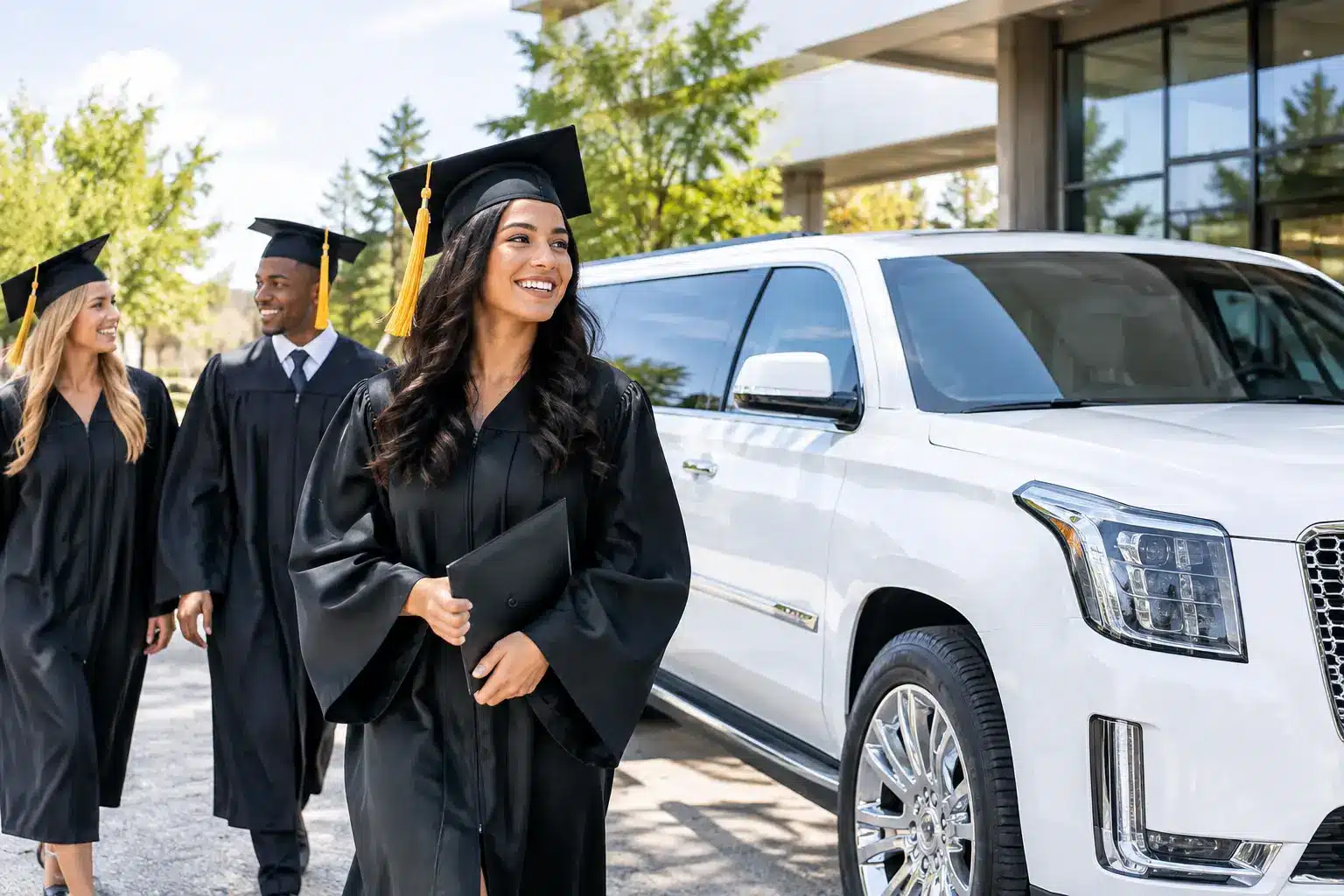
Once the couple’s transportation is set, build outward. A Cadillac Escalade, Chevrolet Suburban, or GMC Yukon XL works well for a small bridal party or immediate family group that needs room without arriving in a stretch limousine. For larger bridal parties, the Hummer H2 Stretch seats up to 18 passengers and keeps the group together between photo locations and the reception.
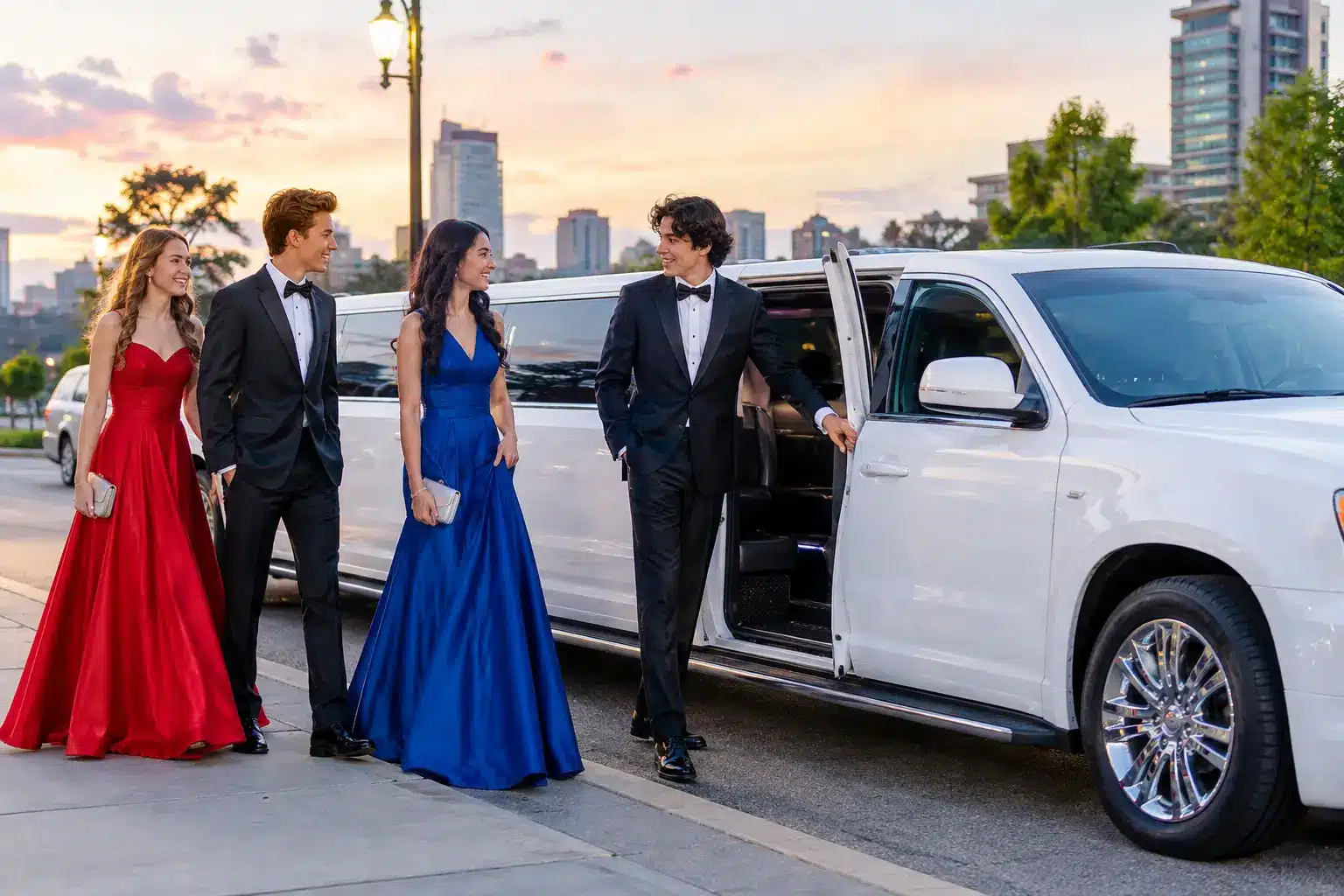
A Lincoln MKT Stretch or Lincoln Navigator Stretch can be a more traditional limousine choice when the group is smaller. The important factor is usable capacity after dresses, suits, bouquets, bags, and personal items are accounted for. A vehicle listed for a certain number of passengers may not be the most comfortable option when everyone is in formal attire.
For family groups, the Mercedes Sprinter Limo Style seats up to 14 passengers and gives relatives one coordinated departure point. The Mercedes Sprinter Corporate and Ford Transit also accommodate up to 14 passengers when the priority is organized group movement. These vehicles are useful when a ceremony and reception are separated by distance, or when family members should not need to navigate unfamiliar routes or parking arrangements.
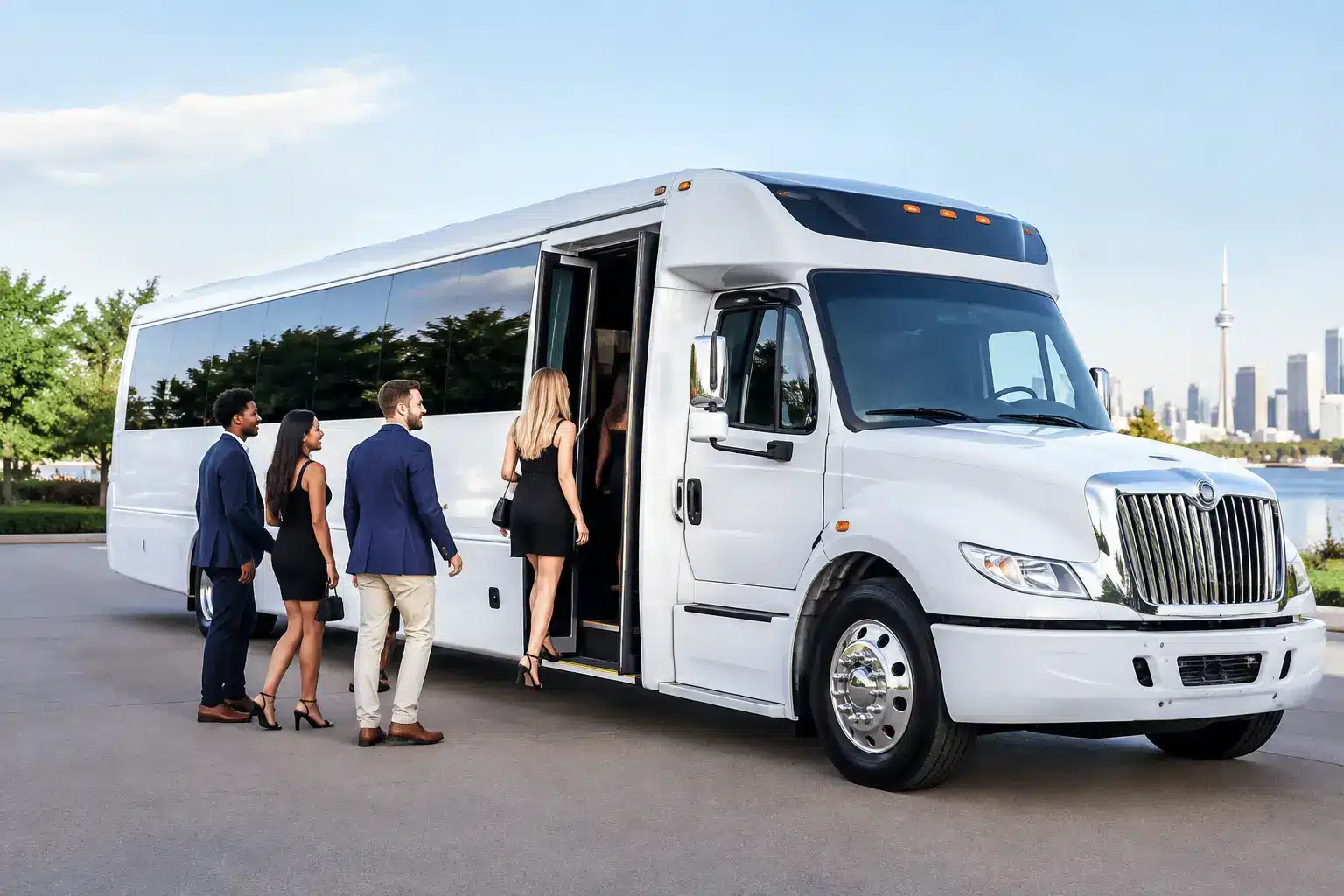
For a wedding with substantial guest movement, party buses for 22, 28, 34, or 50 passengers and coaches for 23, 27, or 56 passengers can reduce fragmented arrivals. This matters especially when parking is limited, the venue has a narrow arrival window, or guests are traveling from one hotel to several wedding events.
Plan around cultural and multi-location traditions
Transportation planning deserves extra attention when the wedding includes traditions with their own timing and movement. A Punjabi baraat may require a defined arrival sequence for the groom’s side, family, and wedding party. A Hindu ceremony can have a muhurat time that leaves little room for delayed staging. Pakistani Nikkah events may involve separate family arrivals before the formal ceremony begins.
Persian Sofreh Aghd ceremonies often involve careful setup and a schedule that includes family portraits before guests enter. Chinese tea ceremonies can mean travel between family homes, the ceremony venue, and the reception. Italian weddings frequently include church-to-reception logistics, formal family photographs, and a convoy that needs a clear order of departure.
The transportation plan should be built around those moments rather than imposed on them. Share the full sequence with the chauffeur service: addresses, expected departure times, entrances to use, photo stops, and the person authorized to make timing decisions. If there are multiple homes, ceremonies, or reception rooms, identify each stop clearly. It is far easier to coordinate a revised departure time with a designated contact than with several relatives giving separate instructions.
Give the timeline room to breathe
Wedding schedules are often written to the minute, but transportation needs a reasonable buffer. Hair and makeup can run late, family portraits may take longer than expected, and a venue may direct vehicles to a particular entrance. The answer is not to overbook the day. It is to allow realistic travel and loading time between major events.
A useful plan includes the pickup time, the desired arrival time, and the latest workable arrival time for each group. These are different numbers. The chauffeur needs the full picture to position the vehicle appropriately and to avoid treating a photo stop as an unexpected detour.
Also consider where each vehicle will wait. Some venues have restricted curb access, small circular driveways, or separate loading zones for buses. A 56-passenger highway coach requires more space to turn and stage than a sedan. Large wedding parties benefit from a venue contact who understands the arrival plan and can direct guests to the correct entrance.
Confirm the details that affect the day
Before booking, verify the passenger count, locations, time blocks, vehicle assignments, and who is riding in each vehicle. Confirm whether decorative ribbons, photography access, or a planned send-off affect vehicle placement. If grandparents or guests with limited mobility are traveling, make that clear when selecting the vehicle.
It is also wise to decide how communication will work during the event. One planner, sibling, coordinator, or member of the wedding party should be the transportation contact. This prevents a chauffeur from receiving competing requests while trying to keep the schedule intact.
At Platinum Rides, every wedding booking includes a formally dressed, licensed chauffeur. The company has operated from Toronto since 2013 and manages a 27-vehicle fleet ranging from the 1960 Rolls-Royce Silver Cloud II to 56-passenger highway coaches. Pricing is confirmed as a flat rate before departure, plus HST and gratuity, rather than calculated by distance during the event.
Choose style after function
Style still matters. The vehicle is part of the visual language of the day, whether that means a Rolls-Royce Phantom Two-Tone for a formal entrance, a Mercedes-Maybach S 580 for a refined city wedding, or a Hummer H2 Stretch for a full bridal party arrival. But style works better when it supports the schedule instead of creating another problem to solve.
A useful test is simple: picture every person getting in and out, every stop, every entrance, and every item that has to travel with them. If the plan works on paper, the photos will follow naturally. The vehicle should give the people closest to you a clear, comfortable way to be where they need to be when the celebration begins.