
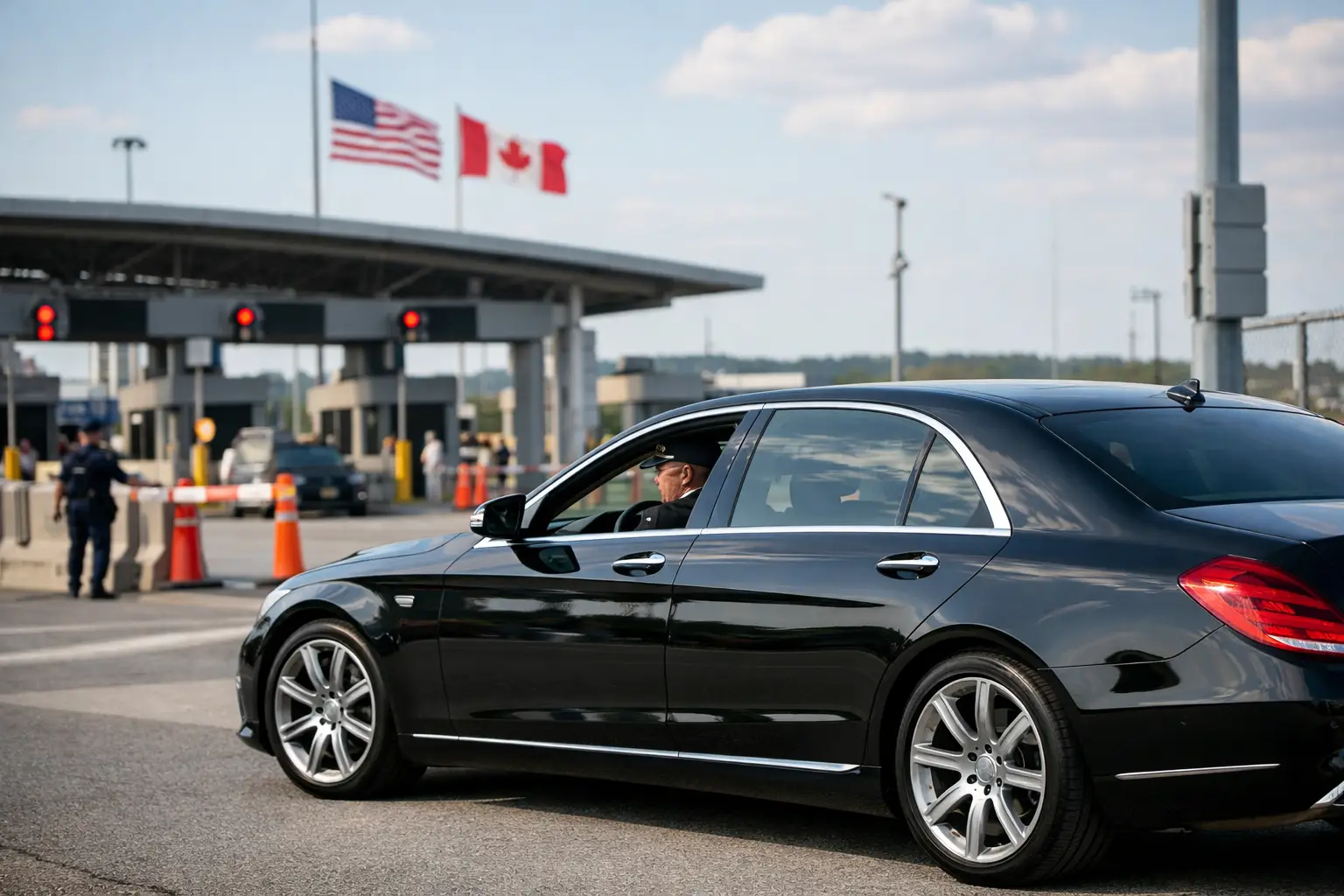
A Toronto departure to Buffalo or Detroit can look simple on a map, yet the border is the one part of the itinerary no chauffeur service can control. Can chauffeurs cross the border? Yes, provided the chauffeur, passengers, vehicle, and trip purpose meet the entry requirements set by Canadian and U.S. border authorities. A confirmed booking is not permission to enter either country.
For executives flying from Pearson to a meeting in Detroit, families attending an event in Buffalo, or visitors continuing from a Toronto FBO to a U.S. destination, the practical question is not merely whether a vehicle can travel south. It is whether everyone in the vehicle has the right documentation, sufficient time, and a trip plan that will stand up to inspection.
Can Chauffeurs Cross the Border From Canada?
A professionally chauffeured vehicle may cross between Canada and the United States when the required documentation and commercial operating conditions are in place. Border officers make the final decision on admission for every person entering the country. They can ask questions, inspect documents, examine luggage, or refer travelers for further inspection.
For a passenger, the usual starting point is a valid passport. Depending on citizenship, immigration status, and the reason for travel, a visa or other travel authorization may also be required. Canadian and U.S. citizens should not assume that a driver’s license alone will be accepted for an international crossing.
The chauffeur also needs appropriate identification and authorization to perform the trip. A licensed chauffeur service must ensure its commercial vehicle documentation and insurance support cross-border travel. Requirements can differ based on the vehicle, passenger count, destination, and whether the service is operating under a pre-arranged private transportation agreement.
That distinction matters. A pre-booked executive transfer from Toronto to Buffalo International Airport is not handled operationally in the same way as an unplanned request at the border. The itinerary, passenger list, pickup point, destination, and return plan should be clear before departure.
What Passengers Should Bring to the Border
Every passenger is responsible for being admissible. A chauffeur can prepare the route and vehicle paperwork, but cannot resolve a missing passport, an expired visa, a prior inadmissibility issue, or an item that border authorities do not permit.
Adults should travel with their valid passport and any immigration documents relevant to their nationality. Permanent residents, visa holders, and travelers who are not Canadian or U.S. citizens may have additional requirements. A traveler with past criminal charges, even where the matter seems minor or occurred years ago, should seek qualified immigration or legal guidance before committing to a cross-border date.
Children require particular care. A child traveling with one parent, grandparents, relatives, or another adult may need a consent letter from a non-traveling parent or guardian. Border officers may ask about the relationship between the child and accompanying adults, particularly where surnames differ. Carrying clear consent documentation can prevent difficult conversations at the port of entry.
It also helps to have the basics of the visit ready: a hotel confirmation, meeting address, event invitation, return flight details, or onward travel plan. Officers may ask where passengers are going, how long they intend to stay, and what they plan to do in the United States. Straightforward, accurate answers are the right approach.
Vehicle Paperwork and Commercial Travel Rules
The vehicle needs more than a full fuel tank and a clean cabin. Cross-border chauffeur service involves commercial insurance and operating documentation that must correspond with the trip. This is why a service should review international requests before confirming them, rather than treating the border as an ordinary long-distance route.
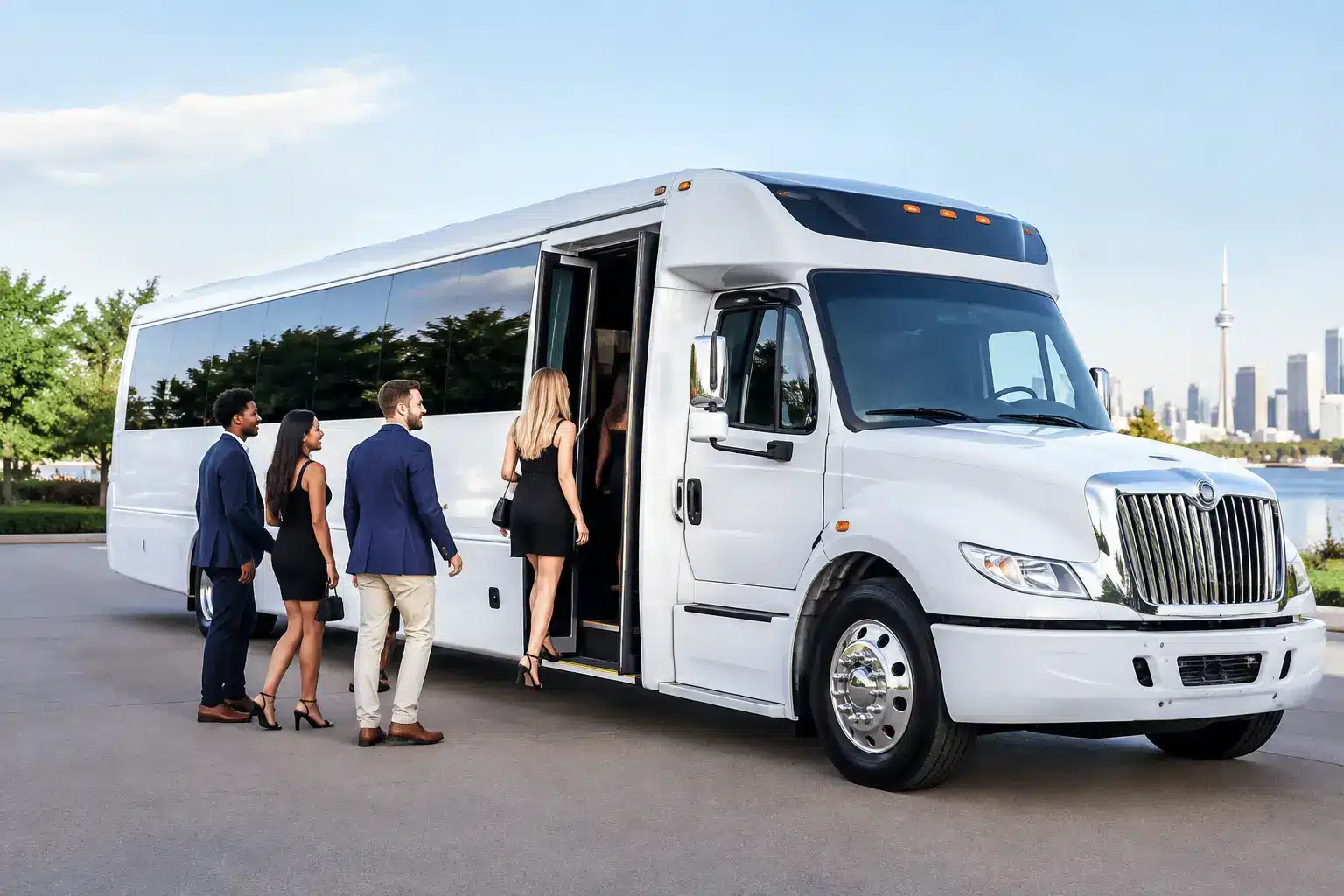
The appropriate vehicle also depends on the group. A Mercedes-Maybach S 580 or Cadillac Escalade may suit one or two executives traveling to a Detroit meeting. A Mercedes Sprinter Corporate can make sense for a small corporate group headed to Buffalo. Larger groups may require a shuttle coach, but passenger capacity can bring additional regulatory and logistical considerations.
Luggage affects that choice as well. A family traveling with several suitcases, golf equipment, or event materials should not select a vehicle based only on the number of seats. The chauffeur service needs to know the passenger count, luggage volume, pickup time, border crossing point, destination, and expected return schedule.
At Platinum Rides, cross-border service to Buffalo, Detroit, and surrounding U.S. destinations is available when proper documentation is in order. Rates are confirmed before departure as a flat rate, plus HST and gratuity, rather than calculated by the kilometer. For border travel, receiving the full itinerary early allows the dispatch team to confirm the operational details that apply to the trip.
Plan for the Border, Not Just the Drive Time
A border crossing can take minutes or considerably longer. Traffic volumes, lane availability, holidays, weather, construction, inspection activity, and individual questioning all affect timing. No chauffeur can promise a specific border-processing time.
This is particularly relevant for airport departures. A passenger leaving downtown Toronto for a flight from Buffalo should build a meaningful buffer into the schedule. The same applies to a Detroit business meeting with a fixed start time. The drive itself may be predictable; the inspection line is not.
Morning and late-afternoon commuter periods can add road traffic near major crossings, while long weekends and school breaks often create heavier passenger volumes. A return trip deserves the same planning. Travelers may clear into the United States quickly and still face a delay returning to Canada later that day.
For a wedding or family event, avoid scheduling the border crossing too close to a ceremony, photo session, or reception entrance. A Rolls-Royce Cullinan can provide a composed, comfortable ride for an important occasion, but it cannot make a border officer move faster. When timing is fixed, traveling the day before may be the more sensible choice.
Questions a Chauffeur Service Should Ask Before Booking
Cross-border transportation is not a request that should be reduced to a pickup address and destination. A professional dispatcher needs enough detail to determine whether the trip can be operated properly.
Expect questions about passenger citizenship, the number of travelers, luggage, destination, trip purpose, requested crossing time, and whether the chauffeur is expected to wait or return later. These are operational questions, not unnecessary paperwork. They help identify issues before the vehicle arrives.
For corporate travel, the contact person should provide the meeting location and a reachable mobile number for the passenger or coordinator. International visitors arriving at Skyservice, Signature Aviation, or Skycharter at Pearson may have a compressed schedule after a private flight, so the route and border plan should be settled well ahead of arrival.
For families, one person should confirm that each traveler has reviewed their documents. This avoids the common and costly situation in which a group is ready to leave Mississauga, Markham, or downtown Toronto only to discover that one passport is expired or a child’s consent letter has been left at home.
Items That Can Cause Delays or Refusal
Border rules cover more than passports. Travelers must declare goods accurately and comply with restrictions on items such as firearms, cannabis, certain foods, and controlled substances. Cannabis is legal in parts of Canada and in some U.S. jurisdictions, but taking it across an international border is not permitted. Do not bring it into the vehicle for a cross-border trip.
Travelers should also consider prescription medication. Keep medication in original labeled containers and carry supporting documentation where appropriate. If a passenger is transporting business samples, equipment, gifts, or high-value items, they should be prepared to explain ownership and intended use.
A chauffeur should not be asked to carry undeclared goods, packages belonging to someone not present, or items a passenger is unwilling to identify. Those requests create risk for everyone in the vehicle. Clear declarations and direct answers protect the group far better than vague explanations.
Choosing the Right Cross-Border Itinerary
The right plan depends on whether the trip is one-way, same-day return, overnight, or part of a longer itinerary. A Buffalo airport transfer may be straightforward if flight timing leaves room for inspection. A Detroit roadshow with multiple meeting stops needs more structure, including waiting time, addresses, and a realistic return window.
For executives, a sedan or SUV often keeps the schedule focused and private. For a group, a Sprinter or coach can keep everyone together, but passengers should understand that the border process applies to each traveler. One traveler’s documentation issue can affect the whole vehicle.
The practical standard is preparation, not assumption. Confirm eligibility before the vehicle is dispatched, bring complete documents, allow extra time at both crossings, and treat border officers’ directions as final. A properly planned chauffeur trip can take you from Ontario to the United States with clarity and comfort, but the border remains a formal point of entry, not simply another stop on the route.