
A Blue Mountain ski day can begin before sunrise, especially when a group is leaving Toronto, Mississauga, Brampton, or Markham. The drive is part of the plan: skis and boots need room, passengers need a comfortable place to sit, and the return trip may take place after a full day on the slopes. Blue Mountain ski transport with a professional chauffeur gives the group one departure plan, one vehicle assignment, and a confirmed flat rate before leaving.
For a couple heading north for a weekend or a corporate group planning a winter outing, the right transportation arrangement depends less on labels and more on practical details: passenger count, equipment, pickup locations, luggage, weather, and whether the itinerary includes dinner in Collingwood or a stop in Thornbury.
Planning Blue Mountain Ski Transport From Toronto
Blue Mountain is generally a two-hour drive from Toronto in clear conditions, but winter traffic and road conditions can change that calculation. A chauffeur service allows the group to set a realistic pickup time based on its departure point, planned arrival, lift ticket timing, and the possibility of slower travel north of Barrie.
Morning departures deserve particular attention. A group meeting at one address in Yorkville or Rosedale is straightforward. Multiple pickups across Toronto, Vaughan, Oakville, or Mississauga require more planning. Each additional stop affects departure timing, particularly when ski bags, helmets, and overnight luggage are being loaded. Confirming the pickup order in advance keeps the morning organized and gives every passenger a clear expectation.
The same thinking applies to the return. Some groups want a direct drive home after skiing. Others arrange dinner in Blue Mountain Village, Collingwood, or a private residence before returning south. A chauffeur can remain aligned with the agreed itinerary, but planned stops and waiting time should be disclosed when booking rather than decided at the last minute.
Ski Equipment Changes the Vehicle Decision
Ski transport is not simply passenger transport. Four adults in winter coats with skis, boots, helmets, and duffel bags can require more cargo capacity than a standard sedan provides. The vehicle should be selected according to the equipment list, not just the number of seats.
For one or two passengers with limited equipment, a Cadillac Escalade, Chevrolet Suburban, GMC Yukon XL, or Cadillac Lyriq EV may suit the trip depending on luggage needs and conditions. For a family or small group, the Escalade, Suburban, and Yukon XL provide useful passenger and cargo space while maintaining a composed ride for the highway portion of the trip.
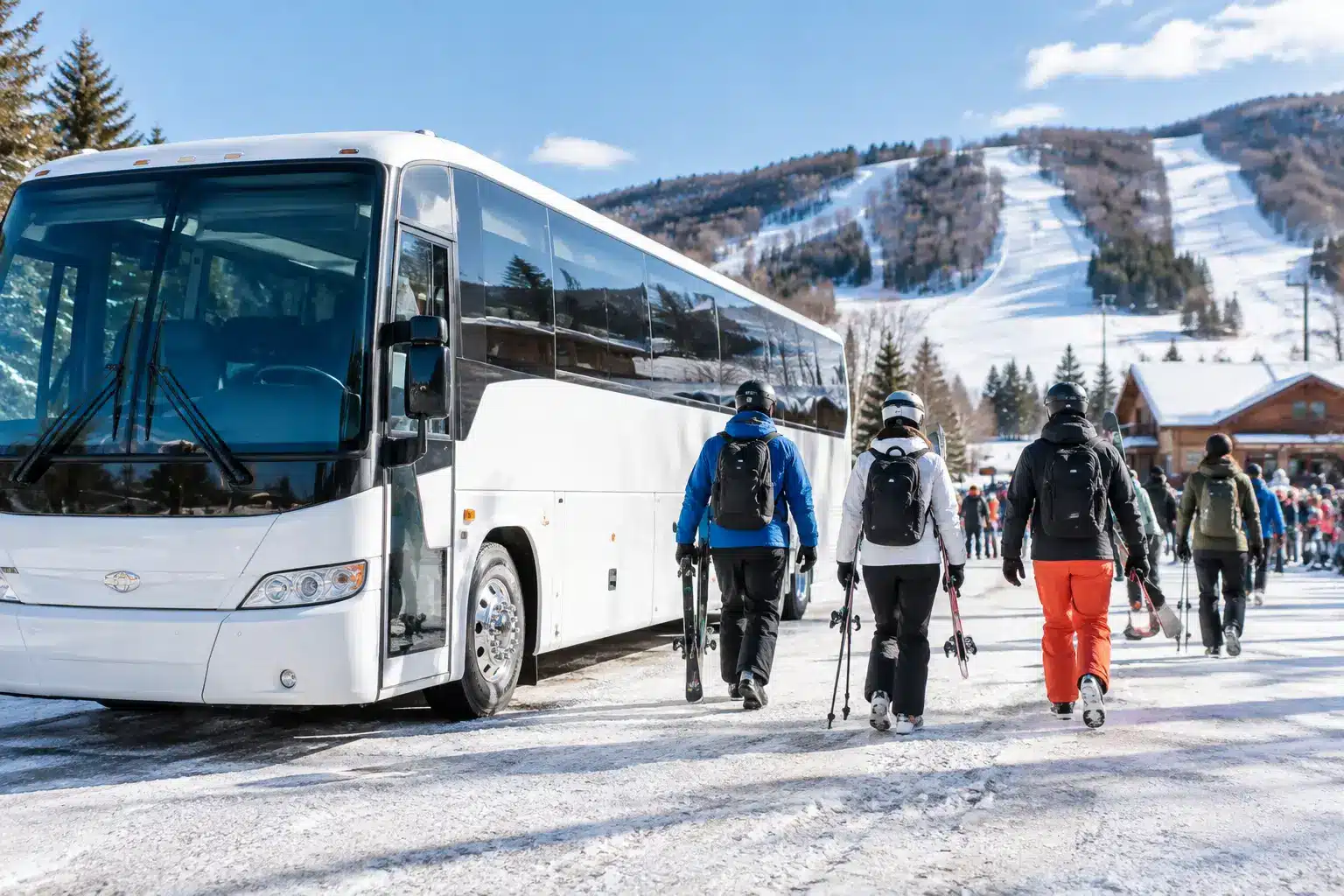
For groups traveling together, a Mercedes Sprinter Corporate, Mercedes Sprinter Limo Style, or Ford Transit can make more sense than splitting passengers across several vehicles. These options seat up to 14 passengers, but the practical passenger count should be adjusted when everyone brings full ski gear. A group of 10 with skis and overnight bags may need more room than a group of 10 attending a dinner.
Larger company outings, school-adjacent adult group events, and extended family trips may call for a 22-, 28-, 34-, or 50-passenger party bus, or a 23-, 27-, or 56-passenger highway coach. Capacity is only one part of the decision. The booking team should know whether equipment must travel with the passengers or if it will be handled separately, as that affects usable interior and cargo space.
What a Chauffeured Ski Trip Solves
A winter drive to Blue Mountain asks someone in the group to manage more than the road. They are also responsible for the route, fuel planning, parking logistics, gear loading, and the drive home when everyone is tired. With a licensed chauffeur, that responsibility stays with the assigned professional.
This is particularly useful for groups with a fixed schedule. A corporate winter outing may have a breakfast meeting before departure, a reserved lesson at the resort, and a dinner reservation afterward. A family weekend may involve early hotel check-in, young passengers, and enough bags for two nights. The transportation plan should support those commitments without requiring one guest to spend the day focused on driving.
There is also value in keeping the group together. Conversation, business discussion, or simply a quiet ride north is easier when no one is coordinating multiple drivers by phone. For executives departing from Bay Street or Pearson FBO guests continuing to the slopes after arriving at Skyservice, Signature Aviation, or Skycharter, a single point of contact and a properly selected vehicle are more useful than a loosely arranged convoy.
Choose the Vehicle Around the Day You Actually Have
Vehicle selection should reflect the tone and purpose of the trip. An executive couple spending a weekend at a Blue Mountain residence may prefer the Mercedes-Maybach S 580 or Rolls-Royce Cullinan, provided the equipment plan is confirmed in advance. The Cullinan is particularly suited to clients who want SUV proportions with a more formal arrival.
For a family ski weekend, the Cadillac Escalade or Chevrolet Suburban is often the more practical choice. Both offer space for passengers, winter layers, bags, and smaller equipment items. A group of friends planning a full day on the slopes may prefer a Mercedes Sprinter Limo Style, where the group can ride together rather than meeting again at the resort.
For corporate teams, the Mercedes Sprinter Corporate offers a professional setting for up to 14 passengers, while coaches are appropriate when the group is substantially larger. There is no single correct answer. A 14-passenger vehicle may be right for a group traveling light, but too compact for the same number of passengers carrying skis, snowboards, boots, and luggage. This is why accurate equipment details matter at the time of inquiry.
Platinum Rides has operated chauffeur service from Toronto since 2013 and has completed more than 500,000 trips across Ontario. Every booking includes a formally dressed, licensed chauffeur. The company does not offer self-drive vehicles, which keeps responsibility for the vehicle and route with the chauffeur from pickup through return.
Weather, Timing, and Winter Expectations
A professional transportation plan should allow for winter conditions without making promises the road cannot support. Snowfall, visibility, collisions, road maintenance, and congestion around ski resort arrival areas can all affect travel time. The sensible approach is to build a time buffer around lessons, dining reservations, hotel check-in, or scheduled events.
Passengers can help by being ready at the confirmed pickup time, keeping ski equipment consolidated, and sharing the final itinerary in advance. If the group has children, bulky strollers, unusually large gear bags, or a change of destination after skiing, those details should be discussed before the vehicle is assigned.
Dress for the vehicle transfer as well as the mountain. Ski boots and outerwear take space, and wet gear at the end of the day requires sensible packing. Bags should be secured and organized before the chauffeur arrives whenever possible. That makes loading faster and helps ensure small but important items, such as lift tickets, gloves, and helmets, are not left behind at pickup.
Flat-Rate Pricing for Long-Distance Trips
Long-distance chauffeur service is priced differently from a short city transfer. The full itinerary matters: pickup location, number of passengers, vehicle requested, equipment, waiting period, return timing, and any planned stops. Platinum Rides confirms a flat rate before departure, plus HST and gratuity. There are no per-kilometer charges.
For a same-day Blue Mountain trip, be clear about whether the chauffeur is waiting locally while the group skis or returning at a scheduled pickup time. For overnight stays, confirm the outbound and return legs, hotel location, and any additional local movements. Clear details produce an accurate quote and a vehicle assignment that fits the trip.
Booking Details Worth Confirming Early
A well-planned ski transfer begins with a complete itinerary, not just a date and destination. Share the exact pickup address, desired arrival time at Blue Mountain, passenger count, equipment count, and whether the group is returning the same day. If there are multiple pickup points, provide each address and the preferred order.
Also confirm the vehicle size based on actual bags and gear, not assumptions. A party of six traveling for one day may fit comfortably in an SUV. The same six passengers heading to a chalet for a long weekend, carrying ski equipment and groceries, may require a Sprinter. If conditions or plans change, communicate that promptly so the transportation arrangement can be reviewed.
The most useful Blue Mountain ski transport plan is the one built around the group’s real schedule. Leave enough time for winter roads, choose room for every passenger and piece of gear, and let the chauffeur handle the drive while the group focuses on the day ahead.