
The church doors open, photographs begin, and a reception schedule is already moving. To coordinate church reception convoy travel properly, the plan must account for more than the drive itself. It needs a clear vehicle order, a realistic departure window, a route that works on a Saturday, and one person authorized to make decisions when the ceremony runs long.
For Italian church weddings, as well as many multicultural celebrations with a ceremony and separate banquet hall, the convoy is part of the day’s rhythm. It should look organized without turning public roads into a procession that pressures drivers or blocks traffic. Professional chauffeurs manage the transportation plan. Guests should be given simple directions and the freedom to travel independently if that suits their schedule.
Start With the Church and Reception Timeline
The convoy plan begins with two fixed points: when the church will release the wedding party and when the reception venue expects the couple, family, and guests to arrive. The space between those points is rarely just driving time.
A church ceremony may finish on schedule, but congratulations at the entrance, family photos, rice or flower-petal exits where permitted, and gathering the bridal party can add 30 minutes quickly. If formal photos are happening at the church, build that time into the transportation schedule rather than asking chauffeurs to wait without a confirmed release plan.
Ask the church coordinator about the exit area, parking restrictions, and whether vehicles can stage near the entrance. Some Toronto churches have narrow streets, active weekend parking, or limited curb access. A large Hummer H2 Stretch or Mercedes Sprinter Limo Style requires more room to arrive, load, and turn than a Rolls-Royce Ghost or Mercedes-Maybach S 580.
Reception timing also needs interpretation. A venue may list a 6:00 p.m. cocktail hour, but the couple may want a private arrival for photographs at 5:30 p.m. Those are two different transportation requirements. The wedding party might depart first for portraits while family transportation follows later, and guest coaches may go directly to the venue on a separate schedule.
Build the Convoy Around Roles, Not Just Vehicle Count
A well-run church-to-reception convoy gives every vehicle a purpose. The couple’s car is not simply the first vehicle in a line. It may leave last after photographs, or depart quietly with the photographer for a portrait location before arriving at the reception.
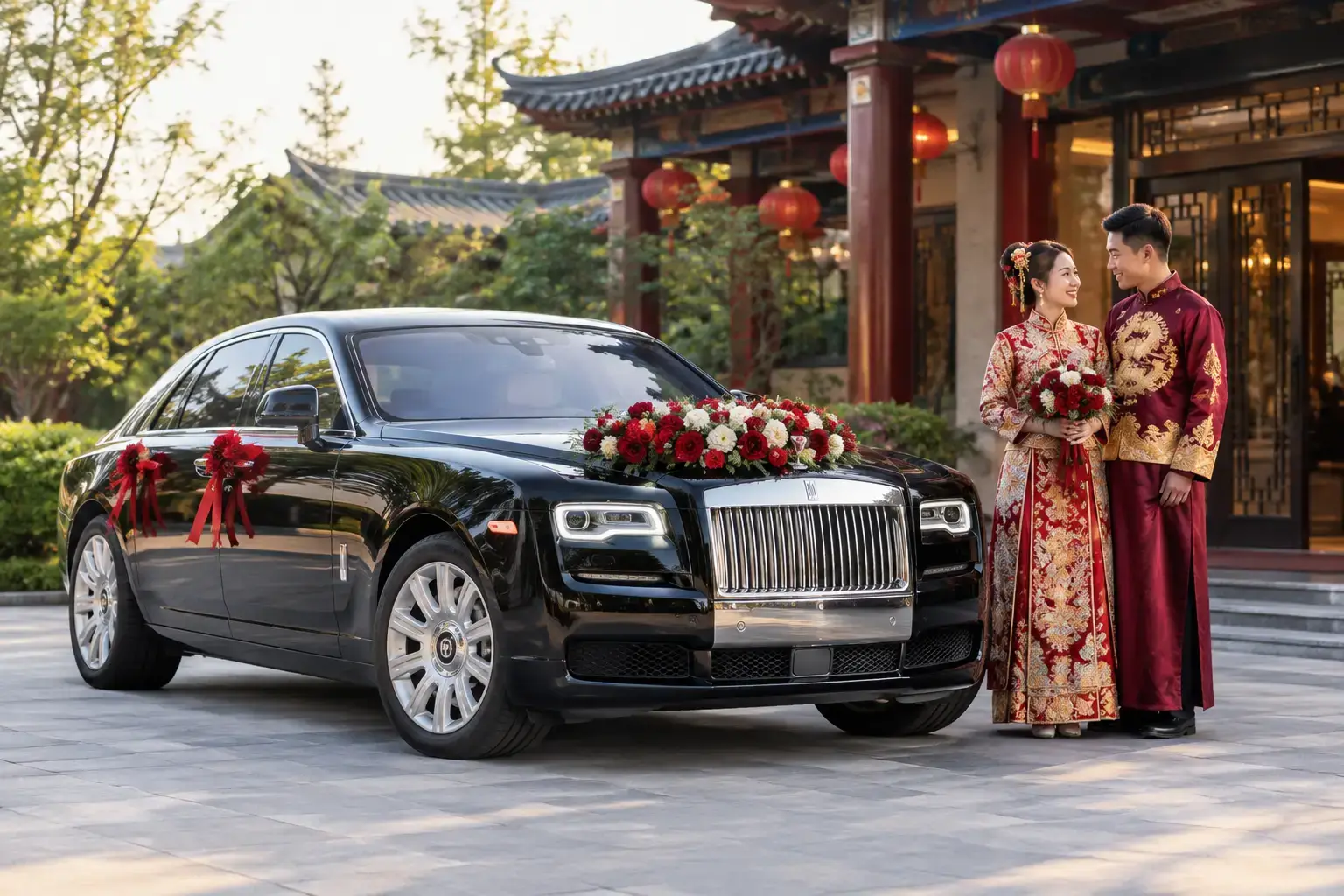
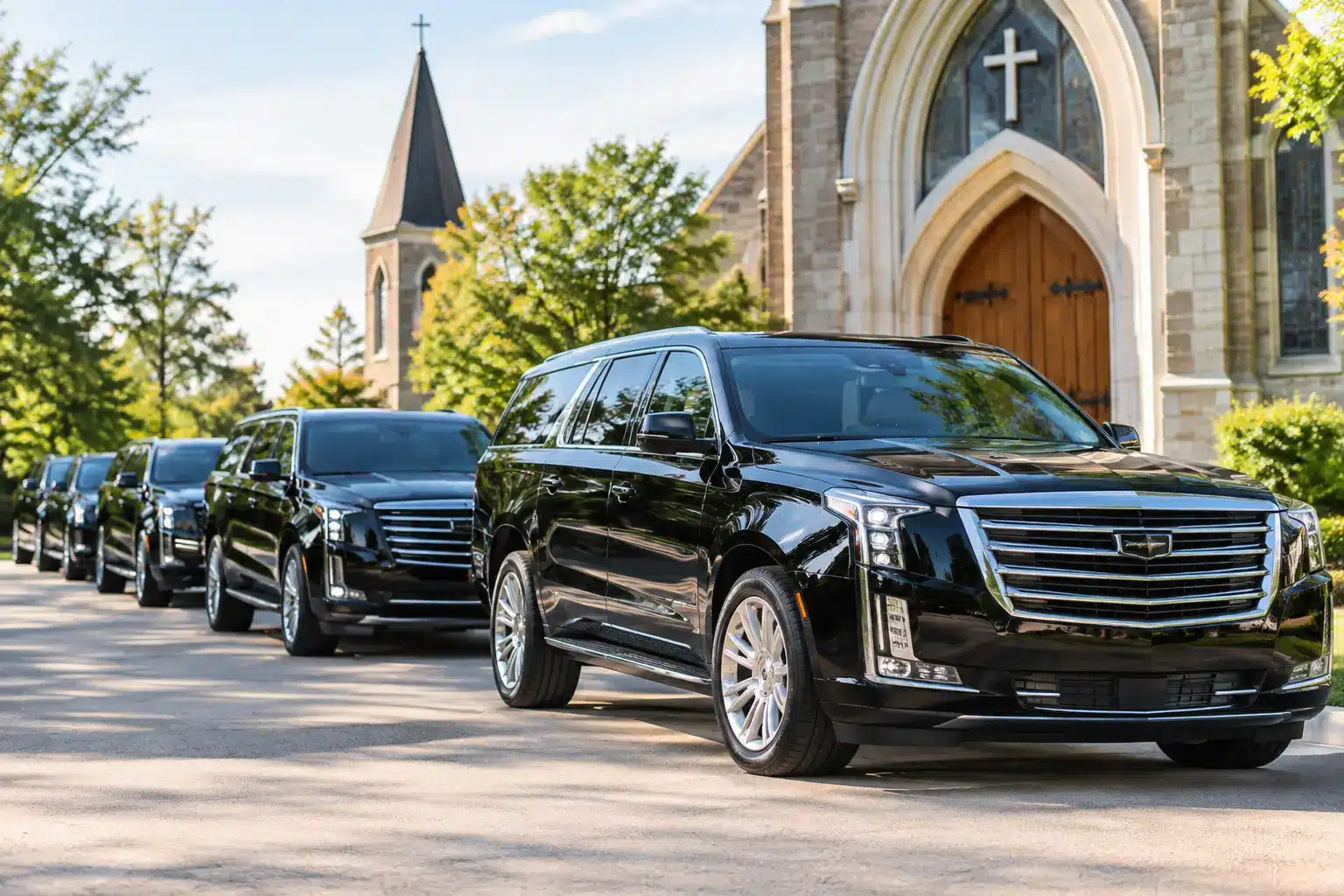
For a traditional church wedding, a practical order often looks like this: the couple in a Rolls-Royce Phantom Two-Tone, Phantom 8 Series, Ghost, or Cullinan; the bridal party in a Cadillac Escalade, Lincoln Navigator Stretch, or Hummer H2 Stretch; and immediate family in a Mercedes Sprinter Limo Style or Corporate Sprinter. The right arrangement depends on passenger count, formalwear, photo plans, and who must arrive together.
The best convoy is not always one continuous line. A 14-passenger Sprinter carrying grandparents and close relatives may be better departing before the wedding party, particularly if they need time to settle in at the reception. A 23-, 27-, or 56-passenger coach can move a larger guest group, but it should operate on a defined departure time rather than waiting for every last guest to exit the church.
Choose one transportation point person
The couple should not receive calls about curb access or a missing passenger. Assign one person, often a planner, sibling, best man, maid of honor, or family representative, to communicate with the chauffeur team. That person should have the final itinerary, the venue contacts, and authority to approve a changed departure time.
Share the point person’s number before the wedding day, along with the photographer’s contact if photo timing affects the route. The chauffeur team can then communicate through the proper channel instead of interrupting the couple during the ceremony or portraits.
Plan Routes for Reality, Not the Map’s Shortest Estimate
The shortest route is not necessarily suitable for a wedding convoy. Downtown Toronto traffic, construction, sporting events, road closures, and wedding-season congestion can change a familiar route considerably. A route from a church in North York to a Vaughan banquet hall requires different planning than a church ceremony in Mississauga followed by a reception in Burlington.
Professional chauffeurs can use route planning and live conditions to make informed adjustments, but the overall schedule still needs a time buffer. Build in enough room for vehicles to depart at different moments and arrive without rushing. Chauffeurs should never be expected to speed, follow too closely, or take unsafe actions simply to keep every vehicle visible in one line.
If the visual effect of vehicles arriving together matters, use a meeting point close to the reception only when it is practical and safe. In many cases, it is better for each chauffeur to proceed directly to the venue and follow the agreed arrival order. Reception staff can then welcome the couple and wedding party as planned without holding up elderly relatives or guests.
Give Guests Clear, Limited Instructions
Guest transportation becomes difficult when instructions are vague. A printed itinerary, wedding website note, or family group message should state the coach departure location, departure time, reception address, and a contact person. Avoid telling guests that a coach will wait indefinitely. It creates uncertainty for everyone on board and puts the entire reception schedule at risk.
For guests driving themselves, provide the reception address and parking guidance in advance. They do not need to follow the wedding vehicles. In fact, encouraging guests to independently navigate to the reception reduces congestion around the church exit and helps prevent confusion at intersections.
A simple message works well: transportation for designated family and guests departs from the church at a stated time; all other guests should travel directly to the reception. It is respectful, clear, and easy to act on.
Match Each Vehicle to Wardrobe and Passenger Needs
Vehicle selection affects the convoy’s pace and comfort. A bridal gown with a full skirt may fit more comfortably in a Rolls-Royce Phantom or Cullinan than in a smaller sedan. A couple seeking a more understated departure may prefer the Rolls-Royce Ghost or Mercedes-Maybach S 580. The 1960 Silver Cloud II brings a distinct vintage character, but its use should be planned with its passenger capacity and photo schedule in mind.
For the wedding party, count actual passengers rather than assuming everyone will fit based on a general estimate. Consider bouquets, garment bags, handbags, umbrellas, and the extra room needed when passengers are wearing formal attire. A 14-passenger Sprinter can be a sensible choice for family movement, while a stretch limousine may better suit a smaller group traveling together for photographs.
For longer transfers or a large group, coaches provide a different function than a bridal vehicle. They are designed to move people efficiently between locations. Keeping those roles separate makes the overall plan easier to manage.
Confirm the Details That Cause Day-Of Delays
A final review should happen several days before the wedding. Confirm church address, exact pickup points, ceremony end estimate, reception entrance, passenger assignments, contact names, and the order in which vehicles should arrive. Confirm whether the venue has a designated area for the couple’s vehicle and whether the bridal party should enter through a separate door.
Also clarify what happens if the ceremony or photo session runs late. Some couples want the family coach to depart at its scheduled time while the bridal party stays for portraits. Others prefer all transportation to wait until the couple leaves. Neither choice is universally right, but the decision must be made before the day.
With Platinum Rides, bookings are confirmed at a flat rate before departure, plus HST and gratuity. For a multi-vehicle wedding plan, that clarity matters because the itinerary may include several pickup locations, a church wait period, photo stops, and a reception arrival sequence.
Let the Exit Feel Celebratory, Not Chaotic
The most memorable church exits often look effortless because the operational work happened earlier. Chauffeurs are in position, family members know their vehicles, guests have directions, and the couple can take a few minutes with the people waiting outside instead of being rushed into the next item on the schedule.
Leave room for the moment. A well-coordinated convoy should protect the timing of the reception while giving the newly married couple a composed, dignified departure from the church.