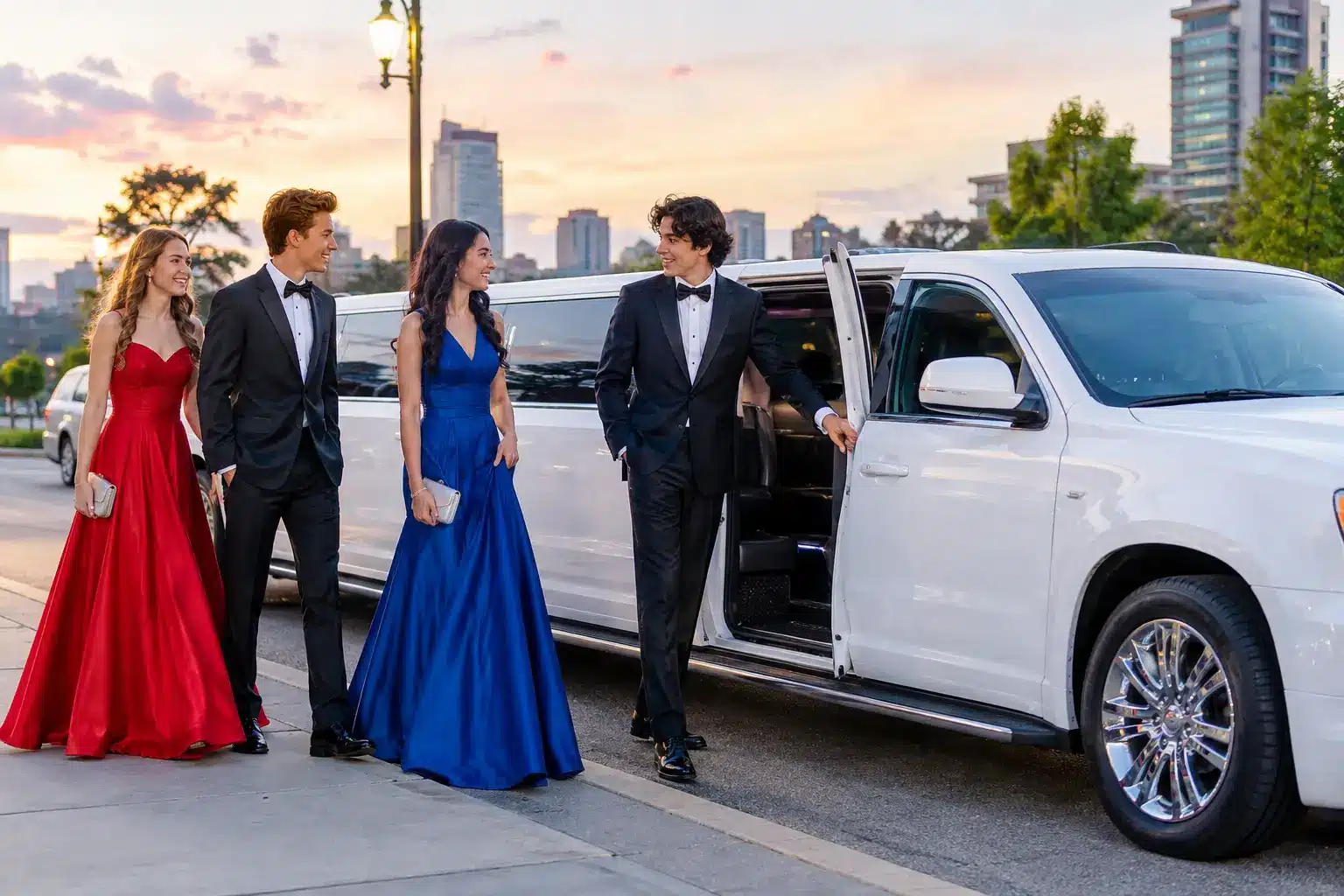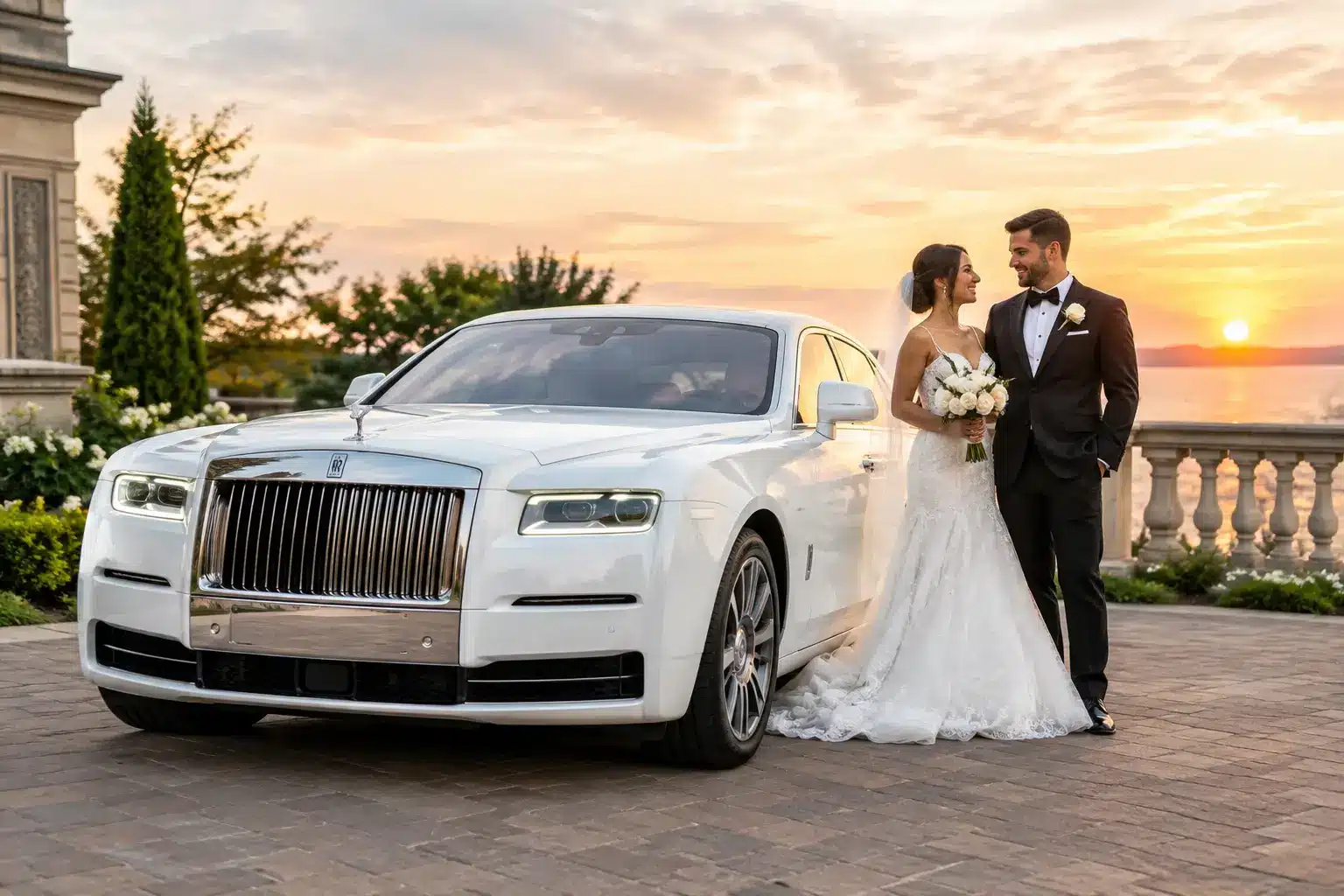

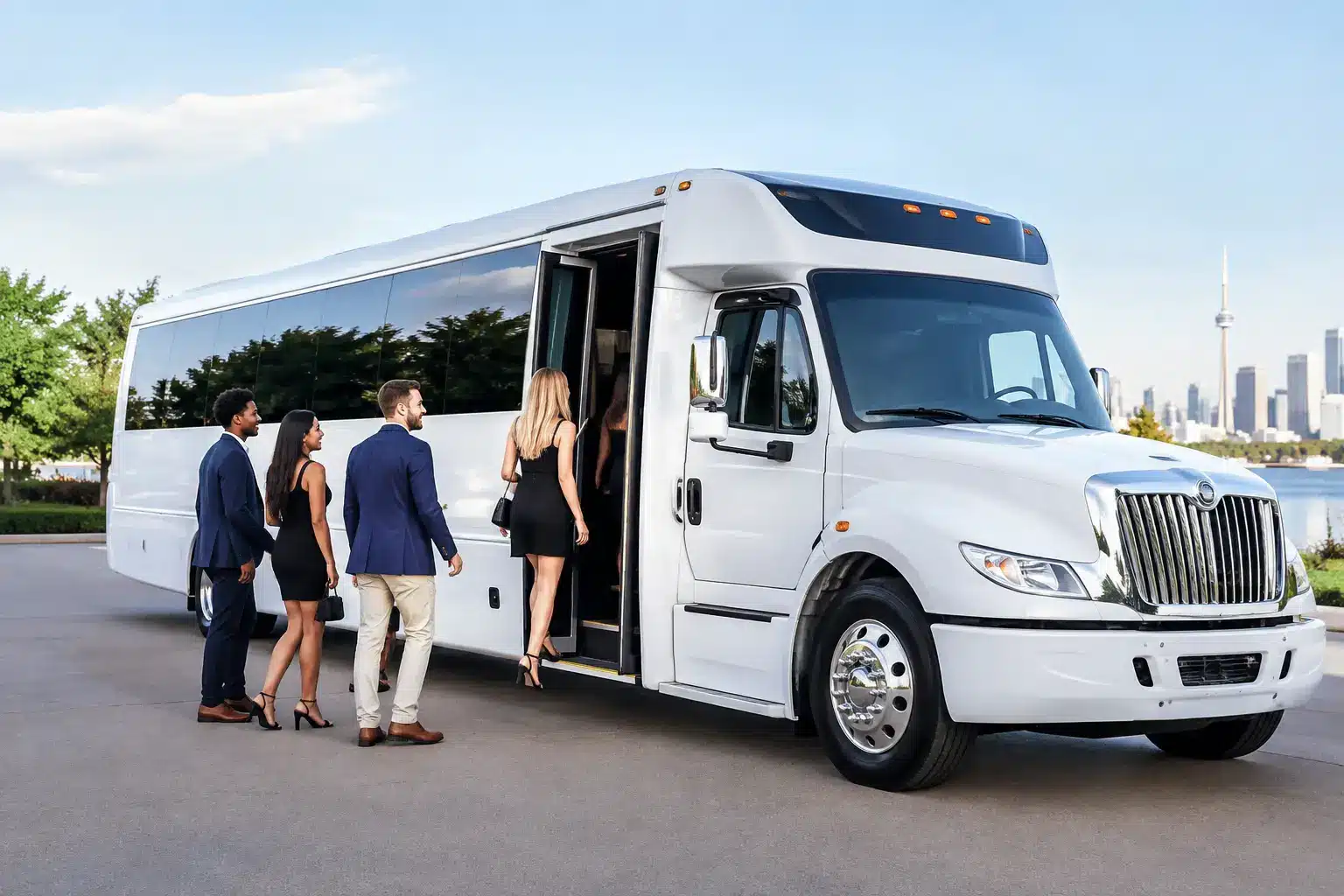
A party bus that looks right in photos can be the wrong choice once everyone is carrying winter coats, formalwear, gift bags, or overnight luggage. The practical question is not only how many people can board. It is how many people can travel comfortably, arrive together, and keep the event schedule moving. This party bus capacity guide explains how to choose between 22-, 28-, 34-, and 50-passenger options for weddings, corporate events, birthdays, and group outings.
The stated capacity is the maximum passenger count for that vehicle. It is a useful starting point, but the right booking decision also depends on trip length, pickup pattern, luggage, and whether the group will be seated for most of the ride. A group of 22 adults traveling from a Toronto hotel to a nearby dinner has different space requirements than 22 wedding guests traveling between multiple venues.
Start With the Actual Headcount
Count every passenger who will ride at any point in the itinerary, including members of the wedding party, parents, coordinators, photographers if they are traveling with the group, and children who need a seat. Do not build the plan around expected no-shows. A confirmed passenger list gives the chauffeur team the information needed to organize pickups and keep the vehicle assignment appropriate.
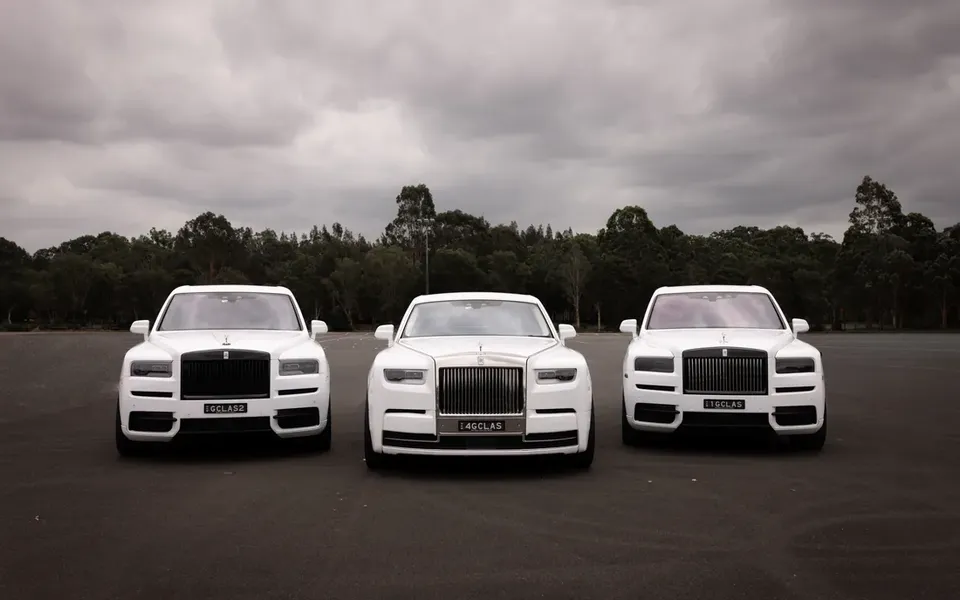
For a wedding, it also helps to separate the group by role. The couple may travel in a Rolls-Royce Phantom Two-Tone or Rolls-Royce Cullinan, while the bridal party and family use separate group transportation. This avoids filling a party bus with people who need to be in different places at different times, such as a tea ceremony, church service, photo location, and reception entrance.
If the number is close to a vehicle’s stated maximum, consider the trip conditions before selecting that size. Full capacity may work well for a short point-to-point transfer. For a longer ride to Niagara-on-the-Lake, Blue Mountain, Muskoka, or a multi-stop wedding day, choosing the next size up can make more sense.
Party Bus Capacity Guide by Group Size
22-passenger party bus
A 22-passenger party bus is often a practical choice for a bridal party, a birthday dinner group, or a corporate team moving between one meeting venue and an evening function. It suits groups that want to travel together without bringing a much larger vehicle into a tight driveway, hotel entrance, or urban loading area.
It is also a sensible capacity for wedding parties with several separate transportation needs. For example, a Hummer H2 Stretch may be selected for an 18-person bridal party, while a 22-passenger party bus carries immediate family members who are attending the same ceremony and reception. The right arrangement depends on who needs to arrive together, not simply on total guest count.
28-passenger party bus
The 28-passenger option works well when a 22-passenger vehicle would be at or near its maximum. It gives a little more flexibility for guests in formal attire and is useful for groups with several pickup points across Mississauga, Brampton, Vaughan, Markham, or Toronto.
For a bachelorette celebration or birthday event, a 28-passenger bus gives the organizer room to include the full group without splitting friends into two vehicles. For a corporate function, it can accommodate a department group while preserving a single arrival time and one central point of communication.
34-passenger party bus
A 34-passenger party bus is a strong fit for larger wedding groups, company celebrations, and coordinated event transportation. It is particularly useful when the itinerary includes travel between a ceremony, photo session, and reception, or when guests are joining from a central hotel.
This size can also reduce the complexity of managing several smaller vehicles. That does not automatically make it the right answer. If the group has different departure times or must divide between venues, two properly scheduled vehicles may be more efficient than one bus waiting for everyone to assemble.
50-passenger party bus
A 50-passenger party bus is designed for large groups that need to remain together for a shared itinerary. It can suit a major wedding guest movement, a large corporate event, a concert group, or a school-related celebration where adult supervision and a detailed pickup plan are in place.
At this capacity, loading and unloading time becomes a real part of the schedule. A 50-person group takes longer to assemble, board, and clear a venue than a group of 20. Build that time into the itinerary, especially at busy banquet halls, downtown hotels, and venues with limited curb access. For prom and school bookings, alcohol is not permitted. Sparkling juice is an appropriate celebratory option.
Capacity Is Not the Same as Comfort
Passenger capacity is a legal seating figure, not a promise that every trip will feel the same. A group traveling 10 minutes between a ceremony and reception can use available seating differently than a group traveling several hours. The more time people spend on board, the more valuable extra room becomes.
Formal clothing is another factor. A bridal party in structured gowns, suits, turbans, or traditional attire may appreciate additional space to sit comfortably and protect garments. For a Persian Sofreh Aghd ceremony or a Chinese tea ceremony with multiple locations, organizers should also consider whether ceremonial items, garment bags, gifts, or décor will travel with the group.
Luggage changes the calculation as well. Party buses are generally selected for event groups rather than heavy airport baggage loads. If guests are arriving at Pearson Airport or an FBO such as Skyservice, Signature Aviation, or Skycharter with substantial luggage, a shuttle coach, Mercedes Sprinter Corporate, Ford Transit, or a combination of vehicles may be more appropriate. Explain the baggage count when confirming transportation so vehicle space can be planned properly.
Plan the Itinerary Before Selecting the Vehicle
The vehicle should follow the schedule, not the other way around. Before confirming capacity, identify the first pickup, each stop, the final drop-off, and the required arrival time at every location. Include time for photographs, venue departures, loading, and any planned return service.
For multicultural weddings, that preparation can be especially important. A Punjabi baraat may require a different arrival sequence from a church-to-reception convoy. A Hindu muhurat has a fixed ceremonial timing, while a Pakistani Nikkah or Italian family reception can involve separate groups traveling from different homes or hotels. One large bus can be useful, but it should not force guests to arrive unnecessarily early or wait through an unrelated part of the day.
Corporate planners should also consider whether the group needs a single shared pickup or several neighborhood pickups. A 34- or 50-passenger party bus may be effective for a central hotel departure, while executives arriving separately may be better assigned to Cadillac Escalades, Chevrolet Suburbans, or a Mercedes-Maybach S 580 for individual transfers.
When a Coach Is the Better Choice
A party bus and a highway coach serve different purposes. A party bus is suited to celebratory groups, local event movement, and itineraries where the group wants to remain together in a social setting. A 23- or 27-passenger shuttle coach, or a 56-passenger highway coach, may be the more practical selection for longer distances, large luggage loads, campus transportation, or organized corporate travel.
For example, a group traveling from Toronto to Niagara Falls for the day may prefer a coach depending on passenger count and trip duration. The same applies to conference attendees traveling between cities, university leadership groups, or a large family traveling a longer route. Capacity alone does not decide the vehicle type. Ride duration, baggage, and the nature of the occasion matter just as much.
Confirm the Details That Affect the Final Count
Before departure, provide the final passenger total, addresses, schedule, and any special items that will travel with the group. Tell the transportation coordinator if the plan includes mobility considerations, several child seats, formal garments, gift boxes, or airport luggage. Small details can affect whether the stated maximum is the comfortable choice.
Ask about the practical loading point at each venue. Some properties have a designated entrance for larger vehicles, while others require a specific curbside location or scheduled access time. This is particularly relevant for downtown Toronto events and venues with active valet operations.
Platinum Rides confirms a flat rate before departure, plus HST and gratuity, rather than using per-kilometer charges. For group transportation, a clear itinerary and accurate count are the foundation of that confirmed rate.
Choose capacity with the full day in mind, not just the moment everyone steps onto the bus. A well-matched vehicle gives the group room to arrive organized, dressed for the occasion, and ready for the next part of the event.