
A wedding weekend can involve a Thursday airport arrival, a Friday tea ceremony, a Saturday baraat or church service, and a Sunday brunch departure. Treating each trip as a separate booking leaves too much room for changed pickup times, missing guest counts, and confusion over who is traveling together. Multi day wedding bookings put the full schedule under one transportation plan, with the right vehicles and licensed chauffeurs assigned around the events that matter.
For families hosting celebrations across Toronto, Mississauga, Brampton, Vaughan, Markham, Hamilton, or Niagara-on-the-Lake, the value is not simply having a vehicle available. It is having an operator who understands that a wedding schedule often moves between homes, photo locations, ceremony sites, hotels, banquet halls, and late-night departures.
Why multi day wedding bookings need one plan
A single wedding day already has several moving parts. A multi-day celebration adds airport arrivals, family dinners, religious ceremonies, pre-wedding photos, rehearsal events, and departures. The same people may not travel together at every point, and the couple’s vehicle may need to be staged differently from family or guest transportation.
Planning each movement in isolation can create gaps. A bridal party vehicle may be booked without accounting for the parents’ departure. Guests arriving at Pearson may be arranged separately from hotel transfers. A vehicle reserved for the ceremony may not be available when photos run longer than expected.
One coordinated booking creates a single schedule for all movements. It also gives the transportation team a full view of addresses, passenger counts, luggage needs, ceremonial timing, vehicle holds, and the order in which each group must leave. When a timeline changes, there is context behind the adjustment rather than a series of disconnected reservations.
Platinum Rides provides chauffeur service, not self-drive vehicles. Every booking includes a formally dressed, licensed chauffeur, which matters when a family needs vehicles placed at specific locations and guests need clear direction on where to meet.
Start with the wedding weekend, not the vehicle
The strongest transportation plan starts with the event calendar before anyone selects a Rolls-Royce or limousine. List each event, the exact address, the required arrival time, the people traveling, and whether the vehicle must wait or return later. Include hotel check-in and check-out windows, particularly when relatives are flying into YYZ Pearson or Billy Bishop YTZ.
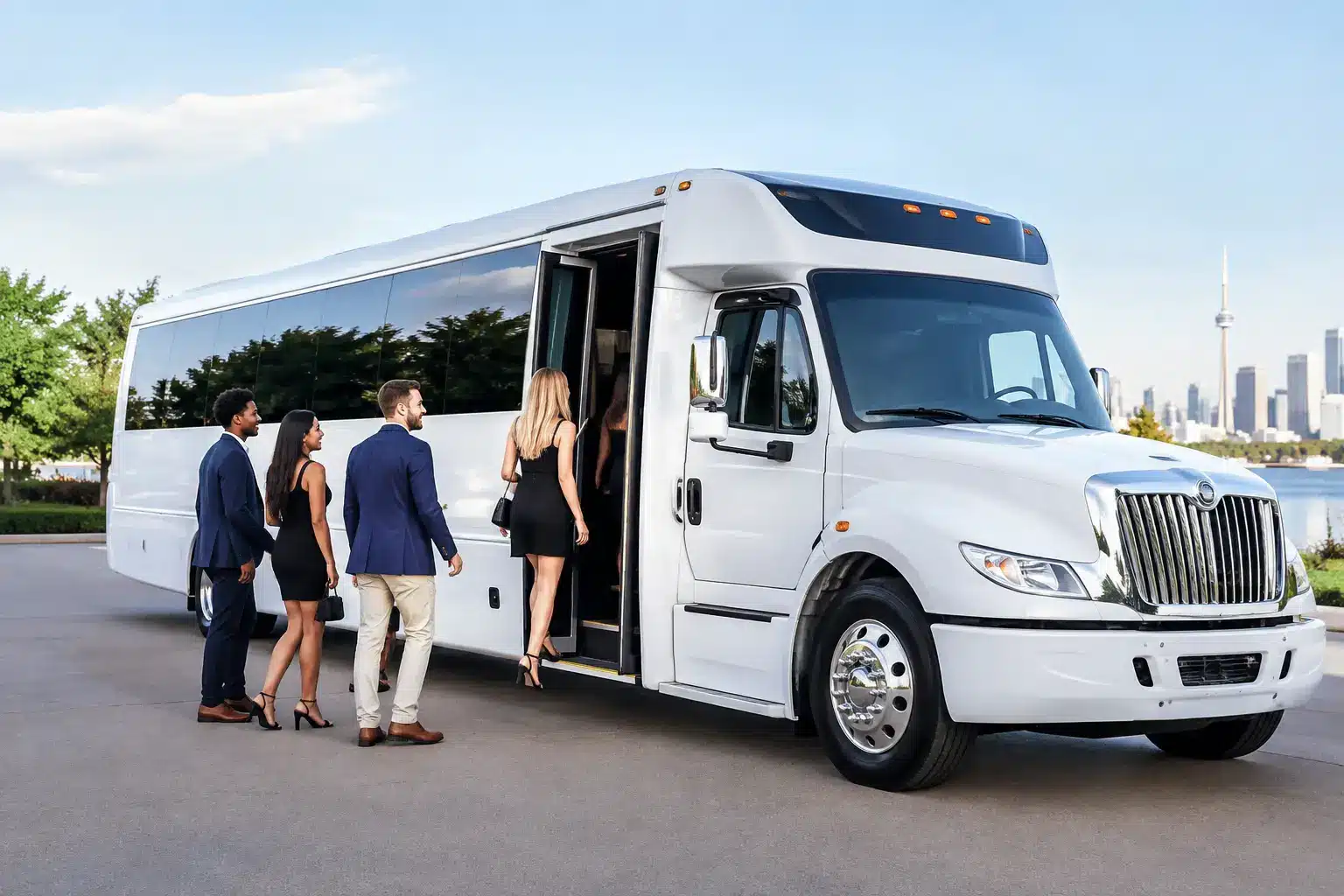
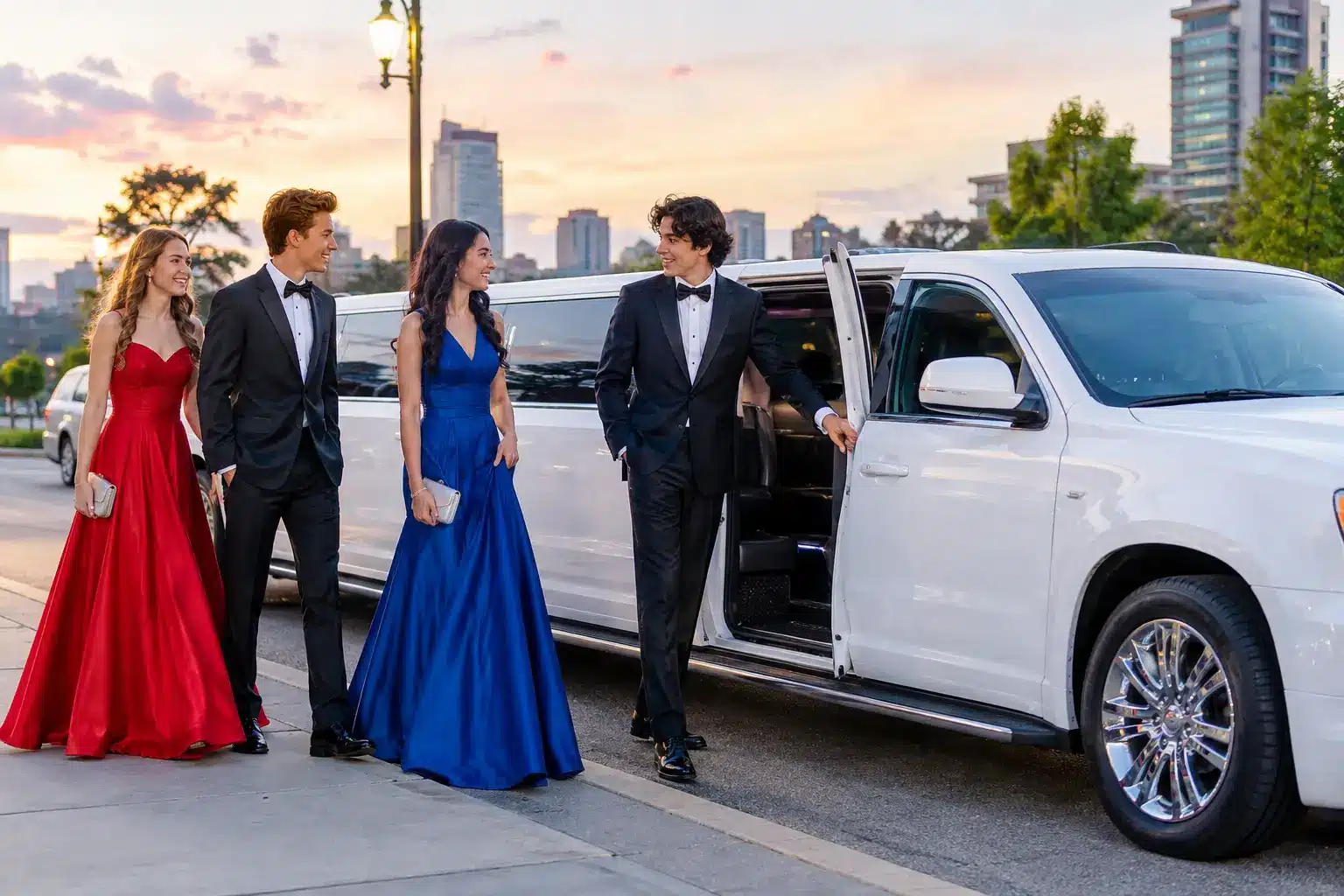
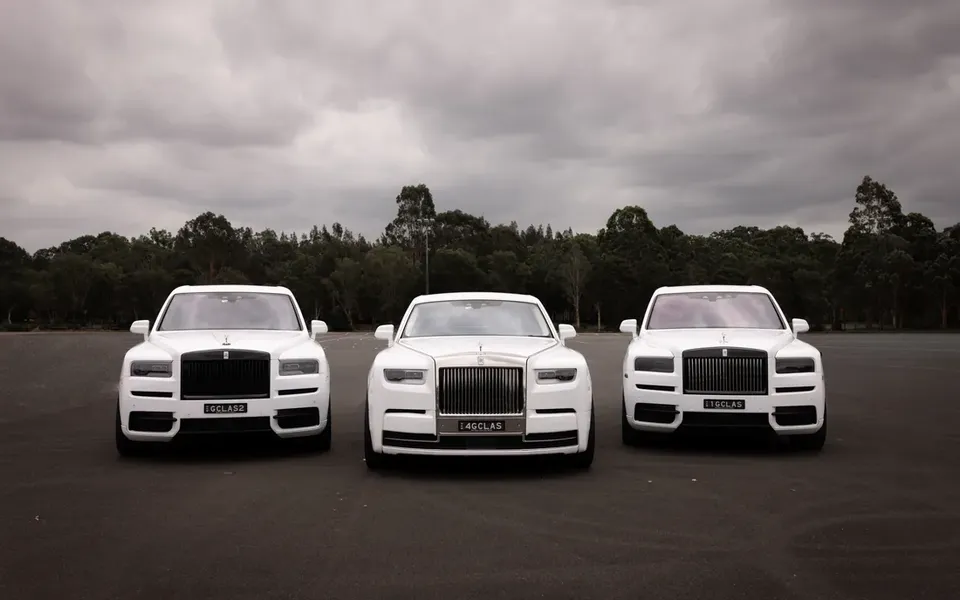
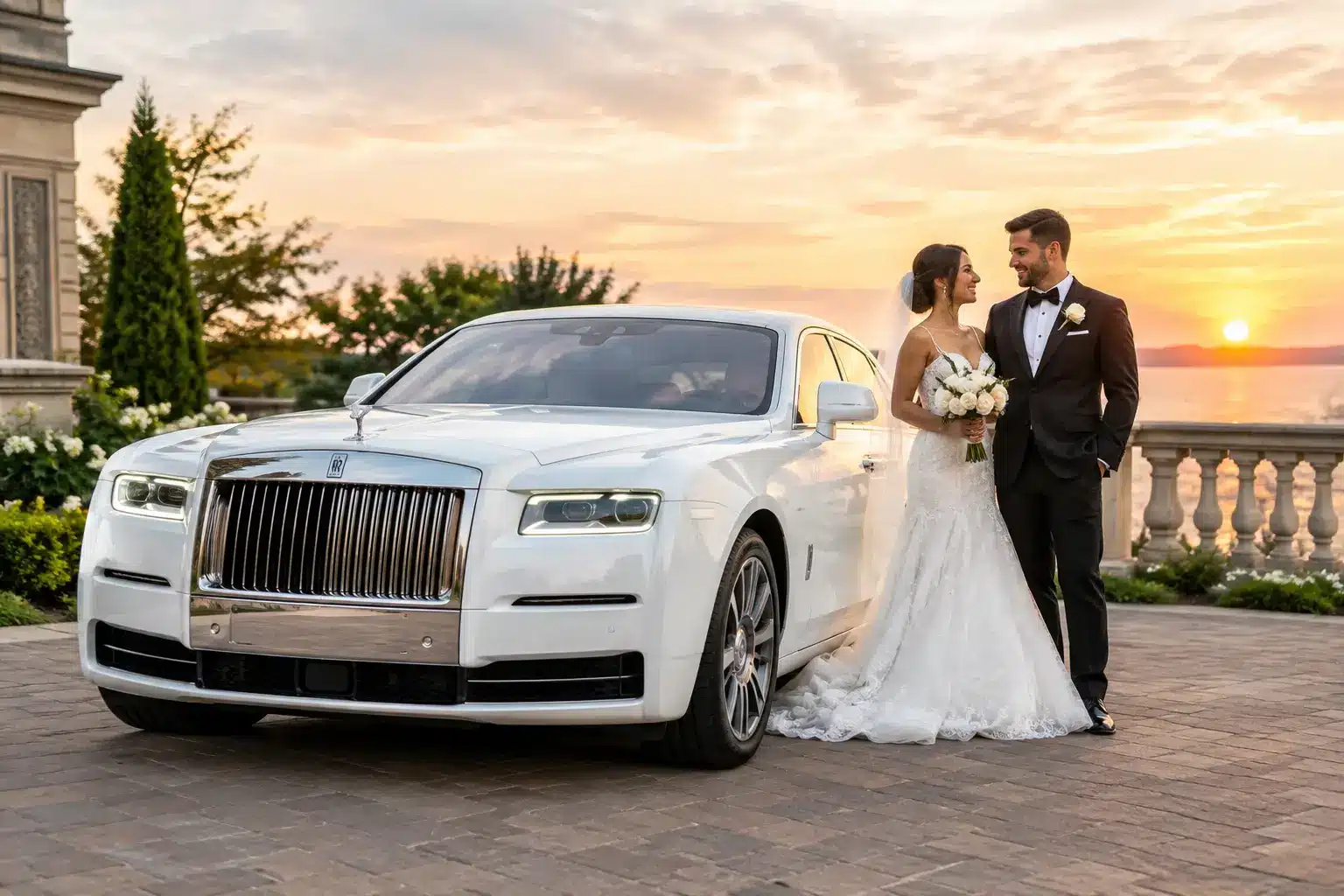
This approach usually reveals where separate transportation is necessary. The couple may require a Rolls-Royce Phantom Two-Tone or Rolls-Royce Cullinan for formal entrances and photos. The bridal party may need a Hummer H2 Stretch or Mercedes Sprinter Limo Style. Parents, elders, or immediate family may be better served by a Cadillac Escalade, Chevrolet Suburban, or Mercedes Sprinter Corporate.
A vehicle that photographs well is not automatically the right vehicle for every movement. A vintage 1960 Rolls-Royce Silver Cloud II has a very different role from a 56-passenger highway coach. Both can fit within the same wedding plan, but they solve different problems.
Build the schedule around ceremony realities
Cultural and religious ceremonies often have timing requirements that should shape transportation from the beginning. A Punjabi baraat may require vehicles to stage well before the procession begins. A Hindu ceremony may have a fixed muhurat that leaves little flexibility around arrival time. A Pakistani Nikkah can involve separate family movements before and after the ceremony.
For a Persian Sofreh Aghd, the ceremony setting, photography sequence, and family entrances can affect when the couple’s vehicle should arrive and where it should wait. A Chinese tea ceremony often means travel between homes before the formal venue program. Italian church-to-reception plans may require a coordinated convoy, photo stop, and separate guest coach movement.
These are not details to add at the end. They determine vehicle placement, chauffeur reporting times, route planning, and the amount of buffer required between locations.
Match capacity to the people actually traveling
Overestimating or underestimating capacity causes avoidable problems. A 14-passenger Sprinter may work well for a bridal party and a small number of personal items, but it may not be suitable for a large group carrying formalwear, gifts, and photography equipment. Similarly, a party bus can move a larger group, but it may not be the practical choice for older relatives who prefer easier entry and a quieter ride.
For multi-vehicle wedding bookings, divide travelers by purpose rather than trying to place everyone in one group. The couple, wedding party, parents and grandparents, out-of-town family, and general guests often have different schedules and comfort requirements.
For example, a wedding at Liuna Station in Hamilton might use a Rolls-Royce Ghost for the couple, a Cadillac Escalade for parents, a Mercedes Sprinter Limo Style for the wedding party, and a 27-passenger coach for hotel guests. A larger reception in Brampton or Vaughan may require several coaches for guest transfers, especially if parking is limited or the hotel is separate from the banquet hall.
Passenger counts should include children, personal attendants, photographers traveling with the group, and anyone who expects to return in the same vehicle. It is also sensible to account for formal clothing. A full vehicle on paper can feel crowded once gowns, suits, bouquets, and bags are added.
Plan airport arrivals and departures as wedding events
Airport transportation is often the first and last impression relatives have of the weekend. It deserves the same detail as the ceremony schedule. Record flight numbers, arrival terminals, passenger names, luggage volume, hotel addresses, and whether guests are arriving together or on separate flights.
A Mercedes-Maybach S 580 or Cadillac Escalade may suit a small family group, while a Sprinter or coach can be more practical for several relatives arriving on the same flight. For guests traveling from farther away, a coordinated return plan can prevent a late-night scramble after the reception or an early-morning rush to Pearson.
The same principle applies to private aviation arrivals. Guests using Skyservice, Signature Aviation, or Skycharter at Pearson may require a direct transfer to a hotel, family home, or venue rehearsal. Those movements should be included in the larger schedule, not handled as an afterthought.
Confirm what is included before the weekend begins
Multi-day transportation should be quoted clearly. Platinum Rides confirms a flat rate before departure, plus HST and gratuity. There are no per-kilometer charges, which helps families budget for long routes, multiple locations, and planned waiting periods without trying to calculate mileage during an already busy weekend.
Before confirming, review the details that affect the itinerary: dates, pickup addresses, vehicle assignments, passenger counts, ceremony and reception timing, requested photo stops, luggage, airport information, and the primary contact for each day. Share the planner’s contact if there is one, but keep one family representative authorized to make day-of decisions.
It is useful to distinguish between a vehicle waiting on site and a vehicle returning for a later pickup. The right choice depends on venue parking, the length of the gap, access to the vehicle, and how likely the schedule is to change. A short photo session may justify keeping the vehicle nearby. A long mid-day break may call for a planned return.
Leave room for the moments that run long
Wedding timelines are precise until they meet real people. Family photos take longer. A receiving line grows. A ceremony begins later because an important relative is still en route. Traffic, weather, and venue access can also affect movement between locations.
The answer is not to add arbitrary hours everywhere. It is to identify the moments where time is genuinely uncertain and build sensible buffers around them. A 15-minute photo stop may need more flexibility than a direct hotel-to-venue transfer. A baraat and a large banquet hall arrival require more staging time than a small dinner reservation.
Share updates early when possible. If the ceremony location changes, guest counts increase, or a family member needs separate transport, those changes are easier to manage before chauffeurs and vehicles are dispatched for the day.
A well-planned wedding weekend should leave the family free to focus on the people gathering, the traditions being honored, and the moments that cannot be repeated. Transportation works best when it has already accounted for everything happening around them.