

A wedding timeline can look realistic on paper and still fall apart at the curb. A hair appointment runs late, relatives need a second pickup, a tea ceremony takes longer than expected, or a photo location is farther from the venue than it appeared. Wedding limo timeline planning accounts for those real moments before they become problems. The goal is not to fill every minute. It is to protect the moments that cannot move.
For weddings in Toronto, Mississauga, Brampton, Vaughan, Markham, Hamilton, and beyond, transportation often connects more than two locations. It may involve separate homes, a church or ceremony hall, photo stops, a banquet hall, and late-night guest transportation. The vehicle plan needs to follow the event’s actual sequence, not a standard template.
Start Wedding Limo Timeline Planning With Fixed Times
Begin with the times that are genuinely fixed: the ceremony start, religious or cultural ceremony windows, venue access, reception entrance, dinner service, and any contracted photo time. Work backward from those points. A pickup time is not the start of transportation planning. It is the result of it.
Ask the venue how early the couple, family, and vendors may arrive. Some banquet halls allow early access for floral setup but not for guest arrivals. Churches may have a firm ceremony slot because another service follows. At a Persian Sofreh Aghd, the table setup and family arrivals may require more time before guests are seated. At a Hindu wedding, the muhurat can set a narrow ceremony window. Those details belong in the vehicle schedule from the beginning.
Then identify every group that must arrive at a specific place. The couple is one movement. Parents, siblings, the bridal party, elderly relatives, and out-of-town guests may be separate movements with different pickup points. Treating them as one group because they are all attending the same wedding is a common source of delays.
Build the Day Around People, Not Just Vehicles
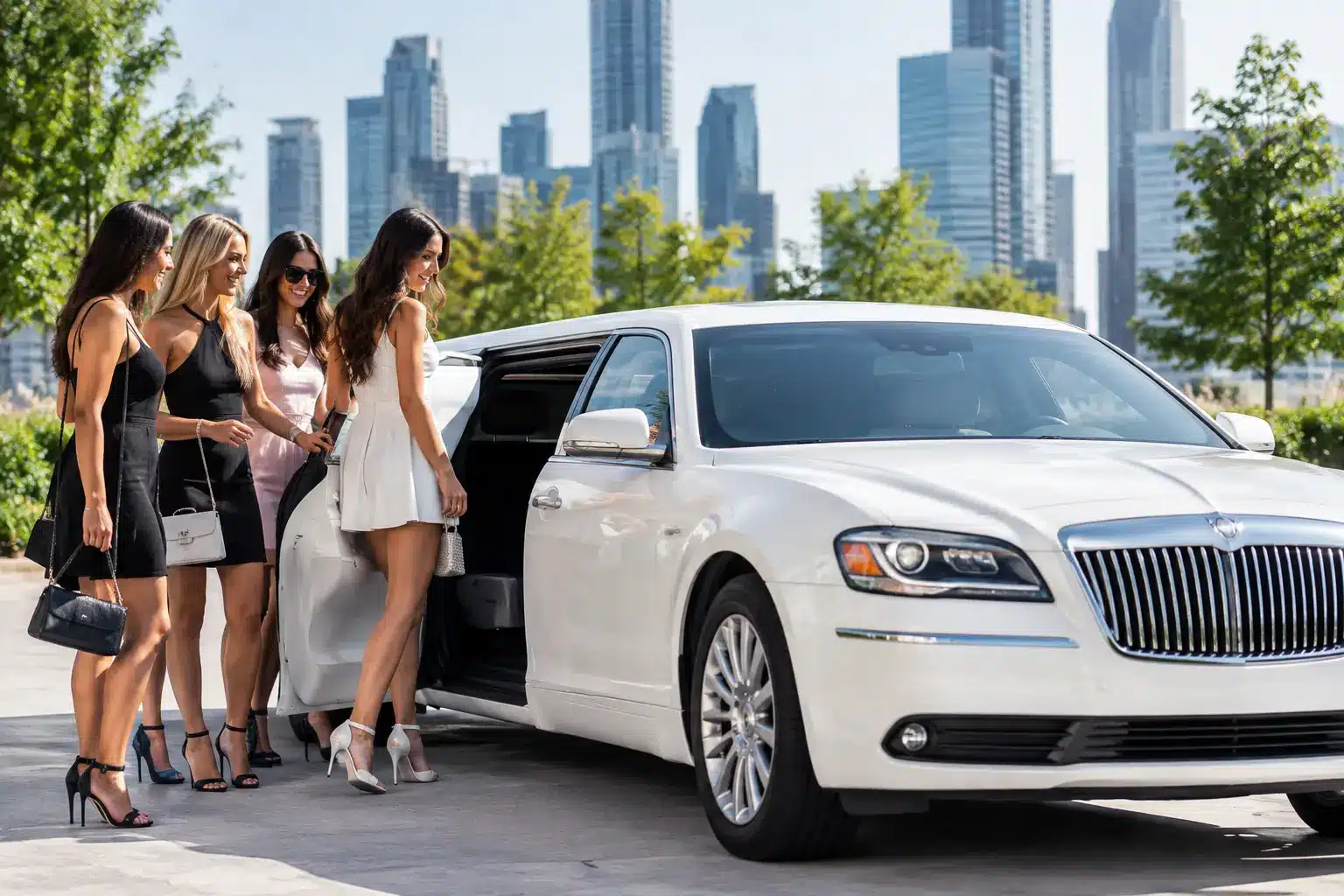
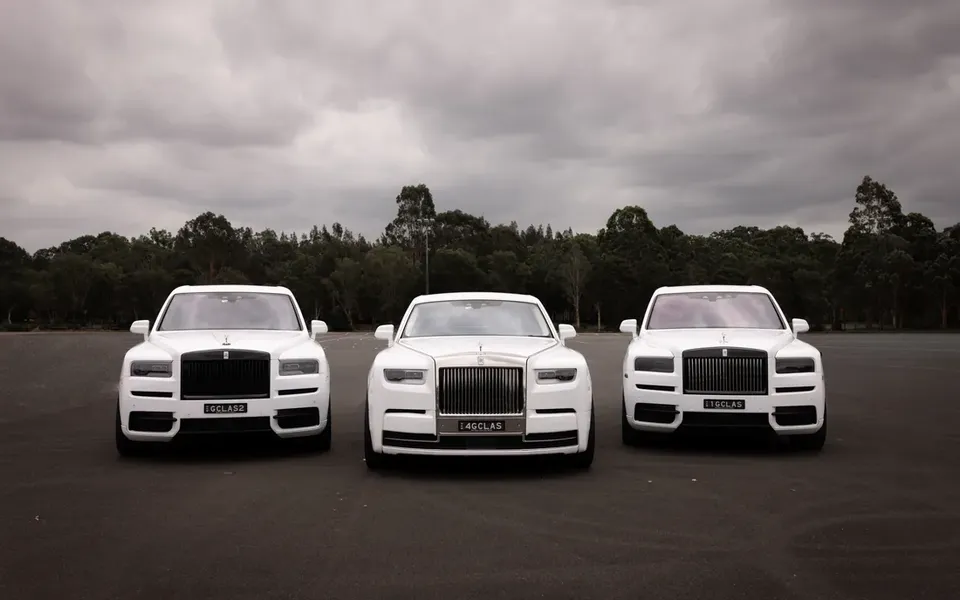
A sedan or Rolls-Royce for the couple serves a different purpose than a party bus or coach for guests. The couple’s vehicle should have a protected schedule, room for formalwear, and a direct route between essential locations. A Rolls-Royce Ghost, Phantom 8 Series, Phantom Two-Tone, Cullinan, or Mercedes-Maybach S 580 is often scheduled separately for that reason.
For a larger wedding party, count seated passengers rather than assuming everyone will fit with gowns, suits, bouquets, bags, and photo equipment. A Hummer H2 Stretch accommodates up to 18 passengers, while the Mercedes Sprinter Limo Style accommodates 14. A Cadillac Escalade or Chevrolet Suburban can make sense for a smaller bridal party, parents, or a second family group. Vehicle selection is not only about appearance. It affects loading time, comfort, and whether people arrive together.
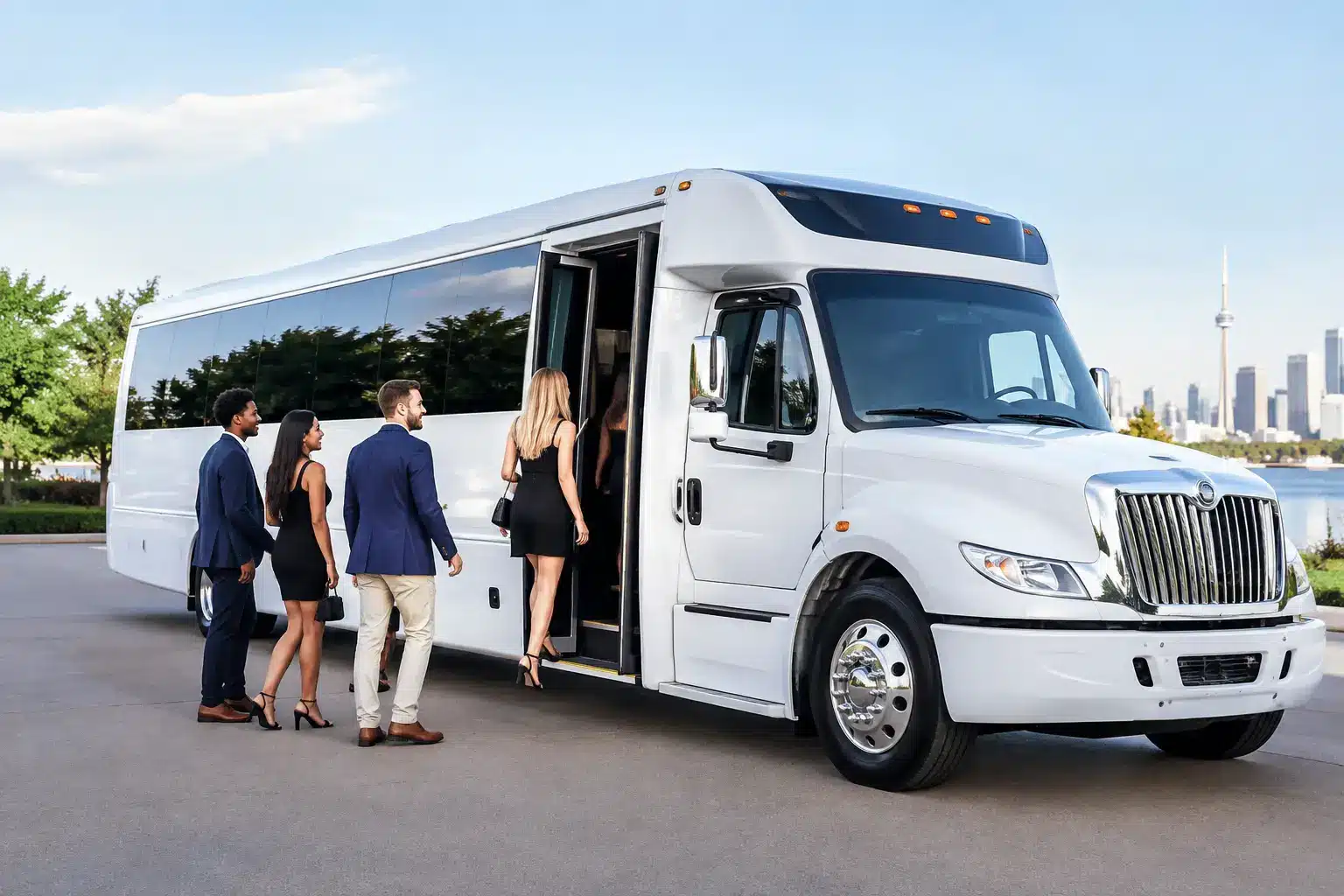
Guest transportation should be planned as its own service. A 22-, 28-, 34-, or 50-passenger party bus may suit a local group transfer, while a 23-, 27-, or 56-passenger coach is more practical for larger guest movements. For example, if many guests are staying at one hotel and the reception is 25 minutes away, schedule the coach arrival early enough to load, not merely early enough to leave.
Add Buffers Where Weddings Actually Run Long
The right buffer depends on the activity. A five-minute cushion between a home pickup and a local first-look photo stop may be enough if the group is already dressed and ready. It is rarely enough after a ceremony with receiving lines, family photos, congratulations, and a full parking lot.
Build extra time at these points:
- Getting everyone into and out of a vehicle, especially with formalwear, children, or older family members.
- Ceremony departures, where relatives often want photos with the couple before anyone leaves.
- Photo sessions, particularly when there are multiple stops or public locations with limited curb access.
- Venue arrivals, where wedding parties may need to wait for a room reveal, staff direction, or a planned entrance.
- Hotel and banquet hall departures, where guests may not come down at the requested time.
A practical approach is to add 10 to 15 minutes for a simple group transfer and 20 to 30 minutes for a transition involving ceremony photos, family greetings, or multiple vehicles. Longer buffers may be necessary for a downtown Toronto route on a weekday, a large Brampton banquet hall, or an event with a detailed procession. The point is not to create idle time everywhere. It is to place time where the day is least predictable.
Account for Cultural Ceremony Flow
Multicultural weddings often require a more detailed transportation map, not a longer generic booking. A Punjabi baraat may need a clear arrival point and enough staging time before the procession begins. A Chinese tea ceremony can involve two homes, gifts, family members, and a precise order of events. Italian church-to-reception logistics may include a formal exit, family photos, and a convoy that cannot be treated like a single vehicle transfer.
Discuss these transitions in plain language with your chauffeur service. Explain who needs to be where, when the couple should remain separate, whether vehicles are staying on site, and who has authority to make changes. One designated transportation contact, usually a planner, sibling, or member of the wedding party, prevents conflicting instructions during the day.
Plan the Photo Route as a Working Schedule
Photo time is often the first item to shrink when the morning runs late. It should also be the first part of the plan to receive clear travel estimates. List the exact locations, preferred order, parking or drop-off limitations, and the time the couple must be at the reception venue.
Avoid booking three photo locations simply because each looks good online. One well-planned location near the ceremony or reception can produce better results than an ambitious route with repeated loading and unloading. If a waterfront stop, park, or downtown landmark is essential, decide in advance what will be removed if the ceremony starts late.
The chauffeur should receive the final route and timing before the wedding day, along with venue entrances and the name of the day-of contact. Platinum Rides provides a formally dressed, licensed chauffeur with every booking, but the chauffeur can only support the plan effectively when the itinerary reflects the actual event flow.
Separate the Couple’s Departure From Guest Transportation
The reception departure is frequently overlooked. Couples may plan a grand exit at 11:00 p.m., then find that speeches, dancing, cake cutting, or family photos have shifted everything later. If the departure matters for photos or a hotel transfer, establish a realistic window rather than a single rigid minute.
Guest transportation needs a different approach. For a shuttle between a hotel and reception venue, set more than one departure when the guest count and schedule justify it. The first trip can serve guests leaving after dinner, older relatives, and families with children. A later departure can serve guests staying through the final events. This reduces the pressure on one crowded end-of-night pickup.
Confirm whether personal items, gifts, or decorations will travel with anyone. A wedding vehicle is not a substitute for a planned venue load-out, and last-minute requests can disrupt the passenger schedule.
Confirm Details Early, Then Reconfirm the Week Of
A useful transportation itinerary includes full pickup addresses, entrance instructions, passenger counts, ceremony and reception contacts, photo stops, requested arrival times, and final destinations. It should also state which vehicle serves which group. If there are multiple limousines, SUVs, Sprinters, or coaches, vague instructions such as “take the family first” are not enough.
Reconfirm the itinerary during the final week, after the venue coordinator, photographer, and planner have finalized their schedules. Check construction notices, major sporting events, road closures, and downtown access restrictions where relevant. A good plan allows for changes, but it does not leave basic facts unresolved until the wedding morning.
Ask for the pricing structure in writing as well. Platinum Rides confirms a flat rate before departure, plus HST and gratuity, rather than applying per-kilometer charges. For a multi-vehicle wedding, that clarity makes it easier to approve the full transportation plan before the day begins.
A wedding timetable should give the couple room to be present, not keep them watching the clock. Protect the ceremony, protect the photo window, give family movements their own plan, and leave enough margin for people to celebrate before they move on.