
A wedding schedule can look perfectly organized on paper until 14 people are waiting outside a hotel, the photographer needs the couple at the church, and family members are leaving from a different address. The question of how many wedding limos to book is less about making an entrance and more about moving the right people at the right time.
For many weddings, the answer is two or three vehicles. For others, particularly celebrations with separate homes, a large wedding party, a baraat, tea ceremony, church service, or reception in another city, four or more vehicles may be the more practical choice. The right number depends on passenger count, locations, timing, and who needs to travel together.
Start With the People Who Cannot Be Late
Begin with the couple. This is usually the one vehicle that should be considered separately from the rest of the plan. The couple may need transportation from a hotel or home to the ceremony, then to photographs, and later from the reception. Their schedule often has different stops and different timing than the wedding party or immediate family.
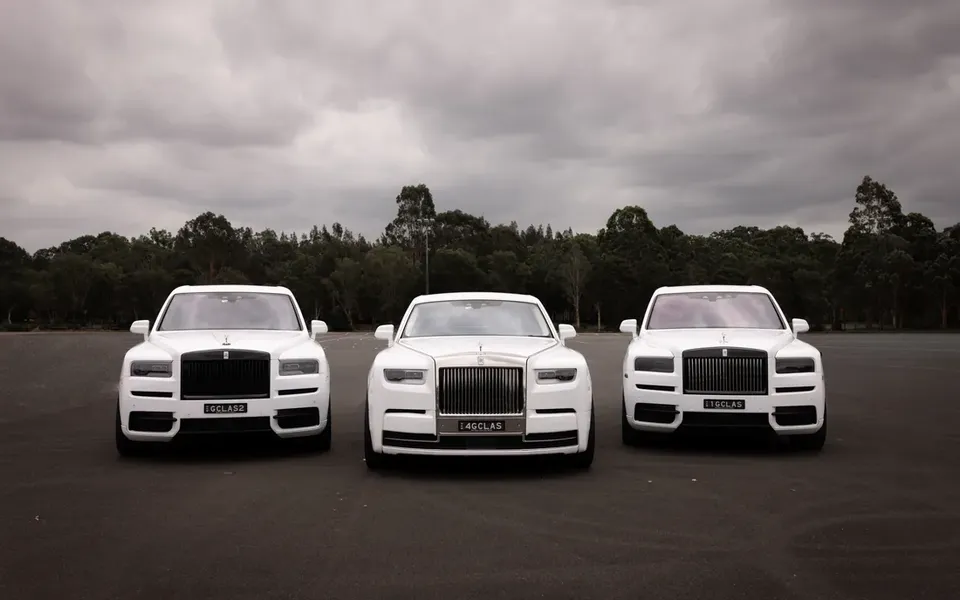
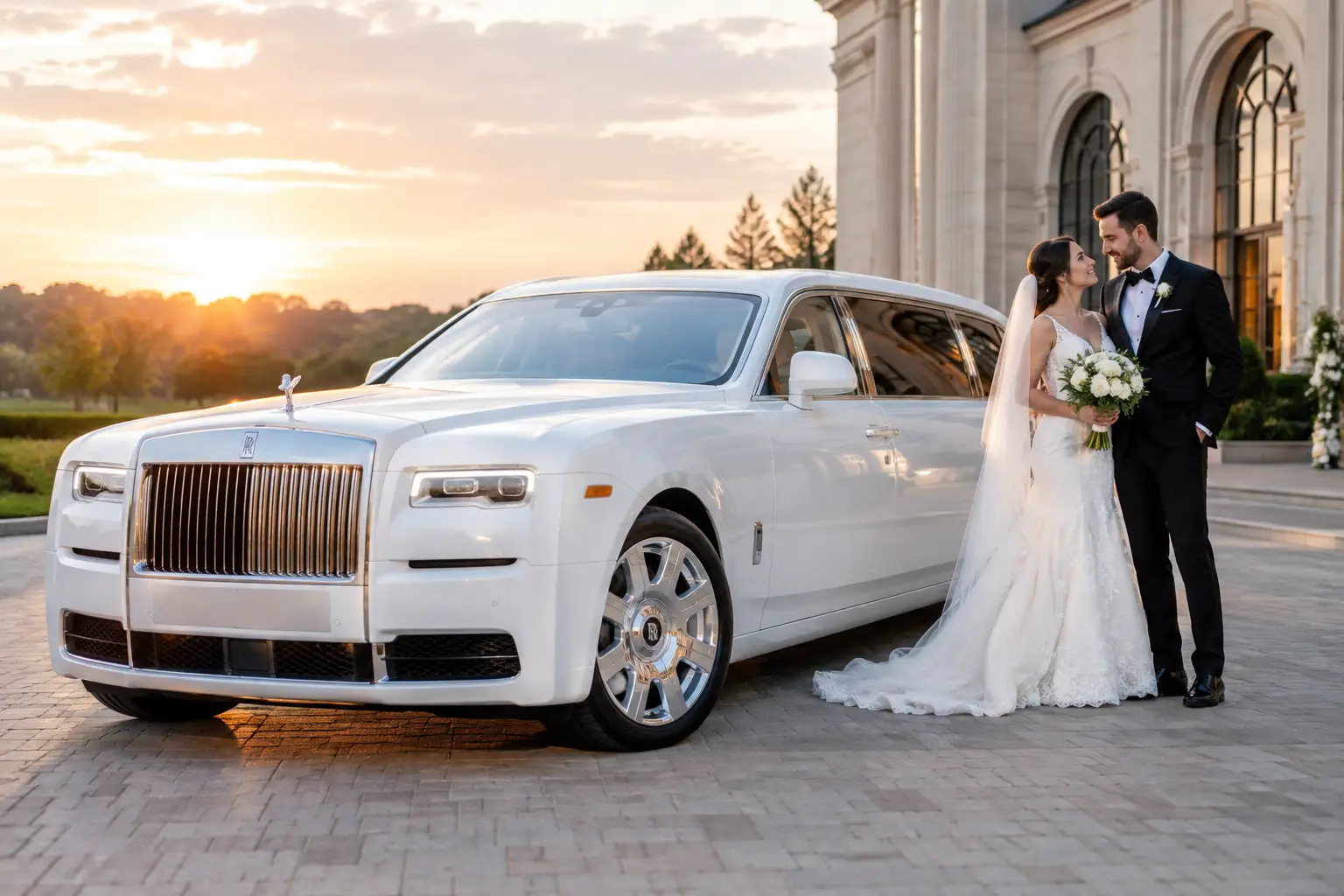
A Rolls-Royce Phantom Two-Tone, Rolls-Royce Ghost, Rolls-Royce Cullinan, Mercedes-Maybach S 580, or vintage 1960 Rolls-Royce Silver Cloud II gives the couple a private vehicle for those transitions. The choice is partly visual, but it is also functional. A private sedan or SUV gives the couple room to reset between the ceremony, photos, and reception rather than traveling in a full vehicle with a larger group.
Next, identify everyone whose arrival affects the ceremony itself. This may include the maid of honor, best man, bridesmaids, groomsmen, parents, siblings, or grandparents. If any of these people are responsible for rings, documents, ceremonial items, or coordinating arrivals, their transportation should be planned rather than left to individual arrangements.
How Many Wedding Limos for Common Wedding Sizes?
There is no universal formula, but a few planning models help couples make a realistic decision.
A small wedding: one or two vehicles
For a ceremony and reception at the same venue, with a small wedding party and nearby family, one dedicated vehicle for the couple may be enough. A second vehicle is useful if the wedding party is getting ready elsewhere or if parents and grandparents need organized transportation.
This arrangement works well when there are few separate stops. It becomes less practical when the couple, wedding party, and family are expected to arrive at different places on a tight schedule.
A standard wedding party: two or three vehicles
Two or three vehicles is common for a wedding with a couple, a wedding party of eight to 16 people, and immediate family traveling from separate locations. One vehicle carries the couple, a second carries the wedding party, and a third handles parents or close family.
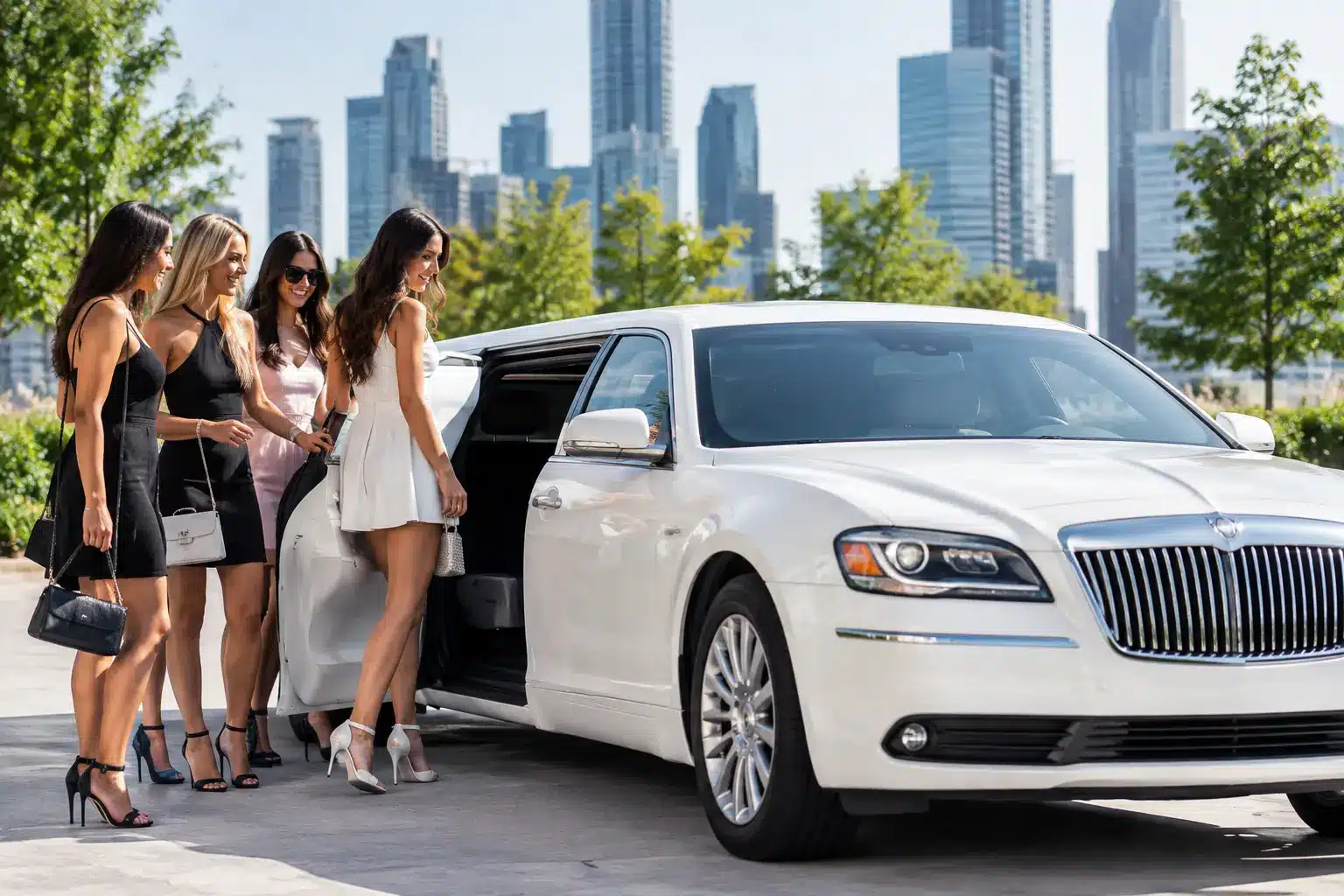
For example, a Lincoln Navigator Stretch or Lincoln MKT Stretch can suit a moderate-size wedding party, while a Hummer H2 Stretch accommodates up to 18 passengers. A Cadillac Escalade, Chevrolet Suburban, or GMC Yukon XL can be a practical choice for parents and relatives who prefer a quieter, smaller group.
A larger or multi-location wedding: four or more vehicles
Four or more vehicles are often appropriate when a wedding includes a large bridal party, several pickup locations, multiple generations of family, or a long route between the ceremony and reception. This is especially common for celebrations in Brampton, Mississauga, Vaughan, Markham, Hamilton, or Niagara-on-the-Lake where guests, family homes, religious venues, and reception halls may be spread across a wide area.
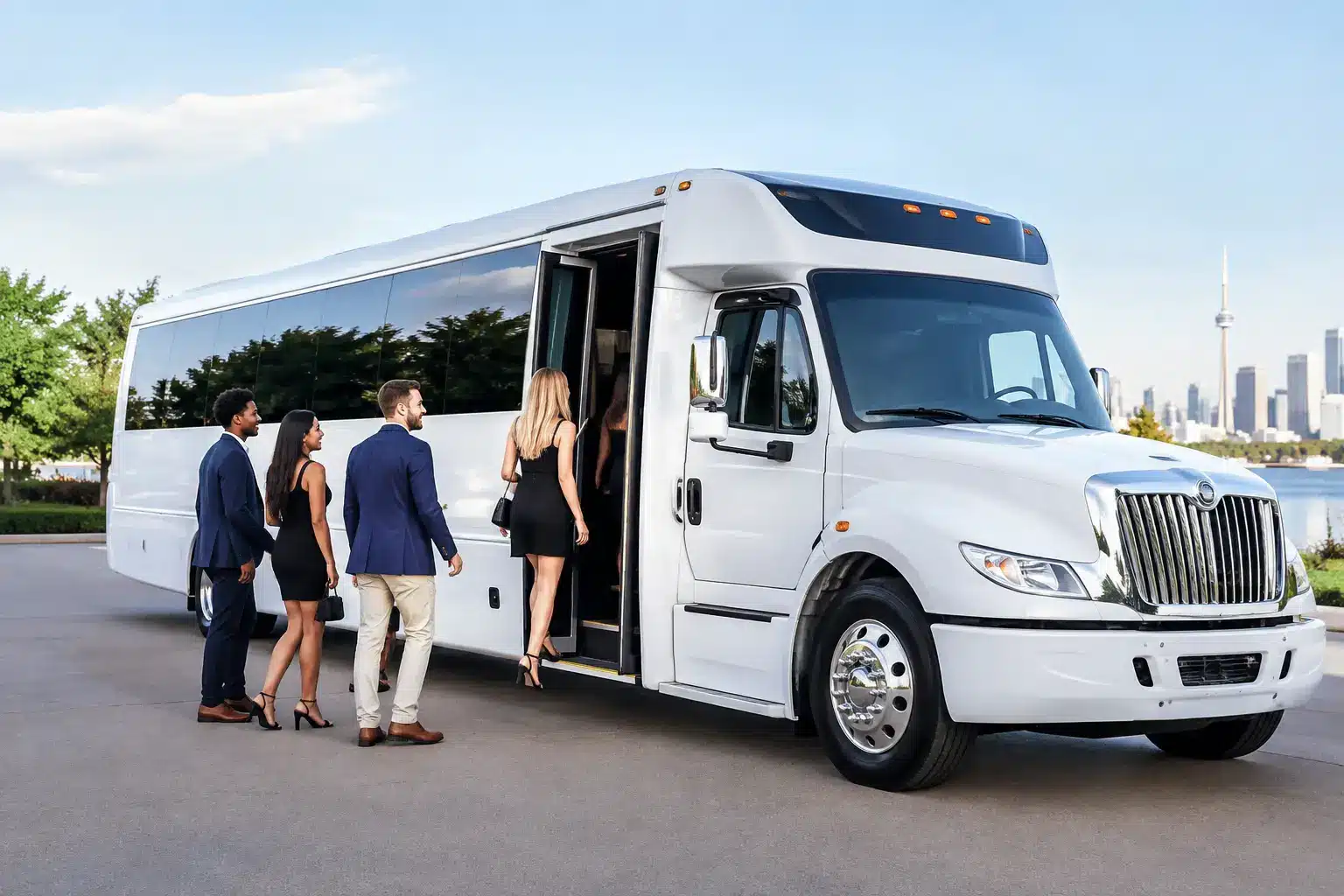
A Mercedes Sprinter Limo Style carries up to 14 passengers and keeps a bridal party together. For larger family groups, a 22-, 28-, 34-, or 50-passenger party bus can reduce the number of separate vehicles. A 23- or 27-passenger shuttle coach is useful when the priority is moving guests or family between locations in an organized way.
Count Seats, Then Count Real Needs
Vehicle capacity is only the starting point. A vehicle listed for 14 passengers may not be the right fit for 14 people in formalwear, particularly if dresses have full skirts, people are carrying garment bags, or there are flowers and personal items to bring along.
Build in room where it matters. A bridal party of 12 might technically fit in a 14-passenger Sprinter, but that does not automatically mean everyone will be comfortable after hair, makeup, and photos. The same applies to a group of parents and elders. A smaller SUV may be preferable to a crowded vehicle, even if a larger option holds everyone on paper.
Also separate passengers by role, not only by family. The couple often benefits from privacy. The wedding party may want to travel together. Parents may prefer their own vehicle, especially when they need to arrive early or leave before the end of the reception. These decisions usually produce a more orderly plan than trying to fill every available seat.
Plan Around the Day’s Actual Route
A transportation plan should follow the real sequence of the day. List every location: getting-ready suites, family homes, the ceremony, photo locations, the reception, and the end-of-night departure point. Then note who needs to be at each stop and when.
The most common mistake is booking vehicles only for the ceremony arrival and forgetting the time between events. If photos are scheduled at a park, waterfront location, hotel, or separate venue, the couple and wedding party may need transportation for several hours. If the ceremony and reception are far apart, family transportation becomes more valuable because guests are less likely to arrive in scattered groups or search for parking under time pressure.
The timing matters even more for ceremonies with established traditions. A Sikh or Punjabi wedding may require coordinated transportation for a baraat procession and family arrivals. A Hindu ceremony may be built around a specific muhurat time, leaving little flexibility for late arrivals. A Pakistani Nikkah, Persian Sofreh Aghd, Chinese tea ceremony, or Italian church-to-reception schedule can involve several locations and separate family groups.
In these cases, do not treat all vehicles as interchangeable. Assign each one a purpose: couple, wedding party, immediate family, elders, or guest group. A clear assignment prevents the question of who rides where from becoming a last-minute issue.
Do You Need Transportation for Guests?
Guest transportation is not required for every wedding. It becomes useful when many guests are staying at the same hotel, parking is limited, the venue is outside the city, or guests will be moving between a ceremony and reception held at different locations.
A party bus or coach can be more effective than adding several smaller vehicles. It keeps a defined group together and gives the day a clearer schedule. This is often worth considering for destination-style celebrations in Niagara wine country, Muskoka, Prince Edward County, or venues where guests are unfamiliar with the route.
For evening transportation, decide whether you need a single departure time or multiple departures. A single end-of-night coach works when most guests will leave together. If older relatives or families with children are likely to leave earlier, plan for that reality instead of assuming everyone will remain until the final send-off.
Use a Buffer, Not a Packed Schedule
Wedding transportation works best when it includes time for real life: elevators, formalwear, photos running long, traffic around Toronto venues, and guests who need a few more minutes. A schedule that gives every vehicle only the exact driving time is vulnerable from the beginning.
Ask for a written itinerary that includes pickup addresses, passenger groups, scheduled departure times, planned stops, and the final drop-off. Confirm who has authority to adjust the plan on the day, such as a planner, maid of honor, best man, or family representative. The chauffeur should not have to guess which group is leaving next.
With Platinum Rides, bookings are confirmed at a flat rate before departure, plus HST and gratuity, rather than being calculated by distance traveled. That makes it easier to plan a multi-stop wedding itinerary with the vehicle assignments and timing agreed in advance.
The number of vehicles is not a measure of the size or value of a wedding. It is a practical decision about protecting the moments that matter most: the couple arriving composed, family members reaching the ceremony together, and the day moving forward without unnecessary confusion.