
A Persian wedding can move through several meaningful moments before the reception doors open: family arrivals, photography, the Sofreh Aghd, the ceremony, and sometimes a separate portrait stop. This Persian wedding transport guide focuses on the part that often determines whether the day feels organized or rushed: matching the vehicle plan to the actual schedule, passenger groups, and venue access.
For weddings in Toronto, Markham, Vaughan, Mississauga, and beyond, transportation is not simply about a car for the couple. It is a timed plan for people who need to arrive in the right order, with enough room, and without turning a significant family occasion into a parking-lot problem.
Start With the Wedding Timeline, Not the Vehicle
A Rolls-Royce Phantom may be the visual centerpiece of the day, but selecting it before mapping the itinerary can create avoidable gaps. Begin with the addresses and fixed times: where the couple starts, where the Sofreh Aghd is set, the ceremony start, photo locations, cocktail hour, reception, and the final departure.
Then identify which parts of the schedule are flexible. A portrait session may move by 15 minutes. A venue ceremony time usually cannot. If the Aghd takes place at a family home before a ballroom reception, the chauffeur team needs to know whether the couple will leave directly for photos, whether parents travel separately, and when the bridal party must be at the next location.
Build in time for loading dresses, gifts, florals, and personal items. A formal gown and a full skirt take more room than a passenger count suggests. A sedan may be right for an arrival, while an SUV gives the couple more practical space between locations. The right choice depends on the wardrobe, the number of stops, and the desired photographs.
Persian Wedding Transport Guide: Plan Around the Sofreh Aghd
The Sofreh Aghd is a focal point, not an item to squeeze between transport blocks. Its placement affects vehicle staging, family arrivals, photography, and the order in which people enter the room. Share the Aghd location and start time with the chauffeur service, especially when it is held at a private residence, a hotel suite, or a venue with restricted loading access.
Ask the venue where chauffeured vehicles can wait and whether there is a designated entrance for the wedding party. Some banquet halls have room for a convoy near the main doors; others require vehicles to arrive in sequence. At a downtown Toronto venue, traffic and curb access can make a five-minute difference meaningful. At a country property or estate venue, the concern may be a long drive, gravel, or distance between the ceremony space and the reception entrance.
Not every family observes the same order of events. Some couples hold a private Aghd before guests arrive. Others incorporate it into the main reception. The transportation plan should reflect your family’s program rather than a generic wedding template.
Choose Vehicles by Role
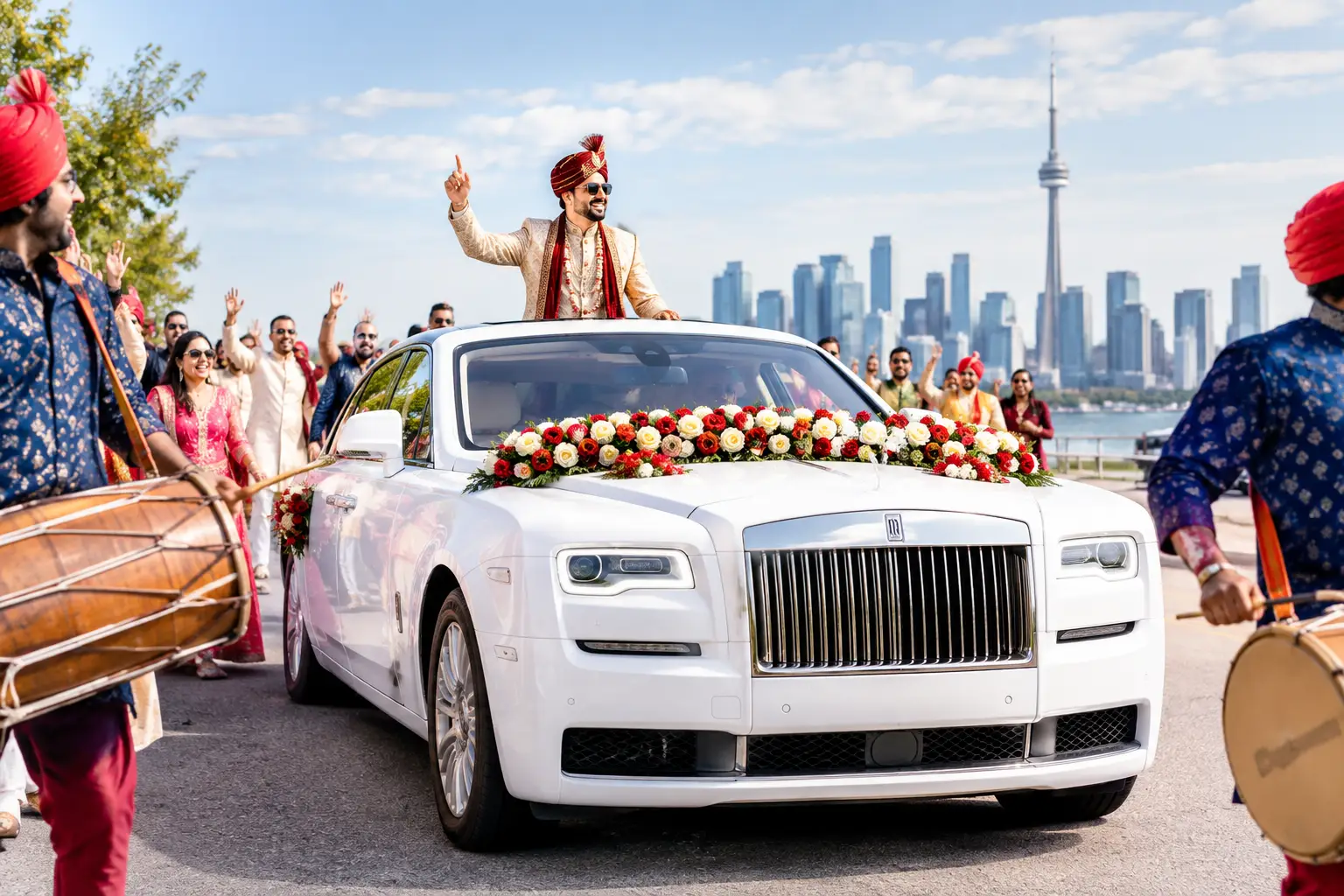
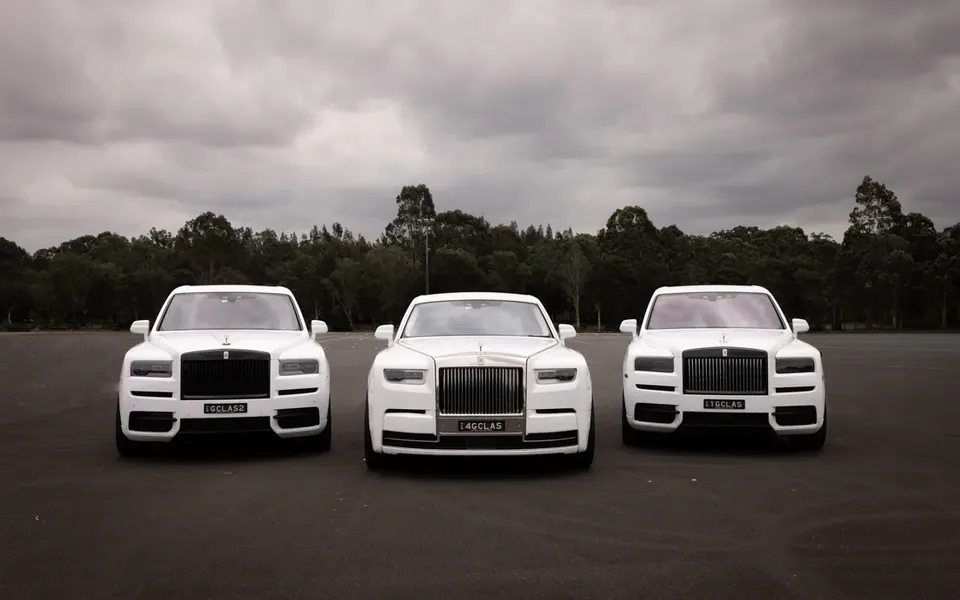
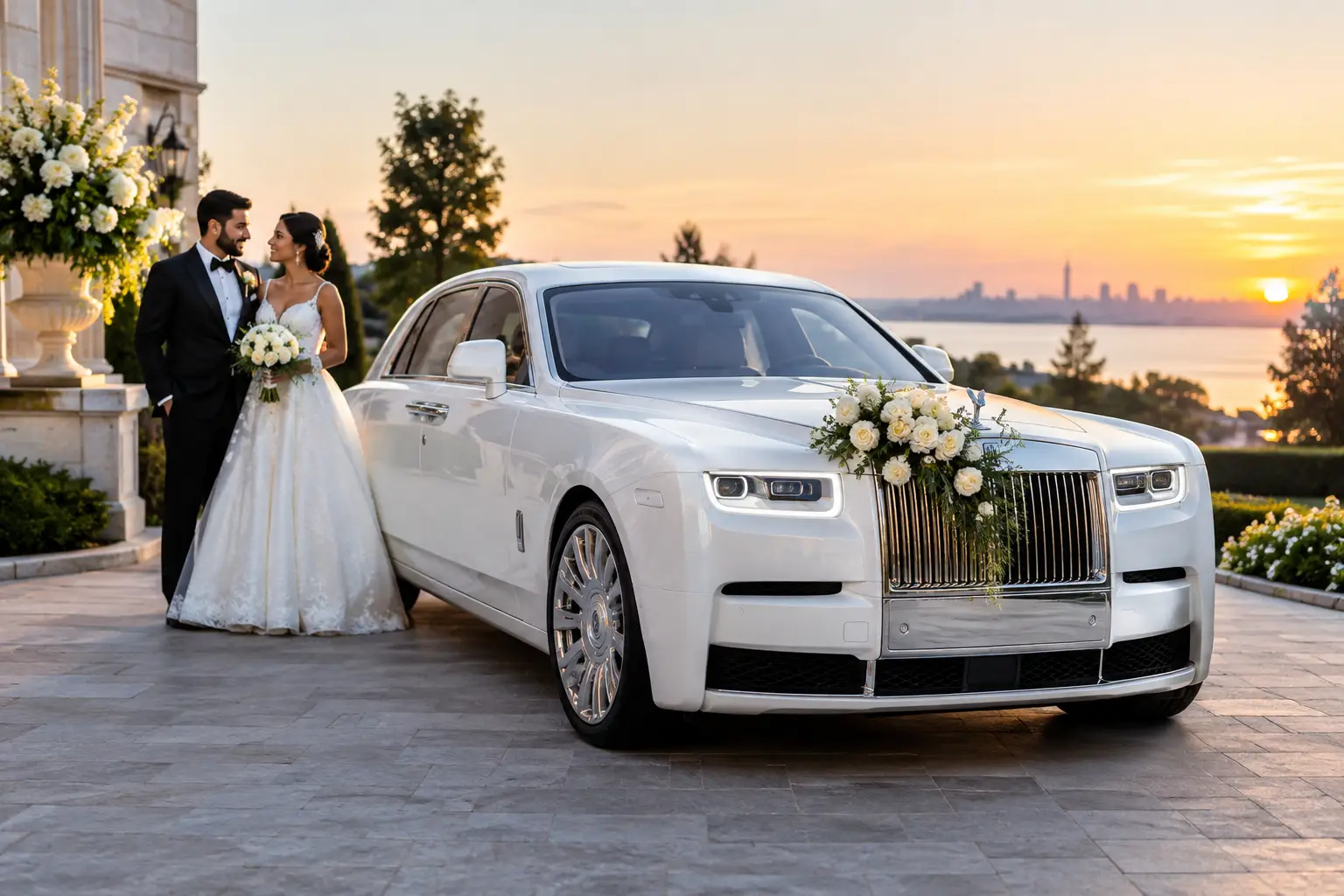
A multi-vehicle wedding plan works best when every vehicle has a clear assignment. The couple’s car should support both the visual style of the day and the travel schedule. A Rolls-Royce Phantom Two-Tone makes a strong arrival and photo vehicle, while the Rolls-Royce Ghost offers a more understated profile. The Rolls-Royce Cullinan is useful when the itinerary includes several stops, a larger gown, or less predictable weather. For a vintage look, the 1960 Silver Cloud II is best reserved for a well-timed segment of the day rather than treating it as a general-purpose people carrier.
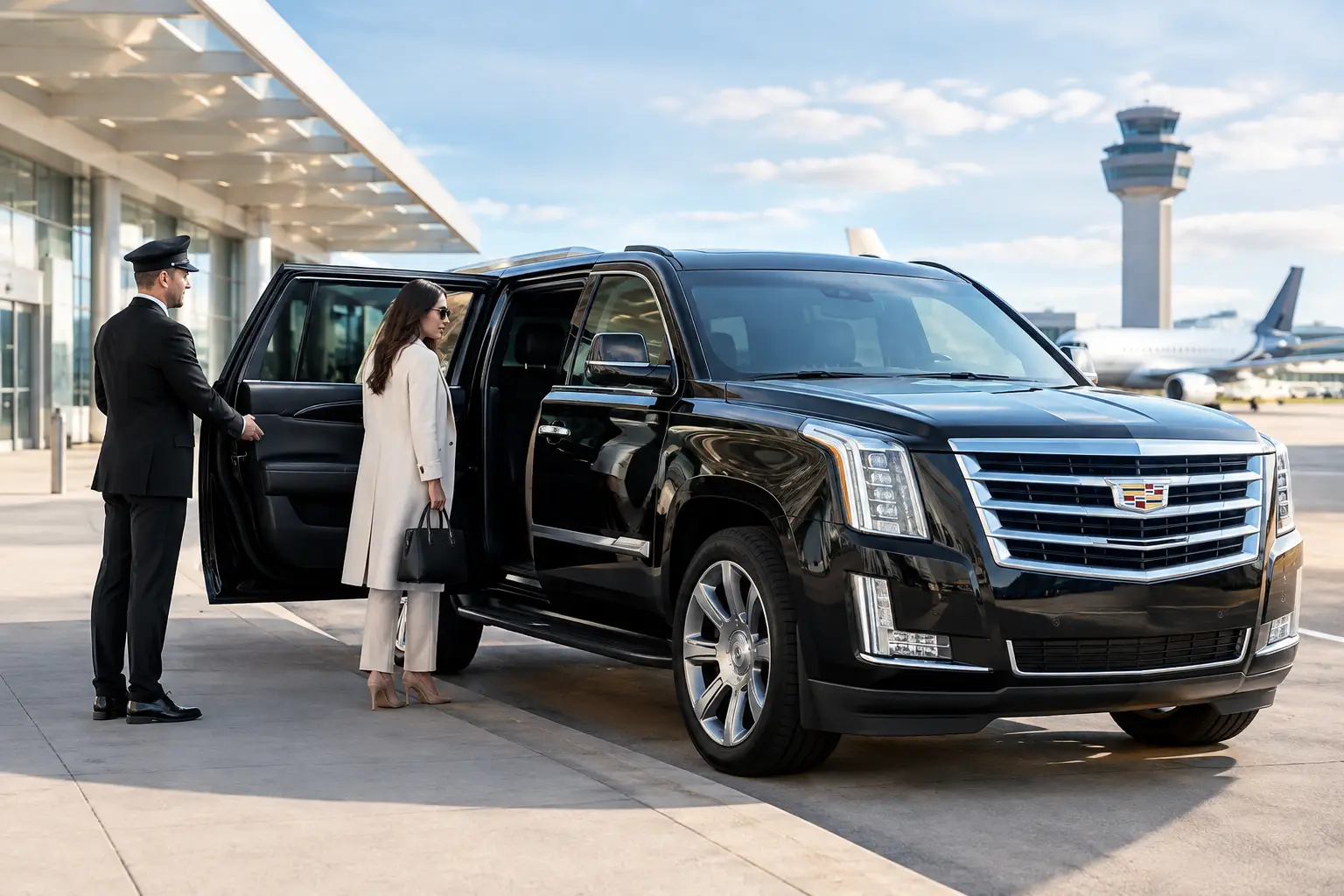
A Mercedes-Maybach S 580 suits couples who prefer a modern sedan with a quiet, formal cabin. If the wedding party needs to move together, a Cadillac Escalade can work for a smaller group, while a Hummer H2 Stretch provides space for up to 18 passengers. The choice is partly aesthetic, but it is also operational: a stretch vehicle needs suitable access and turning space at each stop.
For parents, siblings, and close relatives, a Mercedes Sprinter Limo Style carries up to 14 passengers and keeps a key family group together. A Mercedes Sprinter Corporate or Ford Transit can be more appropriate when the priority is direct, coordinated movement rather than celebration inside the vehicle. For wider guest transportation, party buses accommodate 22, 28, 34, or 50 passengers, and coaches are available for 23, 27, or 56 passengers.
Avoid assigning passengers only by age or family branch. Assign them by where they need to be and when. Parents may need to arrive early for the Aghd. The bridal party may need to leave earlier for photography. Guests coming from one hotel may benefit from one scheduled coach departure rather than a series of individual pickups.
Account for Toronto Traffic and Venue Access
A wedding schedule that looks comfortable on a map can tighten quickly around Gardiner Expressway traffic, downtown construction, weekend events, or a long venue driveway. Build travel windows around the actual route and time of day, not a late-night weekday estimate.
If the ceremony and reception are in different cities, consider a dedicated vehicle for the couple and a separate shuttle plan for guests. For example, a couple may travel in a Rolls-Royce from a Markham ceremony to a Vaughan reception, while family members leave in a Sprinter after photographs begin. This prevents the couple’s timetable from being controlled by a larger passenger group.
Be equally specific about pickup details. A condominium tower needs a unit number, concierge instructions, and a clear pickup entrance. A home with a narrow street may require a different staging plan for a party bus or coach. Provide the planner, venue coordinator, and chauffeur service with the same final timeline so arrival instructions do not conflict.
Make Photography Time Work With the Fleet
Wedding vehicles are part of the photo plan, but photographers need a defined window to use them. If the car is needed for a 4:30 p.m. ceremony arrival, do not schedule it at a distant photo location until 4:25. Give the photographer a start and finish time, plus the location where the chauffeur should stage afterward.
The Rolls-Royce Phantom Two-Tone, the only custom-painted Phantom of its kind in the Toronto area, is often selected for its visual presence. That can make it worth scheduling earlier for portraits, before the family timeline becomes crowded. A Cullinan or Escalade may be more practical if there are multiple stops and frequent entrances and exits.
Weather is another consideration. In winter or rain, reduce the number of outdoor transfers and confirm covered pickup points where possible. In summer, allow extra time for formal clothing, hair, and makeup before loading. Small timing allowances can protect the moments that cannot be repeated.
Confirm the Booking Details Early
A professional chauffeur service should receive the full itinerary before the wedding date, then confirm any changes as the event approaches. Provide names and mobile numbers for the planner, a sibling, or another designated point person who can make decisions if the couple is occupied.
Confirm passenger capacity based on the people who will actually ride. Do not count on a vehicle holding extra passengers, garment bags, or decorations beyond its intended layout. Ask about luggage space if relatives are arriving from Pearson Airport or checking out of a hotel before the reception.
Review the quoted service period, stops, wait time, and final drop-off plan. At Platinum Rides, wedding transportation is quoted as a flat rate confirmed before departure, plus HST and gratuity, rather than per-kilometer charges. That structure is useful when the itinerary has several planned locations, but the schedule still needs to be accurate from the start.
A Better Question for Your Wedding Day
Instead of asking only which vehicle looks right in photos, ask who needs to be where at each important moment. Once that answer is clear, the couple’s car, family transport, guest shuttles, and venue arrivals become much easier to organize. The result is a transportation plan that gives the Sofreh Aghd, the family, and the couple the time each deserves.